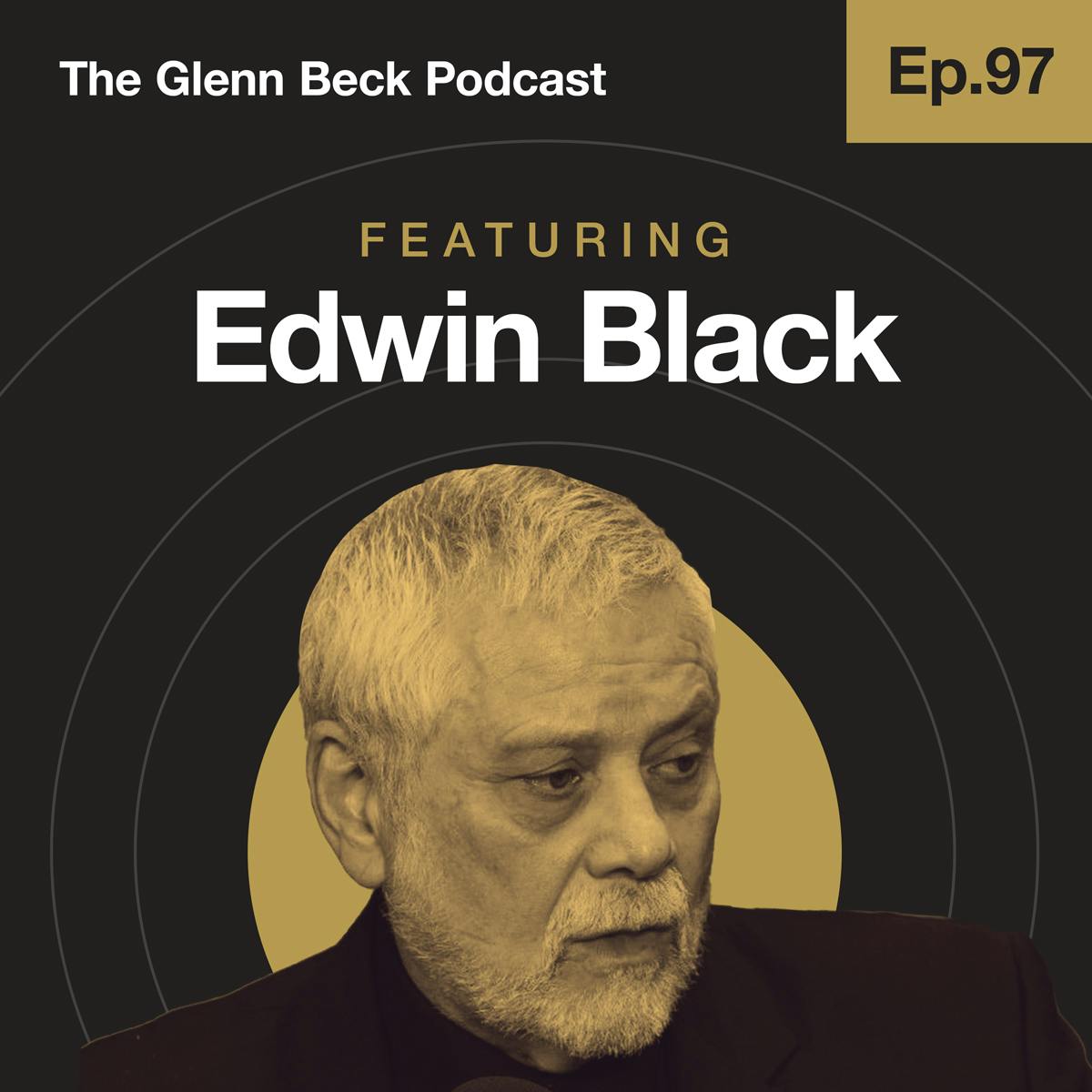
Ep 97 | IBM's Role in Killing Jews & High-Tech Lessons from the Holocaust | Edwin Black | The Glenn Beck Podcast
Edwin Black is the son of Holocaust survivors and an investigative journalist with awards and best-selling books translated into 20 languages in nearly 200 countries. His book "IBM and the Holocaust" examines high tech's role in killing Jews during the Holocaust and what it can teach us about the dangers of Big Tech today. Edwin has spent enough time in the media to see all of its warts (there are a lot). And he’s speaking out about it and its role in ignoring history at our nation's peril. He also discusses Disney actress Gina Carano, fired for comparing conservative persecution to the Nazi treatment of the Jews. Our culture is being erased. Our ideals and values are being censored and mocked. Our history is being erased. With another human extermination on the horizon in China, Edwin challenges this with bravery.
This Week’s Sponsors:
Raycon makes great sound accessible to everyone, with wireless earbuds starting at half the price of other premium audio brands. Whether you’re catching up on your favorite news podcast, binging an audiobook, or powering through your workout with a pumped-up playlist, a pair of Raycons in your ears can make all the difference. Go to BUYRAYCON.com/Glenn and get 15% off.
Built Bar Protein Bars are high protein, low calorie, high fiber, and low carb, and they’ve just added six new flavors, including caramel brownie and lemon-almond cheesecake. Go to Builtbar.com and use the promo code “BECK” to get $10 off your first order.
Learn more about your ad choices. Visit megaphone.fm/adchoices
Available Results
Generated results are saved to your library for reuse and search.
Choose Template
Pick the result you want. You can review provider and model before generating.
A concise first-pass summary for understanding the episode quickly.
A comprehensive, source-grounded extraction of the reusable knowledge in an episode.
Technologies, AI models, technical methods, capabilities, limitations, and adoption implications.
Repeatable methods, frameworks, mental models, processes, and systems.
A dedicated analysis of warnings, limitations, trade-offs, weak evidence, and uncertainty.
A dedicated inventory of concrete resources named in the episode.
A concise first-pass summary for understanding the episode quickly.
A detailed readable summary organized by chapter or topic.
A navigable map of subjects, topic flow, and suggested chapters.
A comprehensive, source-grounded extraction of the reusable knowledge in an episode.
Reusable atomic knowledge units extracted from the episode.
A comprehensive extraction focused on health practices, protocols, claims, and safety caveats.
A comprehensive extraction focused on opportunities, strategy, markets, and company building.
Explicit actions, next steps, habits, recommendations, and things to avoid.
A dedicated inventory of concrete resources named in the episode.
A dedicated analysis of warnings, limitations, trade-offs, weak evidence, and uncertainty.
A concise first-pass summary for understanding the episode quickly.
A detailed readable summary organized by chapter or topic.
A navigable map of subjects, topic flow, and suggested chapters.
A comprehensive, source-grounded extraction of the reusable knowledge in an episode.
Reusable atomic knowledge units extracted from the episode.
A comprehensive extraction focused on health practices, protocols, claims, and safety caveats.
A comprehensive extraction focused on opportunities, strategy, markets, and company building.
Scientific findings, mechanisms, studies, hypotheses, and the limits of the evidence discussed.
Technologies, AI models, technical methods, capabilities, limitations, and adoption implications.
Investment theses, assets, catalysts, valuation reasoning, time horizons, and risks.
Chronologies, actors, causes, consequences, turning points, and competing historical interpretations.
Policies, proposals, stakeholders, arguments, implementation constraints, and predicted effects.
Career paths, skills, hiring signals, workplace decisions, transitions, and limitations of the advice.
Behavioral mechanisms, biases, motivation, habits, emotions, interventions, and evidence limitations.
Economic mechanisms, incentives, indicators, market structure, forecasts, and uncertainty.
Leadership principles, team systems, organizational design, culture, feedback, and failure modes.
Audience, positioning, messaging, acquisition, retention, experiments, metrics, and failed approaches.
Teaching methods, learning strategies, practice, feedback, assessment, and effectiveness evidence.
Theses, premises, arguments, objections, values, thought experiments, and unresolved questions.
Communication patterns, conflict, boundaries, expectations, repair methods, and contextual limitations.
Books, papers, authors, courses, and other learning resources mentioned in the episode.
Repeatable methods, frameworks, mental models, processes, and systems.
Explicit actions, next steps, habits, recommendations, and things to avoid.
Memorable statements and important claims with attribution and source context.
A dedicated inventory of concrete resources named in the episode.
A dedicated analysis of warnings, limitations, trade-offs, weak evidence, and uncertainty.