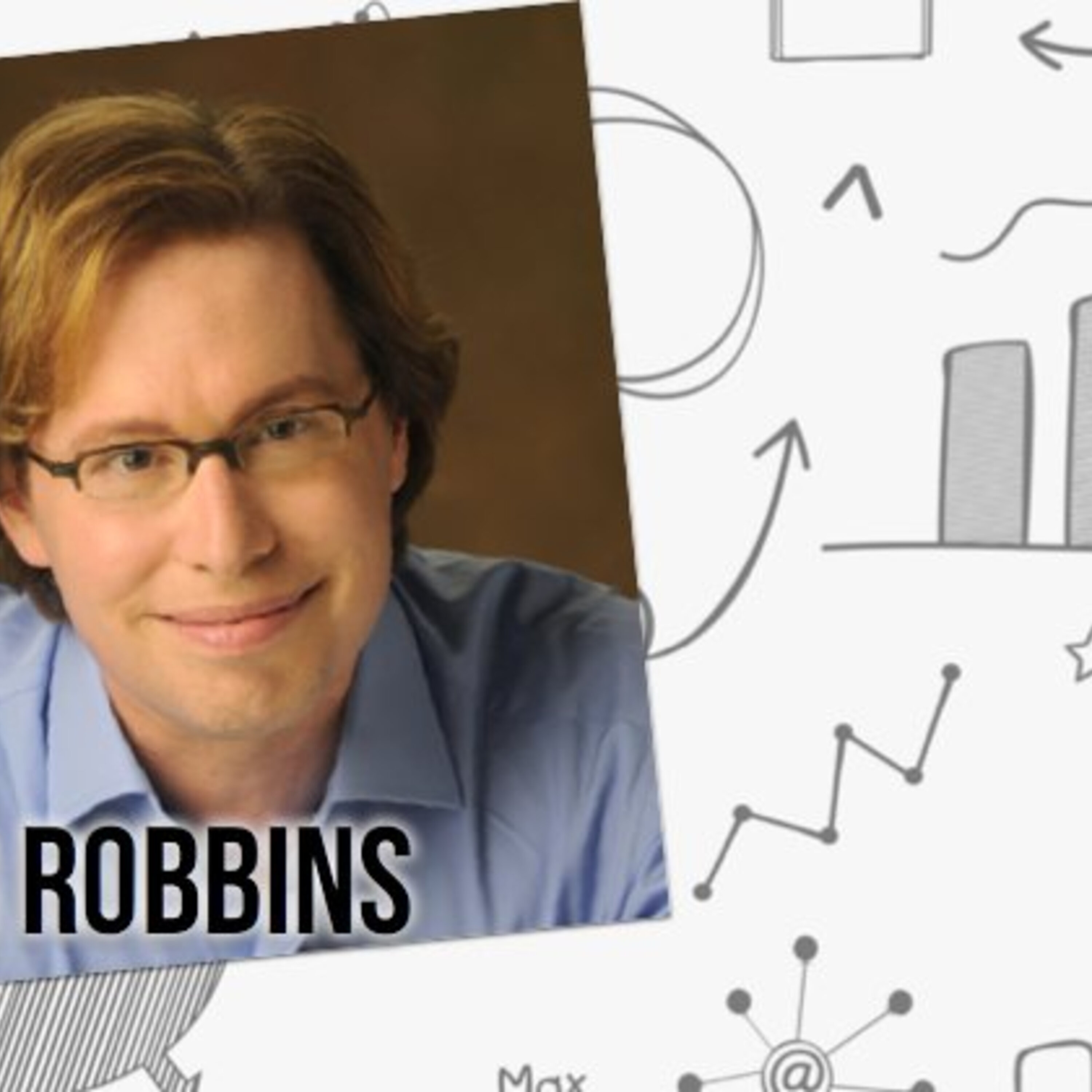
Zombie Musicals, Quitting Your Job & Living An Extraordinary Life with Stever Robbins.
Last month, I was driving to play tennis with some friends, and, while driving, I played a 55 minute audio episode entitled "Living an Extraordinary Life". I'm not a voracious "self-improvement" consumer, and this type of thing doesn't happen very often when I listen to podcasts, audiobooks or lectures, but I actually found myself multiple times stopping to pump my fist, verbally shout in agreement and furiously take notes. The program was recorded by my friend Stever Robbins, also known in the podcasting world as the "Get-It-Done Guy". Stever combines business savvy, "life hacking," and personal development to help people make their lives extraordinary. He is CEO of Ideas Unleashed, a company that helps thought leaders build businesses around their areas of expertise. He is a serial entrepreneur, executive coach, and executive curriculum designer. He co-founded the early internet success story FTP Software, served as COO of Building Blocks Interactive, CEO of JobTacToe.com, and has been an initial team member of ten start-ups, including four IPOs and three acquisitions. He was project manager at Intuit, where he co-led the development of the award-winning Quicken VISA Card. He serves as business plan judge for the Harvard Business School business plan competition, the Pete Conrad Spirit of Innovation Awards, the William James Foundation social enterprise competition, and the Mass Challenge entrepreneurship competition. His experience developing organizational leaders began as co-designer of Harvard Business School’s “Leadership and Learning” curriculum redesign, and has gone on to include being an advisor and mentor to senior managers in several high-growth companies. His Get-It-Done-Guy podcast has spent weeks as #1 in the iTunes business category and has been downloaded more than 23 million times. He has been a repeat commentator on CNN-fn's Entrepreneurs Only and hosted a regular segment on the nationally syndicated radio show Entrepreneurs, Living the American Dream. He is a featured expert in Harvard Business School Publishing's Harvard Manage Mentor, as well as appearing as an expert in critical thinking and memory in Houghton-Mifflin's forthcoming Skillbuilders series. He has been interviewed in numerous publications including The Wall Street Journal, NBC Nightly News, The New York Times, ABC News Now, MSNBC, FOX News, BusinessWeek Online, and Investor's Business Daily. He has written for Harvard Business Review, The Boston Business Journal and has had columns on Entrepreneur.com, Harvard Business School's Working Knowledge, and the Quick and Dirty Tips network. He is the author of It Takes a Lot More than Attitude...to Lead a Stellar Organization and Get-it-Done Guy's 9 Steps to Work Less and Do More, an Amazon Business & Investing top-10 best-seller.
Stever is also the co-writer and lyricist of the musical Work Less and Do More: The (Zombie) Musical. Yes, a zombie musical. And that is where we start with today's podcast.
During our discussion, you'll discover: -Why Stever moved away from home when he was 15 years old... -What Stever means when he says "the journey is the reward"... -The crazy dream that Stever had that led him on a three year experiment to quit his job and start a podcast... -Why I dislike watching tennis and reading fiction, and how this relates to you deciding what an extraordinary life could be for you... -Why values like "hard work", "setting goals", "planning" are all myths... -How dangerous the concept of delayed gratification can be... -And much more!
Resources from this episode: -Book "Just Enough: Tools for Creating Success in Your Work and Life" -WorkLessAndDoMore.com -The Get-It-Done Guy podcast -Text the word EXTRAORDINARY to 33444 and then follow the instructions to send in your email address and you'll get a link to the Stever's slides and audio materials in your email. -Go to http://SteverRobbins.com/lelhbs to get a special version of his talk given to Harvard Business School, which has a section on goal-setting that the regular version of his talk doesn't have.
Do you have questions, comments or feedback for me or Stever? Leave your thoughts at BenGreenfieldFitness.com and one of use will reply!
See omnystudio.com/listener for privacy information.
Available Results
Generated results are saved to your library for reuse and search.
Choose Template
Pick the result you want. You can review provider and model before generating.
A concise first-pass summary for understanding the episode quickly.
A comprehensive, source-grounded extraction of the reusable knowledge in an episode.
A comprehensive extraction focused on health practices, protocols, claims, and safety caveats.
A dedicated analysis of warnings, limitations, trade-offs, weak evidence, and uncertainty.
Repeatable methods, frameworks, mental models, processes, and systems.
A comprehensive extraction focused on opportunities, strategy, markets, and company building.
A concise first-pass summary for understanding the episode quickly.
A detailed readable summary organized by chapter or topic.
A navigable map of subjects, topic flow, and suggested chapters.
A comprehensive, source-grounded extraction of the reusable knowledge in an episode.
Reusable atomic knowledge units extracted from the episode.
A comprehensive extraction focused on health practices, protocols, claims, and safety caveats.
A comprehensive extraction focused on opportunities, strategy, markets, and company building.
Explicit actions, next steps, habits, recommendations, and things to avoid.
A dedicated inventory of concrete resources named in the episode.
A dedicated analysis of warnings, limitations, trade-offs, weak evidence, and uncertainty.
A concise first-pass summary for understanding the episode quickly.
A detailed readable summary organized by chapter or topic.
A navigable map of subjects, topic flow, and suggested chapters.
A comprehensive, source-grounded extraction of the reusable knowledge in an episode.
Reusable atomic knowledge units extracted from the episode.
A comprehensive extraction focused on health practices, protocols, claims, and safety caveats.
A comprehensive extraction focused on opportunities, strategy, markets, and company building.
Scientific findings, mechanisms, studies, hypotheses, and the limits of the evidence discussed.
Technologies, AI models, technical methods, capabilities, limitations, and adoption implications.
Investment theses, assets, catalysts, valuation reasoning, time horizons, and risks.
Chronologies, actors, causes, consequences, turning points, and competing historical interpretations.
Policies, proposals, stakeholders, arguments, implementation constraints, and predicted effects.
Career paths, skills, hiring signals, workplace decisions, transitions, and limitations of the advice.
Behavioral mechanisms, biases, motivation, habits, emotions, interventions, and evidence limitations.
Economic mechanisms, incentives, indicators, market structure, forecasts, and uncertainty.
Leadership principles, team systems, organizational design, culture, feedback, and failure modes.
Audience, positioning, messaging, acquisition, retention, experiments, metrics, and failed approaches.
Teaching methods, learning strategies, practice, feedback, assessment, and effectiveness evidence.
Theses, premises, arguments, objections, values, thought experiments, and unresolved questions.
Communication patterns, conflict, boundaries, expectations, repair methods, and contextual limitations.
Books, papers, authors, courses, and other learning resources mentioned in the episode.
Repeatable methods, frameworks, mental models, processes, and systems.
Explicit actions, next steps, habits, recommendations, and things to avoid.
Memorable statements and important claims with attribution and source context.
A dedicated inventory of concrete resources named in the episode.
A dedicated analysis of warnings, limitations, trade-offs, weak evidence, and uncertainty.