Wine Myths, Dark & Dirty Secrets of the Wine Industry, Wine Biohacks & More!
A few months ago, I released the article "Dark & Dirty Secrets Of The Wine Industry, Four Ways To Make Wine Healthier, and What Kind Of Wine Fit People Should Drink."
In it, I detailed the serious issues with arsenic, overpricing, lack of sustainability, high levels of sulfites, amines and ochratoxins, boatloads of sugars, high pH levels (that increase the possibility of contamination by unwanted organisms), a less than stellar taste, plastic polyethylenes and many other problems plaguing the modern wine industry - and causing many people (including my wife) to get headaches or poor sleep from a nightly glass of wine.
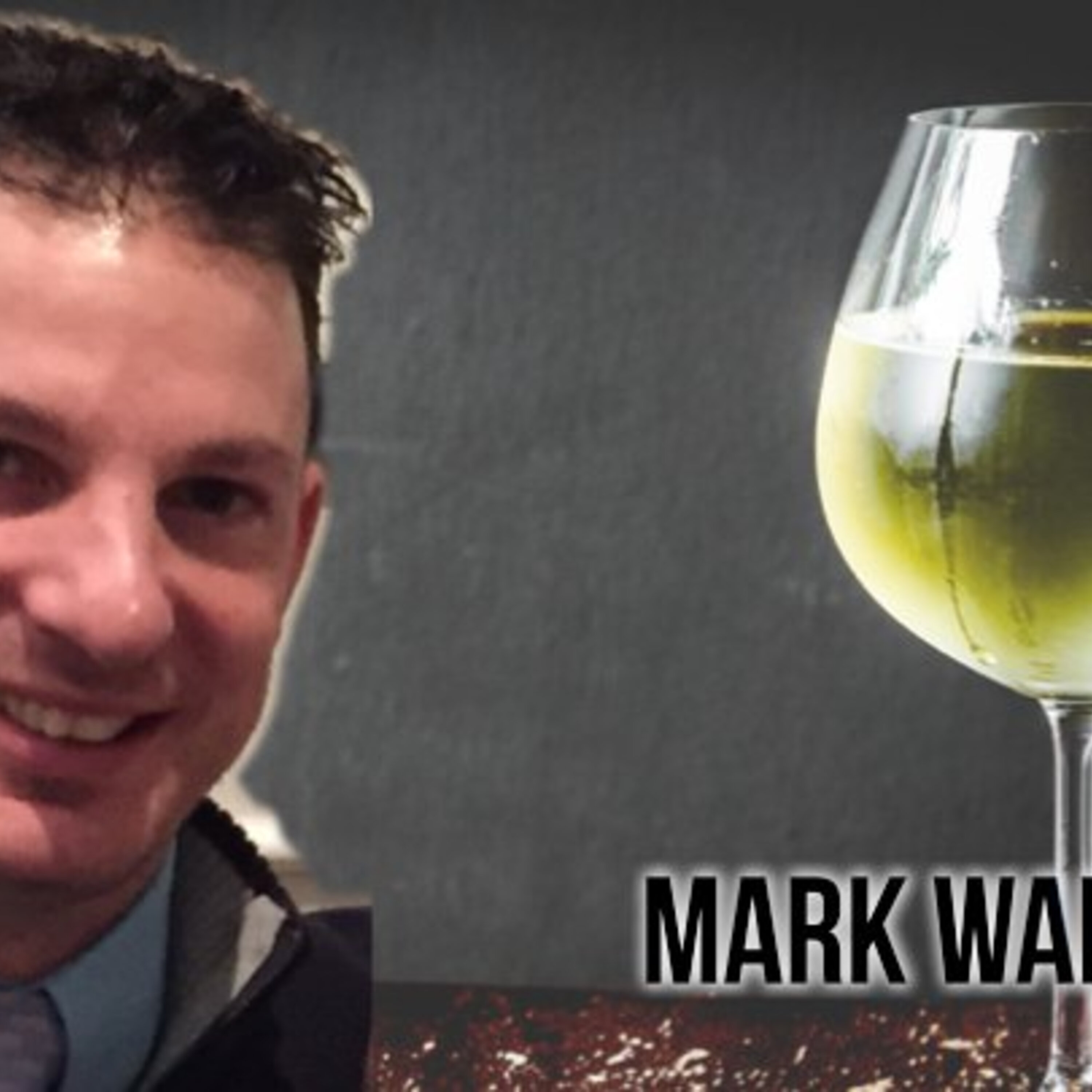
At the end of that post, I highlight that I now drink a new kind of healthy wine called "FitVineWine", and in today's podcast, I interview Mark Warren, co-founder of FitVineWine, a national level black belt competitor in TaeKwonDo, a Crossfitter and of course, as a wine enthusiast and father of two boys, a man after my own heart.
During our discussion, you'll discover:
-Why there are shocking levels of additives and other fillers in most modern wines...
-How most wineries add sugar and grape concentrate to wines to adjust the pH (and why pH is so important)...
-Why many wines are filtered through wheat and contain gluten...
-Whether you need to be concerned about mold in wine...
-How you can concentrate the amount of antioxidants like resveratrol, polyphenols and proanthocyanidins in grapes...
-What it means for a wine to be "biodynamic" or "organically" farmed...
-Why many wines are over-irrigated and why wineries should use less water, not more...
-Why wine grapes should be grown at higher, cooler elevations...
-Why people really aren't allergic to sulfites in wine, and why it's something else altogether...
-How FitVineWine compares to other popular "healthy" or "Paleo" wines out there...
-And much more!
Resources from this episode: -FitVineWine.com (use 10% discount code BEN10) “California Winemakers Sued Over High Levels of Arsenic in Wines” “Bad News for Those of You Who, Like Us, Drank Cheap Wine Each and Every Night of Your 20s” Do you have questions, comments or feedback for me or my guest Mark on anything we discuss in this episode? Leave your thoughts at BenGreenfieldFitness.com and one of us will reply...and click here to get a bottle of red or a bottle of white at FitVineWine.com with 10% discount code BEN10 (assuming you’re 21 years of age or older).
See omnystudio.com/listener for privacy information.
Available Results
Generated results are saved to your library for reuse and search.
Choose Template
Pick the result you want. You can review provider and model before generating.
A concise first-pass summary for understanding the episode quickly.
A comprehensive, source-grounded extraction of the reusable knowledge in an episode.
A comprehensive extraction focused on health practices, protocols, claims, and safety caveats.
A dedicated analysis of warnings, limitations, trade-offs, weak evidence, and uncertainty.
Repeatable methods, frameworks, mental models, processes, and systems.
A comprehensive extraction focused on opportunities, strategy, markets, and company building.
A concise first-pass summary for understanding the episode quickly.
A detailed readable summary organized by chapter or topic.
A navigable map of subjects, topic flow, and suggested chapters.
A comprehensive, source-grounded extraction of the reusable knowledge in an episode.
Reusable atomic knowledge units extracted from the episode.
A comprehensive extraction focused on health practices, protocols, claims, and safety caveats.
A comprehensive extraction focused on opportunities, strategy, markets, and company building.
Explicit actions, next steps, habits, recommendations, and things to avoid.
A dedicated inventory of concrete resources named in the episode.
A dedicated analysis of warnings, limitations, trade-offs, weak evidence, and uncertainty.
A concise first-pass summary for understanding the episode quickly.
A detailed readable summary organized by chapter or topic.
A navigable map of subjects, topic flow, and suggested chapters.
A comprehensive, source-grounded extraction of the reusable knowledge in an episode.
Reusable atomic knowledge units extracted from the episode.
A comprehensive extraction focused on health practices, protocols, claims, and safety caveats.
A comprehensive extraction focused on opportunities, strategy, markets, and company building.
Scientific findings, mechanisms, studies, hypotheses, and the limits of the evidence discussed.
Technologies, AI models, technical methods, capabilities, limitations, and adoption implications.
Investment theses, assets, catalysts, valuation reasoning, time horizons, and risks.
Chronologies, actors, causes, consequences, turning points, and competing historical interpretations.
Policies, proposals, stakeholders, arguments, implementation constraints, and predicted effects.
Career paths, skills, hiring signals, workplace decisions, transitions, and limitations of the advice.
Behavioral mechanisms, biases, motivation, habits, emotions, interventions, and evidence limitations.
Economic mechanisms, incentives, indicators, market structure, forecasts, and uncertainty.
Leadership principles, team systems, organizational design, culture, feedback, and failure modes.
Audience, positioning, messaging, acquisition, retention, experiments, metrics, and failed approaches.
Teaching methods, learning strategies, practice, feedback, assessment, and effectiveness evidence.
Theses, premises, arguments, objections, values, thought experiments, and unresolved questions.
Communication patterns, conflict, boundaries, expectations, repair methods, and contextual limitations.
Books, papers, authors, courses, and other learning resources mentioned in the episode.
Repeatable methods, frameworks, mental models, processes, and systems.
Explicit actions, next steps, habits, recommendations, and things to avoid.
Memorable statements and important claims with attribution and source context.
A dedicated inventory of concrete resources named in the episode.
A dedicated analysis of warnings, limitations, trade-offs, weak evidence, and uncertainty.