The Underground Test That Shows You How To Legally Upgrade Your EPO, Increase Your Oxygen Levels, Boost Your Red Blood Cells & Build Double-Digit Percentages In Power And Endurance.
You may remember Christopher Kelly from the podcast episode "The Little Known Test That Tells You Everything You Need To Know About Your Metabolism" and "7 Signs Your Cortisol & Adrenals Are Broken".
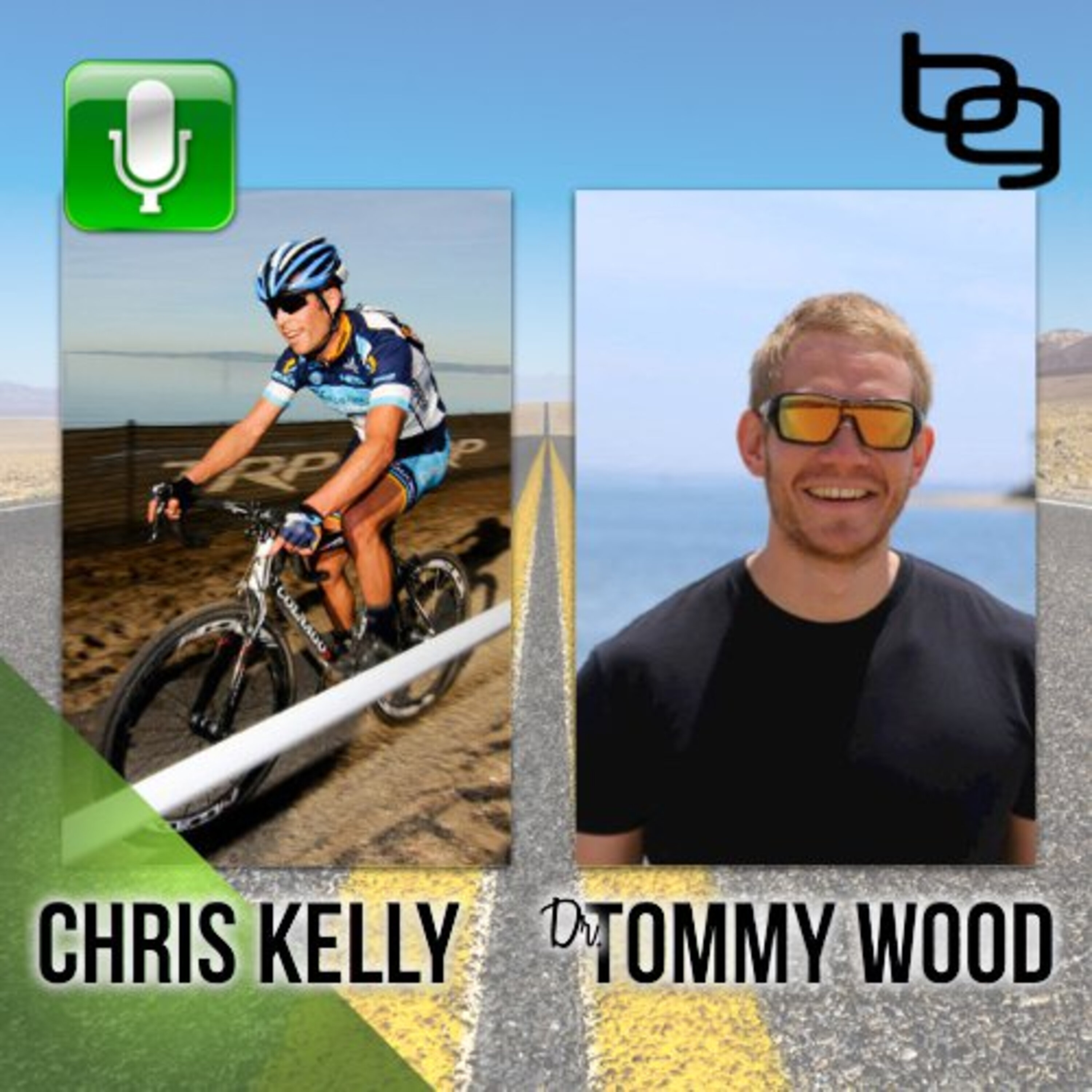
In today's episode, Chris is back, along with special guest Dr. Tommy Wood. The reason I've invited Chris back on the podcast is because he recently wrote me about new methods he's been using to identify how to increase EPO, increase oxygen consumption, beat anemia, boost red blood cells, and get double-digit percentage increases in power and endurance. I'm always looking for insider tips on how to maximize my own athletic performance, so figured it would be a good idea to have Chris on to talk about these new, little-known testing and treatment methods. Christopher Kelly is a computer scientist, pro mountain biker, certified Functional Diagnostic Nutrition Practitioner and graduate of the Kalish Institute. Chris is British but lives in California where he runs the functional medicine practice Nourish Balance Thrive. Chris has been on the podcast twice before, once to talk about salivary hormone testing for adrenal fatigue, and once to talk about organic acid testing. My other guest, Dr. Tommy Wood is a qualified medical doctor, graduating from Oxford University in 2011. He has a previous Bachelor's degree in Natural Sciences and Biochemistry from Cambridge University. After working as a junior doctor in the UK for two years, Dr Wood is now working towards a Ph.D. in neonatal brain metabolism at the University of Oslo, Norway. During our discussion, you'll discover:
-Why oxygen deliverability is so extremely crucial if you plan to compete at elevation or altitude, or you want to maximize your physical performance...
-The exact blood-building protocol Chris used to get a a 32-watt (9%) improvement in his cycling power at threshold...
-Specific conditions you probably get exposed to that directly shut down your ability to produce red blood cells and EPO and what you can do about it...
-How to know if you're deficient in any of the nutrients required to produce red blood cells...
-The common nutrient deficiencies (which Chris had) that severely hamper your oxygen delivery capabilities, and how to fix them...
-The best way to track and monitor whether excessive red blood cell destruction is occurring...
-Little known ways that you can actually lose red blood cells, and how to test to see if that is happening...
-And much more!
Resources from this episode:
-Dr. Michael Puchowicz website on doping and hematocrit
-The Oxygen Boosting Webinar downloadable .pdf
-NourishBalanceThrive.com (where you can use code BEN10 for a 10% discount on the testing and consulting services we discuss in this episode)
-the Paleo Autoimmune protocol that Chris followed
Do you have question, comments or feedback about how to build EPO, how to test your blood and biomarkers for precursors to oxygen production or anything else Christopher Kelly, Dr. Tommy Wood or I discuss in this episode? Leave your thoughts at BenGreenfieldFitness.com and we'll reply!
See omnystudio.com/listener for privacy information.
Available Results
Generated results are saved to your library for reuse and search.
Choose Template
Pick the result you want. You can review provider and model before generating.
A concise first-pass summary for understanding the episode quickly.
A comprehensive, source-grounded extraction of the reusable knowledge in an episode.
A comprehensive extraction focused on health practices, protocols, claims, and safety caveats.
A dedicated analysis of warnings, limitations, trade-offs, weak evidence, and uncertainty.
Repeatable methods, frameworks, mental models, processes, and systems.
Scientific findings, mechanisms, studies, hypotheses, and the limits of the evidence discussed.
A concise first-pass summary for understanding the episode quickly.
A detailed readable summary organized by chapter or topic.
A navigable map of subjects, topic flow, and suggested chapters.
A comprehensive, source-grounded extraction of the reusable knowledge in an episode.
Reusable atomic knowledge units extracted from the episode.
A comprehensive extraction focused on health practices, protocols, claims, and safety caveats.
A comprehensive extraction focused on opportunities, strategy, markets, and company building.
Explicit actions, next steps, habits, recommendations, and things to avoid.
A dedicated inventory of concrete resources named in the episode.
A dedicated analysis of warnings, limitations, trade-offs, weak evidence, and uncertainty.
A concise first-pass summary for understanding the episode quickly.
A detailed readable summary organized by chapter or topic.
A navigable map of subjects, topic flow, and suggested chapters.
A comprehensive, source-grounded extraction of the reusable knowledge in an episode.
Reusable atomic knowledge units extracted from the episode.
A comprehensive extraction focused on health practices, protocols, claims, and safety caveats.
A comprehensive extraction focused on opportunities, strategy, markets, and company building.
Scientific findings, mechanisms, studies, hypotheses, and the limits of the evidence discussed.
Technologies, AI models, technical methods, capabilities, limitations, and adoption implications.
Investment theses, assets, catalysts, valuation reasoning, time horizons, and risks.
Chronologies, actors, causes, consequences, turning points, and competing historical interpretations.
Policies, proposals, stakeholders, arguments, implementation constraints, and predicted effects.
Career paths, skills, hiring signals, workplace decisions, transitions, and limitations of the advice.
Behavioral mechanisms, biases, motivation, habits, emotions, interventions, and evidence limitations.
Economic mechanisms, incentives, indicators, market structure, forecasts, and uncertainty.
Leadership principles, team systems, organizational design, culture, feedback, and failure modes.
Audience, positioning, messaging, acquisition, retention, experiments, metrics, and failed approaches.
Teaching methods, learning strategies, practice, feedback, assessment, and effectiveness evidence.
Theses, premises, arguments, objections, values, thought experiments, and unresolved questions.
Communication patterns, conflict, boundaries, expectations, repair methods, and contextual limitations.
Books, papers, authors, courses, and other learning resources mentioned in the episode.
Repeatable methods, frameworks, mental models, processes, and systems.
Explicit actions, next steps, habits, recommendations, and things to avoid.
Memorable statements and important claims with attribution and source context.
A dedicated inventory of concrete resources named in the episode.
A dedicated analysis of warnings, limitations, trade-offs, weak evidence, and uncertainty.