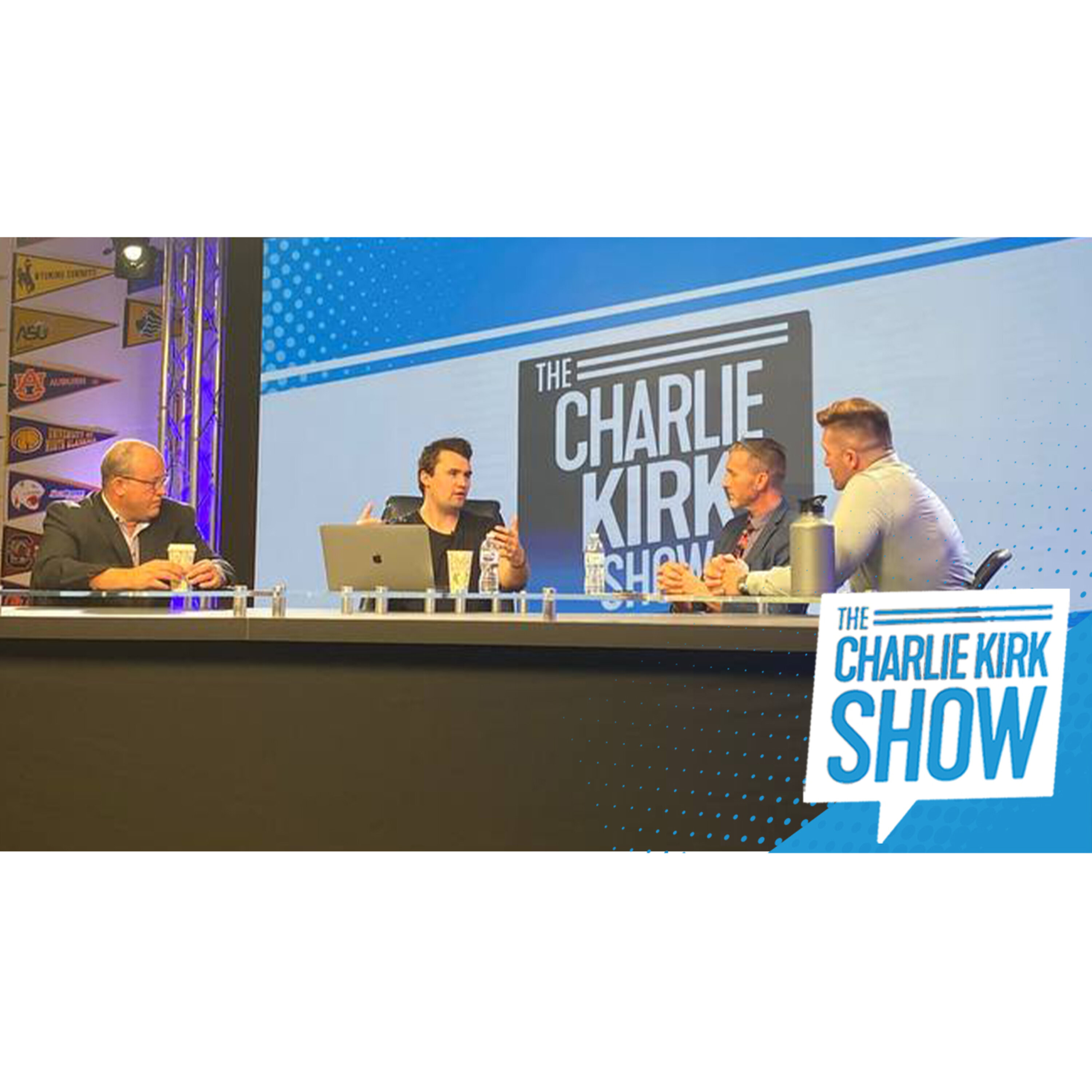
Three Doctors Take On Bill Gates, Big Pharma and Destroy the COVID Fear Narrative
By popular demand, Charlie welcomes his second white coat summit featuring Dr. Flavio Cadegiani, Endocrinologist and internist in Brazil and consultant for Brazilian Health Regulatory Agency (Anvisa); Dr. Pierre Kory, Joe Rogan's doctor and Pulmonary and Critical Care Specialist and the president, frontline Covid-19 critical care alliance (FLCCC); and Dr. Ryan Cole, pathologist, CEO and Medical Director of Cole Diagnostics. Charlie and the doctors break down the grip of dark money on the medical and pharma industries and how this corrupt incentive structure makes it extremely difficult for doctors to break away from the dominant Covid narratives. Also, what is the role of Bill Gates in the international public health community and how much money has he contributed to big media? What did the chief immunologist in Israel just admit and why is no one covering it? What happens if you get the vaccine before you get the illness? What happened with the Gamma variant? What is the connection between male pattern baldness and Covid outcomes? What are the real prospects of the Pfizer pill? What is the inside scoop surrounding Joe Rogan and his ongoing controversy? Thought crimes incoming, so please share this episode with your friends and family and help this show to keep getting the word out about early treatment and COVID truth.
Support the show: http://www.charliekirk.com/support
See omnystudio.com/listener for privacy information.
Available Results
Generated results are saved to your library for reuse and search.
Choose Template
Pick the result you want. You can review provider and model before generating.
A concise first-pass summary for understanding the episode quickly.
A comprehensive, source-grounded extraction of the reusable knowledge in an episode.
A comprehensive extraction focused on health practices, protocols, claims, and safety caveats.
A dedicated analysis of warnings, limitations, trade-offs, weak evidence, and uncertainty.
Repeatable methods, frameworks, mental models, processes, and systems.
Communication patterns, conflict, boundaries, expectations, repair methods, and contextual limitations.
A concise first-pass summary for understanding the episode quickly.
A detailed readable summary organized by chapter or topic.
A navigable map of subjects, topic flow, and suggested chapters.
A comprehensive, source-grounded extraction of the reusable knowledge in an episode.
Reusable atomic knowledge units extracted from the episode.
A comprehensive extraction focused on health practices, protocols, claims, and safety caveats.
A comprehensive extraction focused on opportunities, strategy, markets, and company building.
Explicit actions, next steps, habits, recommendations, and things to avoid.
A dedicated inventory of concrete resources named in the episode.
A dedicated analysis of warnings, limitations, trade-offs, weak evidence, and uncertainty.
A concise first-pass summary for understanding the episode quickly.
A detailed readable summary organized by chapter or topic.
A navigable map of subjects, topic flow, and suggested chapters.
A comprehensive, source-grounded extraction of the reusable knowledge in an episode.
Reusable atomic knowledge units extracted from the episode.
A comprehensive extraction focused on health practices, protocols, claims, and safety caveats.
A comprehensive extraction focused on opportunities, strategy, markets, and company building.
Scientific findings, mechanisms, studies, hypotheses, and the limits of the evidence discussed.
Technologies, AI models, technical methods, capabilities, limitations, and adoption implications.
Investment theses, assets, catalysts, valuation reasoning, time horizons, and risks.
Chronologies, actors, causes, consequences, turning points, and competing historical interpretations.
Policies, proposals, stakeholders, arguments, implementation constraints, and predicted effects.
Career paths, skills, hiring signals, workplace decisions, transitions, and limitations of the advice.
Behavioral mechanisms, biases, motivation, habits, emotions, interventions, and evidence limitations.
Economic mechanisms, incentives, indicators, market structure, forecasts, and uncertainty.
Leadership principles, team systems, organizational design, culture, feedback, and failure modes.
Audience, positioning, messaging, acquisition, retention, experiments, metrics, and failed approaches.
Teaching methods, learning strategies, practice, feedback, assessment, and effectiveness evidence.
Theses, premises, arguments, objections, values, thought experiments, and unresolved questions.
Communication patterns, conflict, boundaries, expectations, repair methods, and contextual limitations.
Books, papers, authors, courses, and other learning resources mentioned in the episode.
Repeatable methods, frameworks, mental models, processes, and systems.
Explicit actions, next steps, habits, recommendations, and things to avoid.
Memorable statements and important claims with attribution and source context.
A dedicated inventory of concrete resources named in the episode.
A dedicated analysis of warnings, limitations, trade-offs, weak evidence, and uncertainty.