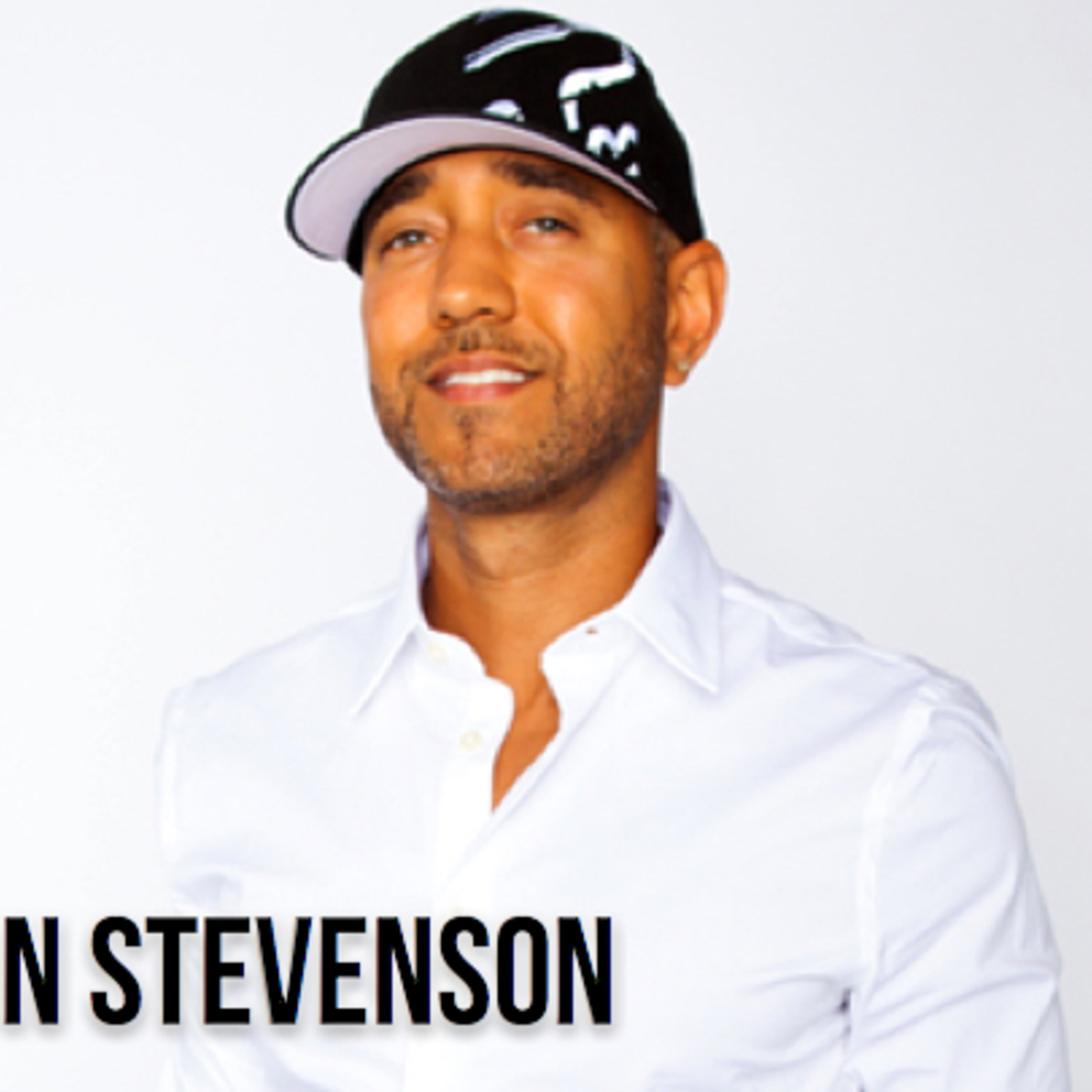
Sleep, Light, Alarms, Caffeine, Night Shifts, Naps, Sleeping Positions & More With Shawn Stevenson.
Sleep can be super confusing. I get lots of questions about it and have my own too...for example: Are there healthy substitutes for sunlight? What does it exactly mean to be a fast vs. a slow caffeine metabolizer? What's the ideal nap length? How can you limit the damage from a night shift? What's the ideal sleeping position? Should you use an alarm?
My guest on today's podcast is Shawn Stevenson just wrote the new book "Sleep Smarter: 21 Proven Tips to Sleep Your Way To a Better Body, Better Health and Bigger Success", and today we dig into plenty of detail on the topics he covers in this book, which I highly recommend as a comprehensive sleep resource.
Shawn is a graduate of The University of Missouri - St. Louis, where he studied business, biology and kinesiology, and went on to be the founder of Advanced Integrative Health Alliance, a company that provides wellness services for individuals and organizations worldwide.
Shawn has been featured in Entrepreneur magazine, Men's Health magazine, ESPN, FOX News, and many other media outlets. He is also a frequent keynote speaker for numerous organizations, universities, and conferences - all with outstanding reviews.
To learn more about Shawn visit TheModelHealthShow.com.
During our discussion, you'll discover: -How using natural medicine to rebuild his spine bones made Shawn want to write a book about sleep... -How Shawn and I differ in the ways we quantify and track sleep... -Whether there are sunlight substitutes you can use instead of sunlight... -How to measure your UVA vs. UVB exposure... -The difference between blue-light boxes, in-ear photo therapy and intranasal therapy... -How many sleep cycles you should get each night... -What Shawn thinks about the effect of caffeine on sleep if one is genetically tested and found to be a fast caffeine metabolizer... -Shawn's top tips for people who have to work graveyard or night shifts to avoid the metabolic issues that can arise with circadian rhythm disruptions... -The surprising link between gut bacteria and sleep... -Whether morning vs. evening exercise is best for sleep... -Shawn's thoughts on optimal nap time, and if you really need to limit your naps to less than 60 minutes... -What the ideal sleeping position is... -Why you should use black-out curtains and sleep masks even though your ancestors or "caveman" didn't... -The best type of alarm to use to optimize your sleep cycles... -And much more!
Resources from this episode: -What You Need To Know About Stem Cells previous podcast episode with Shawn -The OURA ring and HRV Ben uses for sleep tracking (and other sleep cycle tips) -How to use light to "hack" your sleep cycles -Intranasal light therapy -Apps to measure your UVA/UVB index -My podcast with sleep coach Nick Littlehales -The Sleep Cocktail supplement -Dr J. Sleep Solution pillow
Do you have questions, comments, or feedback for Shawn or I about what we discuss in this episode? Leave your thoughts at BenGreenfieldFitness.com and one of us will reply, and be sure to check out Shawn's book Sleep Smarter: 21 Proven Tips to Sleep Your Way To a Better Body, Better Health and Bigger Success.
See omnystudio.com/listener for privacy information.
Available Results
Generated results are saved to your library for reuse and search.
Choose Template
Pick the result you want. You can review provider and model before generating.
A concise first-pass summary for understanding the episode quickly.
A comprehensive, source-grounded extraction of the reusable knowledge in an episode.
A comprehensive extraction focused on health practices, protocols, claims, and safety caveats.
A dedicated analysis of warnings, limitations, trade-offs, weak evidence, and uncertainty.
Repeatable methods, frameworks, mental models, processes, and systems.
A comprehensive extraction focused on opportunities, strategy, markets, and company building.
A concise first-pass summary for understanding the episode quickly.
A detailed readable summary organized by chapter or topic.
A navigable map of subjects, topic flow, and suggested chapters.
A comprehensive, source-grounded extraction of the reusable knowledge in an episode.
Reusable atomic knowledge units extracted from the episode.
A comprehensive extraction focused on health practices, protocols, claims, and safety caveats.
A comprehensive extraction focused on opportunities, strategy, markets, and company building.
Explicit actions, next steps, habits, recommendations, and things to avoid.
A dedicated inventory of concrete resources named in the episode.
A dedicated analysis of warnings, limitations, trade-offs, weak evidence, and uncertainty.
A concise first-pass summary for understanding the episode quickly.
A detailed readable summary organized by chapter or topic.
A navigable map of subjects, topic flow, and suggested chapters.
A comprehensive, source-grounded extraction of the reusable knowledge in an episode.
Reusable atomic knowledge units extracted from the episode.
A comprehensive extraction focused on health practices, protocols, claims, and safety caveats.
A comprehensive extraction focused on opportunities, strategy, markets, and company building.
Scientific findings, mechanisms, studies, hypotheses, and the limits of the evidence discussed.
Technologies, AI models, technical methods, capabilities, limitations, and adoption implications.
Investment theses, assets, catalysts, valuation reasoning, time horizons, and risks.
Chronologies, actors, causes, consequences, turning points, and competing historical interpretations.
Policies, proposals, stakeholders, arguments, implementation constraints, and predicted effects.
Career paths, skills, hiring signals, workplace decisions, transitions, and limitations of the advice.
Behavioral mechanisms, biases, motivation, habits, emotions, interventions, and evidence limitations.
Economic mechanisms, incentives, indicators, market structure, forecasts, and uncertainty.
Leadership principles, team systems, organizational design, culture, feedback, and failure modes.
Audience, positioning, messaging, acquisition, retention, experiments, metrics, and failed approaches.
Teaching methods, learning strategies, practice, feedback, assessment, and effectiveness evidence.
Theses, premises, arguments, objections, values, thought experiments, and unresolved questions.
Communication patterns, conflict, boundaries, expectations, repair methods, and contextual limitations.
Books, papers, authors, courses, and other learning resources mentioned in the episode.
Repeatable methods, frameworks, mental models, processes, and systems.
Explicit actions, next steps, habits, recommendations, and things to avoid.
Memorable statements and important claims with attribution and source context.
A dedicated inventory of concrete resources named in the episode.
A dedicated analysis of warnings, limitations, trade-offs, weak evidence, and uncertainty.