Antibiotics in Meat | Fatal Conveniences™
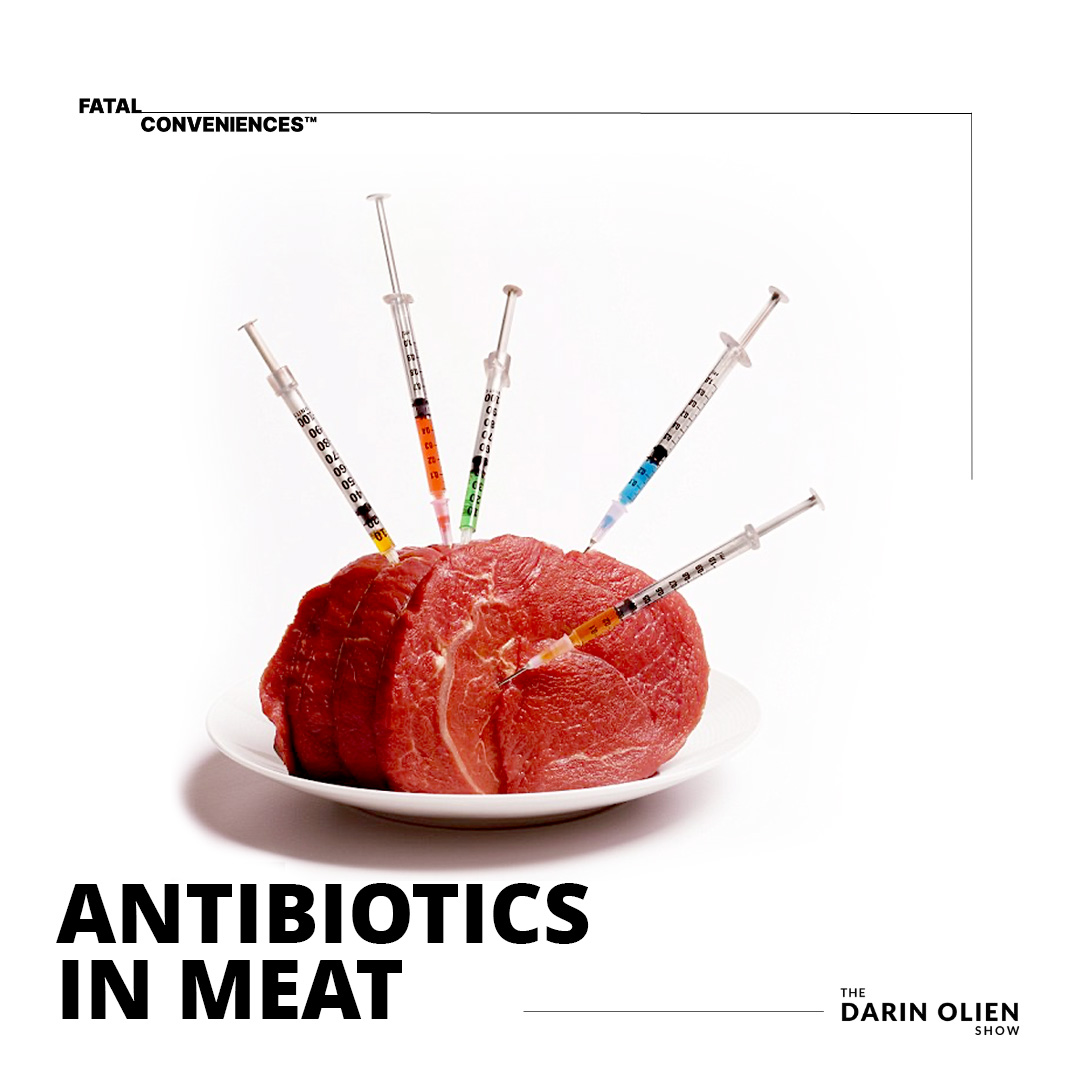
When it comes to animal agriculture, most animals aren't living freely pasturing in wide-spaced green areas. Breeders and animal farms are more likely to be torturous prisons than the happy Uncle Bill farm that appears on the logo of your favorite hamburgers. And guess what? It comes at a cost to your health. The animal industry is regulated differently by each country, but there's one thing in common: meat from sick animals can't be commercialized, but with the living conditions of the animals, they are inevitably going to get sick. So "naturally", the animals in farms are medically treated to prevent or combat infectious diseases, most of which are treated with antibiotics. You know the age-old saying: You are what you eat. So what happens to your health when the meat you are eating is pumped with antibiotics? This is what we explore in this episode of Fatal Conveniences™. What we discuss: 06:43: What are the dangers of antibiotic resistance? 08:07: How are these animals treated? 10:19: How is this a public health issue? 14:21: What can you do about it? Reliable sources where you can learn more:
- A Review of Antibiotic Use in Food Animals: Perspective, Policy, and Potential: https://www.ncbi.nlm.nih.gov/pmc/articles/PMC3234384/
- Food Animals and Antimicrobials: Impacts on Human Health: https://www.ncbi.nlm.nih.gov/pmc/articles/PMC3194830/
- Use of antimicrobials in food animals and impact of transmission of antimicrobial resistance on humans: https://www.sciencedirect.com/science/article/pii/S2590053620301099
- Comparison of different approaches to antibiotic restriction in food-producing animals: stratified results from a systematic review and meta-analysis: https://gh.bmj.com/content/4/4/e001710.abstract
- Use of antibiotics in animal production and its impact on human health: https://foodchemistryjournal.com/jfcn/articles/v6n1/jfcn-082-naila-a-oliveira.pdf
More description
When it comes to animal agriculture, most animals aren't living freely pasturing in wide-spaced green areas. Breeders and animal farms are more likely to be torturous prisons than the happy Uncle Bill farm that appears on the logo of your favorite hamburgers. And guess what? It comes at a cost to your health. The animal industry is regulated differently by each country, but there's one thing in common: meat from sick animals can't be commercialized, but with the living conditions of the animals, they are inevitably going to get sick. So "naturally", the animals in farms are medically treated to prevent or combat infectious diseases, most of which are treated with antibiotics. You know the age-old saying: You are what you eat. So what happens to your health when the meat you are eating is pumped with antibiotics? This is what we explore in this episode of Fatal Conveniences™. What we discuss: 06:43: What are the dangers of antibiotic resistance? 08:07: How are these animals treated? 10:19: How is this a public health issue? 14:21: What can you do about it? Reliable sources where you can learn more:
- A Review of Antibiotic Use in Food Animals: Perspective, Policy, and Potential: https://www.ncbi.nlm.nih.gov/pmc/articles/PMC3234384/
- Food Animals and Antimicrobials: Impacts on Human Health: https://www.ncbi.nlm.nih.gov/pmc/articles/PMC3194830/
- Use of antimicrobials in food animals and impact of transmission of antimicrobial resistance on humans: https://www.sciencedirect.com/science/article/pii/S2590053620301099
- Comparison of different approaches to antibiotic restriction in food-producing animals: stratified results from a systematic review and meta-analysis: https://gh.bmj.com/content/4/4/e001710.abstract
- Use of antibiotics in animal production and its impact on human health: https://foodchemistryjournal.com/jfcn/articles/v6n1/jfcn-082-naila-a-oliveira.pdf
2023-06-08
19 min
Listen elsewhere
Available Results
Generated results are saved to your library for reuse and search.
No generated results are available for this episode yet.
Transcript
No transcript is available for this episode yet.
Sign in to generate a transcript for review.
Sign in
Chapters
No chapters available.