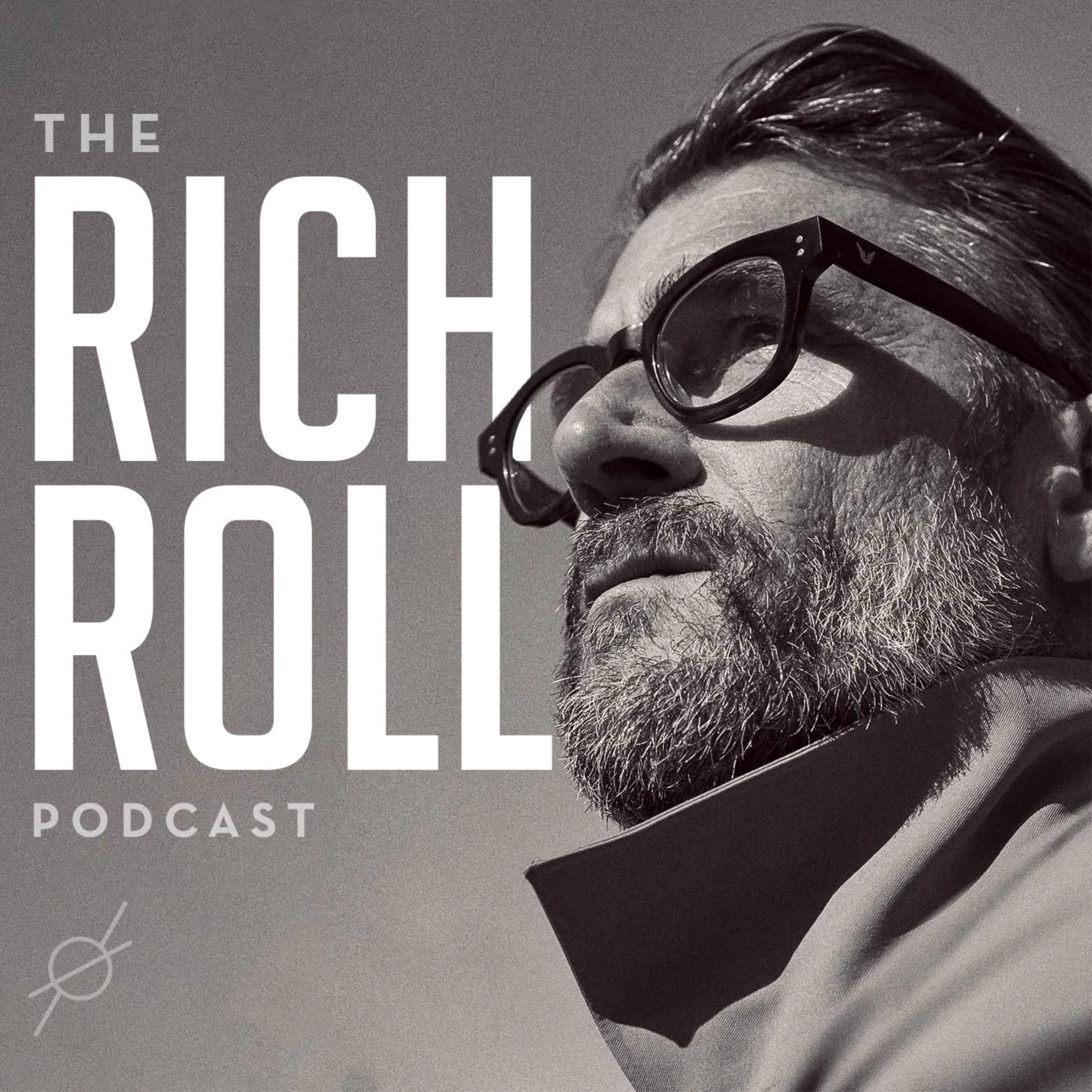
Rip Esselstyn Is PLANTSTRONG! (And Why You Should Be Too)
Friend, mentor and original Plantstrong pioneer Rip Esselstyn and I go way back.
Both swimmers, we crossed paths at many a meet — as young teens and later as collegiate rivals (Rip was always far more accomplished than I). During the early stages of my transition to a plant-based diet, I vividly recall perusing Facebook when I stumbled upon Rip, who just happened to be on the precipice of publishing his first book on the very subject I was attempting to master. From that moment forward, Rip became a lighthouse — illuminating my path as a generous friend and cheerleader always available to share his knowledge, experience and inspiration.
Today, Rip (finally) joins the podcast to share that knowledge, experience and inspiration with you — a hotly anticipated master course on the incredible power of a whole-food, plant-based diet to prevent and reverse disease, promote optimal health, and fuel your athletic dreams.
Educated at the University of Texas at Austin, Rip was a three-time All-American swimmer before spending a decade as one of the premier professional triathletes in the world. He then joined the Austin Fire Department where he introduced his passion for a whole-food, plant-based diet to Austin’s Engine 2 Firehouse in order to rescue a firefighting brother’s health. To document his success he wrote the New York Times' bestselling book, The Engine 2 Diet, which demonstrates the irrefutable connection between a plant-based diet and good health.
Rip left his job as a firefighter in 2009 to team up with Whole Foods Market as one of their Healthy Eating Partners to raise awareness for Whole Foods employees, customers and communities about the benefits of eating a plant-strong diet. As the founder of Engine 2, Rip develops and implements a range of programs and events geared toward education, inspiring and nurturing plant-strong living for individuals, families and organizations across the globe.
A New York Times bestselling author of four books, Rip has appeared on hundreds of radio and national television shows, including the Today Show, CBS Sunday Morning, Good Morning America and The Dr. Oz Show. Each year his family produces a series of all-inclusive, immersive events, culminating in Camp Plantstock — an extraordinary experience I highly recommend to anyone looking to reboot their lifestyle. Finally, Rip's newest book, The Engine 2 Cookbook hits bookstores everywhere on December 26, 2017.
This is a conversation I’ve been anticipating since the first episode of this podcast
Enjoy!
Rich
Learn more about your ad choices. Visit podcastchoices.com/adchoices
Available Results
Generated results are saved to your library for reuse and search.
Choose Template
Pick the result you want. You can review provider and model before generating.
A concise first-pass summary for understanding the episode quickly.
A comprehensive, source-grounded extraction of the reusable knowledge in an episode.
A comprehensive extraction focused on health practices, protocols, claims, and safety caveats.
A dedicated analysis of warnings, limitations, trade-offs, weak evidence, and uncertainty.
Repeatable methods, frameworks, mental models, processes, and systems.
A comprehensive extraction focused on opportunities, strategy, markets, and company building.
A concise first-pass summary for understanding the episode quickly.
A detailed readable summary organized by chapter or topic.
A navigable map of subjects, topic flow, and suggested chapters.
A comprehensive, source-grounded extraction of the reusable knowledge in an episode.
Reusable atomic knowledge units extracted from the episode.
A comprehensive extraction focused on health practices, protocols, claims, and safety caveats.
A comprehensive extraction focused on opportunities, strategy, markets, and company building.
Explicit actions, next steps, habits, recommendations, and things to avoid.
A dedicated inventory of concrete resources named in the episode.
A dedicated analysis of warnings, limitations, trade-offs, weak evidence, and uncertainty.
A concise first-pass summary for understanding the episode quickly.
A detailed readable summary organized by chapter or topic.
A navigable map of subjects, topic flow, and suggested chapters.
A comprehensive, source-grounded extraction of the reusable knowledge in an episode.
Reusable atomic knowledge units extracted from the episode.
A comprehensive extraction focused on health practices, protocols, claims, and safety caveats.
A comprehensive extraction focused on opportunities, strategy, markets, and company building.
Scientific findings, mechanisms, studies, hypotheses, and the limits of the evidence discussed.
Technologies, AI models, technical methods, capabilities, limitations, and adoption implications.
Investment theses, assets, catalysts, valuation reasoning, time horizons, and risks.
Chronologies, actors, causes, consequences, turning points, and competing historical interpretations.
Policies, proposals, stakeholders, arguments, implementation constraints, and predicted effects.
Career paths, skills, hiring signals, workplace decisions, transitions, and limitations of the advice.
Behavioral mechanisms, biases, motivation, habits, emotions, interventions, and evidence limitations.
Economic mechanisms, incentives, indicators, market structure, forecasts, and uncertainty.
Leadership principles, team systems, organizational design, culture, feedback, and failure modes.
Audience, positioning, messaging, acquisition, retention, experiments, metrics, and failed approaches.
Teaching methods, learning strategies, practice, feedback, assessment, and effectiveness evidence.
Theses, premises, arguments, objections, values, thought experiments, and unresolved questions.
Communication patterns, conflict, boundaries, expectations, repair methods, and contextual limitations.
Books, papers, authors, courses, and other learning resources mentioned in the episode.
Repeatable methods, frameworks, mental models, processes, and systems.
Explicit actions, next steps, habits, recommendations, and things to avoid.
Memorable statements and important claims with attribution and source context.
A dedicated inventory of concrete resources named in the episode.
A dedicated analysis of warnings, limitations, trade-offs, weak evidence, and uncertainty.