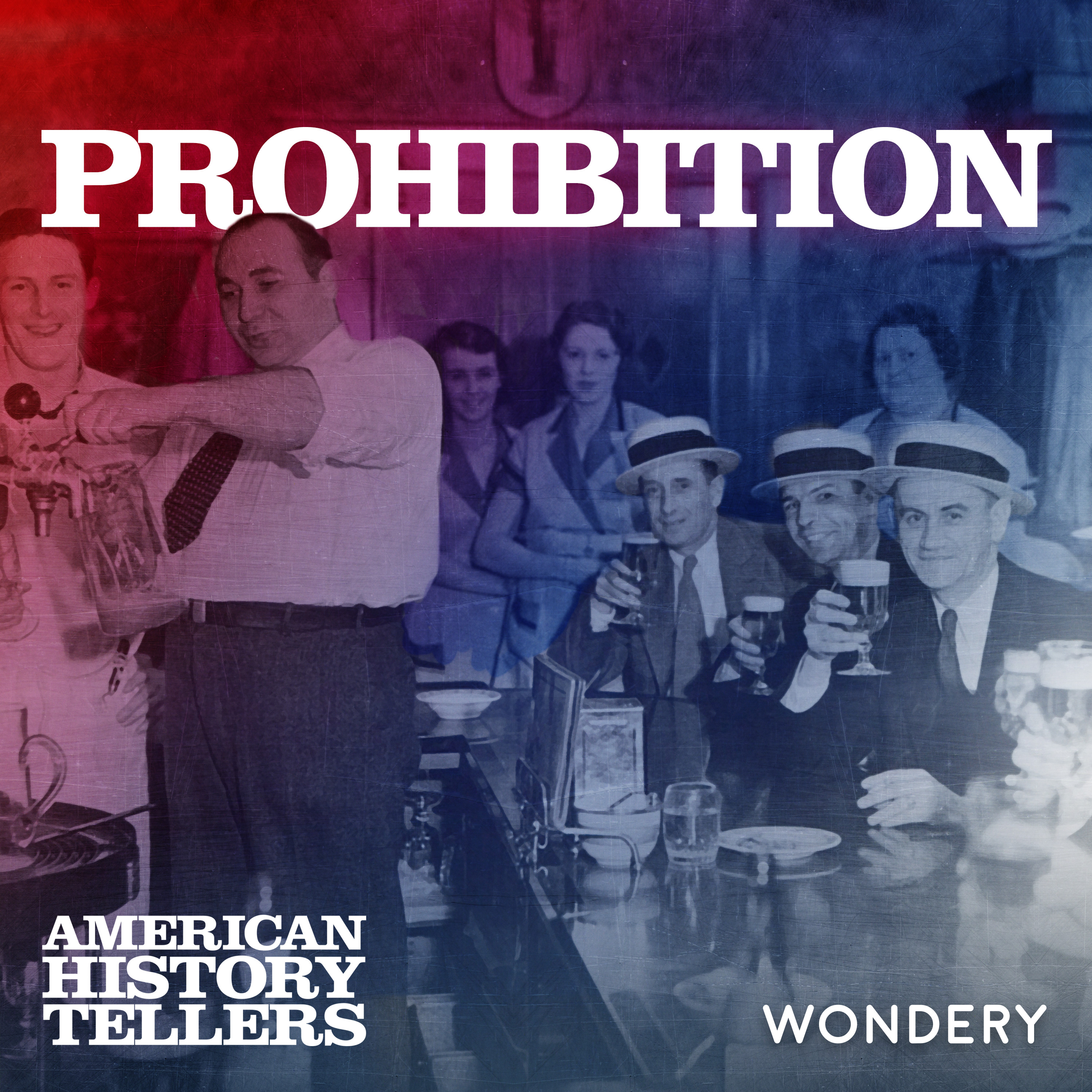
Prohibition - Closing Time | 1
On January 17, 1920, the United States passed the 18th Amendment to the US Constitution, ushering in a 13-year dry spell known as Prohibition. But how did a country that loved to drink turn its back on alcohol? How did two-thirds of both the House and Senate and three-fourths of State legislatures all agree that going dry was the way to get the country going forward? It had always been a long, uphill battle for the temperance movement, but towards the end of the nineteenth century, certain forces aligned: fears of industrialization, urbanization and immigration. Traditional American life was changing - fast - and many people looked for a scapegoat: the saloon.
For more information on how Prohibition came to be, check out Professor David J. Hanson’s, “Alcohol Problems and Solutions,” a comprehensive, interactive site that outlines all the various stakeholders in the Noble Experiment.
Daniel Okrent’s Last Call: The Rise and Fall of Prohibition is a key text for learning more about Prohibition and how it came about. And, to narrow in on New York, itself, Michael Lerner’s Dry Manhattan: Prohibition in New York City is a tremendous resource.
The bootlegger character was based on a real story, A Bootlegger’s Story: How I Started, which ran in the New Yorker in 1926.
For more on the Atlanta race riots and how they connect to Prohibition, check out this story on NPR, in which professor Cliff Kuhn describes his research. To learn more about the intersection between race and the policing of Prohibition, Lisa McGirr’s The War on Alcohol: Prohibition and the Rise of the American State is invaluable.
Further references can be found in America Walks Into a Bar: A Spirited History of Taverns and Saloons, Speakeasies and Grog Shops by Christine Sismondo.
Support us by supporting our sponsors!
See Privacy Policy at https://art19.com/privacy and California Privacy Notice at https://art19.com/privacy#do-not-sell-my-info.
Available Results
Generated results are saved to your library for reuse and search.
Choose Template
Pick the result you want. You can review provider and model before generating.
A concise first-pass summary for understanding the episode quickly.
A comprehensive, source-grounded extraction of the reusable knowledge in an episode.
Scientific findings, mechanisms, studies, hypotheses, and the limits of the evidence discussed.
A dedicated analysis of warnings, limitations, trade-offs, weak evidence, and uncertainty.
Memorable statements and important claims with attribution and source context.
Technologies, AI models, technical methods, capabilities, limitations, and adoption implications.
A concise first-pass summary for understanding the episode quickly.
A detailed readable summary organized by chapter or topic.
A navigable map of subjects, topic flow, and suggested chapters.
A comprehensive, source-grounded extraction of the reusable knowledge in an episode.
Reusable atomic knowledge units extracted from the episode.
A comprehensive extraction focused on health practices, protocols, claims, and safety caveats.
A comprehensive extraction focused on opportunities, strategy, markets, and company building.
Explicit actions, next steps, habits, recommendations, and things to avoid.
A dedicated inventory of concrete resources named in the episode.
A dedicated analysis of warnings, limitations, trade-offs, weak evidence, and uncertainty.
A concise first-pass summary for understanding the episode quickly.
A detailed readable summary organized by chapter or topic.
A navigable map of subjects, topic flow, and suggested chapters.
A comprehensive, source-grounded extraction of the reusable knowledge in an episode.
Reusable atomic knowledge units extracted from the episode.
A comprehensive extraction focused on health practices, protocols, claims, and safety caveats.
A comprehensive extraction focused on opportunities, strategy, markets, and company building.
Scientific findings, mechanisms, studies, hypotheses, and the limits of the evidence discussed.
Technologies, AI models, technical methods, capabilities, limitations, and adoption implications.
Investment theses, assets, catalysts, valuation reasoning, time horizons, and risks.
Chronologies, actors, causes, consequences, turning points, and competing historical interpretations.
Policies, proposals, stakeholders, arguments, implementation constraints, and predicted effects.
Career paths, skills, hiring signals, workplace decisions, transitions, and limitations of the advice.
Behavioral mechanisms, biases, motivation, habits, emotions, interventions, and evidence limitations.
Economic mechanisms, incentives, indicators, market structure, forecasts, and uncertainty.
Leadership principles, team systems, organizational design, culture, feedback, and failure modes.
Audience, positioning, messaging, acquisition, retention, experiments, metrics, and failed approaches.
Teaching methods, learning strategies, practice, feedback, assessment, and effectiveness evidence.
Theses, premises, arguments, objections, values, thought experiments, and unresolved questions.
Communication patterns, conflict, boundaries, expectations, repair methods, and contextual limitations.
Books, papers, authors, courses, and other learning resources mentioned in the episode.
Repeatable methods, frameworks, mental models, processes, and systems.
Explicit actions, next steps, habits, recommendations, and things to avoid.
Memorable statements and important claims with attribution and source context.
A dedicated inventory of concrete resources named in the episode.
A dedicated analysis of warnings, limitations, trade-offs, weak evidence, and uncertainty.