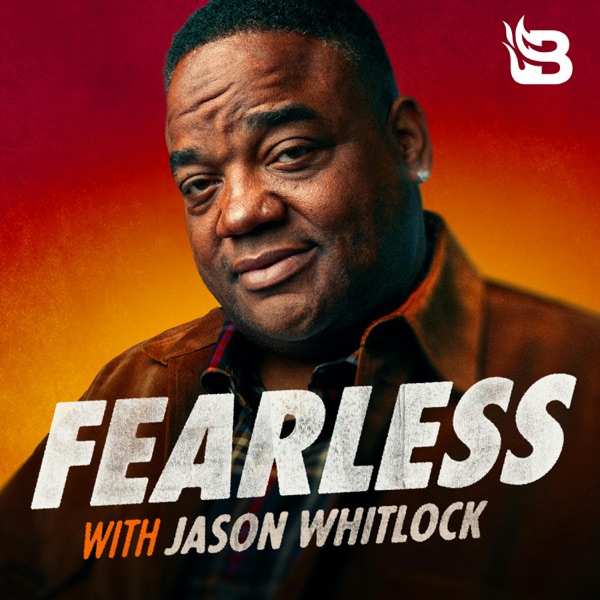
Ep 229 | Scrap Juneteenth — Celebrate the Rebirth of America, Not the Death of George Floyd
Last year, President Joe Biden made Juneteenth the newest federal holiday. The day is said to commemorate slaves in Texas hearing the news of Abraham Lincoln’s Emancipation Proclamation and of their impending freedom on June 19, 1865. Let’s set aside the fact that the 13th Amendment wasn’t ratified until December 1865 and slavery was not officially banned in President Biden’s home state of Delaware until 1901. June 19, 2020, was the first time that many Americans heard the word Juneteenth, but it wasn’t in connection with freed slaves from a century and a half ago. It was a part of the protests following the death of George Floyd. Jason believes the connection to Floyd is problematic. “I suspect most people don’t fully comprehend or get Juneteenth. It’s a national holiday because of the death of George Floyd, not because our political leaders had a sincere interest in celebrating the emancipation of slaves in Texas or across the South.” Jason has an alternative to the polarizing, over-politicized holiday. “Fearless” contributor Delano Squires shares his thoughts and discusses the problem with the colors red, green, and black being associated with Juneteenth. "Fearless" soldier Dave Shannon answers the question of whether America will ever accept the holiday as a legitimate one. Plus, Shemeka Michelle has some words for Joy Reid.
Today's Sponsor:
Two FREE 18-ounce Prime, center cut Ribeyes?! What are you waiting for? Get it by using my code, “FEARLESS”, or by visiting https://GoodRanchers.com/FEARLESS.
Learn more about your ad choices. Visit megaphone.fm/adchoices
Available Results
Generated results are saved to your library for reuse and search.
Choose Template
Pick the result you want. You can review provider and model before generating.
A concise first-pass summary for understanding the episode quickly.
A comprehensive, source-grounded extraction of the reusable knowledge in an episode.
Technologies, AI models, technical methods, capabilities, limitations, and adoption implications.
Repeatable methods, frameworks, mental models, processes, and systems.
A dedicated analysis of warnings, limitations, trade-offs, weak evidence, and uncertainty.
A dedicated inventory of concrete resources named in the episode.
A concise first-pass summary for understanding the episode quickly.
A detailed readable summary organized by chapter or topic.
A navigable map of subjects, topic flow, and suggested chapters.
A comprehensive, source-grounded extraction of the reusable knowledge in an episode.
Reusable atomic knowledge units extracted from the episode.
A comprehensive extraction focused on health practices, protocols, claims, and safety caveats.
A comprehensive extraction focused on opportunities, strategy, markets, and company building.
Explicit actions, next steps, habits, recommendations, and things to avoid.
A dedicated inventory of concrete resources named in the episode.
A dedicated analysis of warnings, limitations, trade-offs, weak evidence, and uncertainty.
A concise first-pass summary for understanding the episode quickly.
A detailed readable summary organized by chapter or topic.
A navigable map of subjects, topic flow, and suggested chapters.
A comprehensive, source-grounded extraction of the reusable knowledge in an episode.
Reusable atomic knowledge units extracted from the episode.
A comprehensive extraction focused on health practices, protocols, claims, and safety caveats.
A comprehensive extraction focused on opportunities, strategy, markets, and company building.
Scientific findings, mechanisms, studies, hypotheses, and the limits of the evidence discussed.
Technologies, AI models, technical methods, capabilities, limitations, and adoption implications.
Investment theses, assets, catalysts, valuation reasoning, time horizons, and risks.
Chronologies, actors, causes, consequences, turning points, and competing historical interpretations.
Policies, proposals, stakeholders, arguments, implementation constraints, and predicted effects.
Career paths, skills, hiring signals, workplace decisions, transitions, and limitations of the advice.
Behavioral mechanisms, biases, motivation, habits, emotions, interventions, and evidence limitations.
Economic mechanisms, incentives, indicators, market structure, forecasts, and uncertainty.
Leadership principles, team systems, organizational design, culture, feedback, and failure modes.
Audience, positioning, messaging, acquisition, retention, experiments, metrics, and failed approaches.
Teaching methods, learning strategies, practice, feedback, assessment, and effectiveness evidence.
Theses, premises, arguments, objections, values, thought experiments, and unresolved questions.
Communication patterns, conflict, boundaries, expectations, repair methods, and contextual limitations.
Books, papers, authors, courses, and other learning resources mentioned in the episode.
Repeatable methods, frameworks, mental models, processes, and systems.
Explicit actions, next steps, habits, recommendations, and things to avoid.
Memorable statements and important claims with attribution and source context.
A dedicated inventory of concrete resources named in the episode.
A dedicated analysis of warnings, limitations, trade-offs, weak evidence, and uncertainty.