S4 EP2: Living in a Material World - Spotlight People, Scapegoats, & Staying Clever
What happens when someone seems to value your talent, creativity, or helpfulness more than they value you?
In “Living in a Material World: Spotlight People, Scapegoats, and Staying Clever,” I explore something I desperately needed an adult to explain when I was young: other people do not necessarily think the way you do. That does not mean everyone is bad, and it certainly does not mean kids should become frightened or suspicious. It means we can keep our good hearts while learning to notice patterns, set boundaries, and choose carefully who receives access to our time, trust, and ideas.
We talk about “spotlight people,” the surprising strengths often found in the person who becomes the scapegoat, and why being useful to someone is not the same as being valued by them. For neurodivergent kids—and every helper, fixer, creative engine, and brave truth-teller—this episode offers permission to remain kind without measuring self-worth by how much you can do for everyone else.
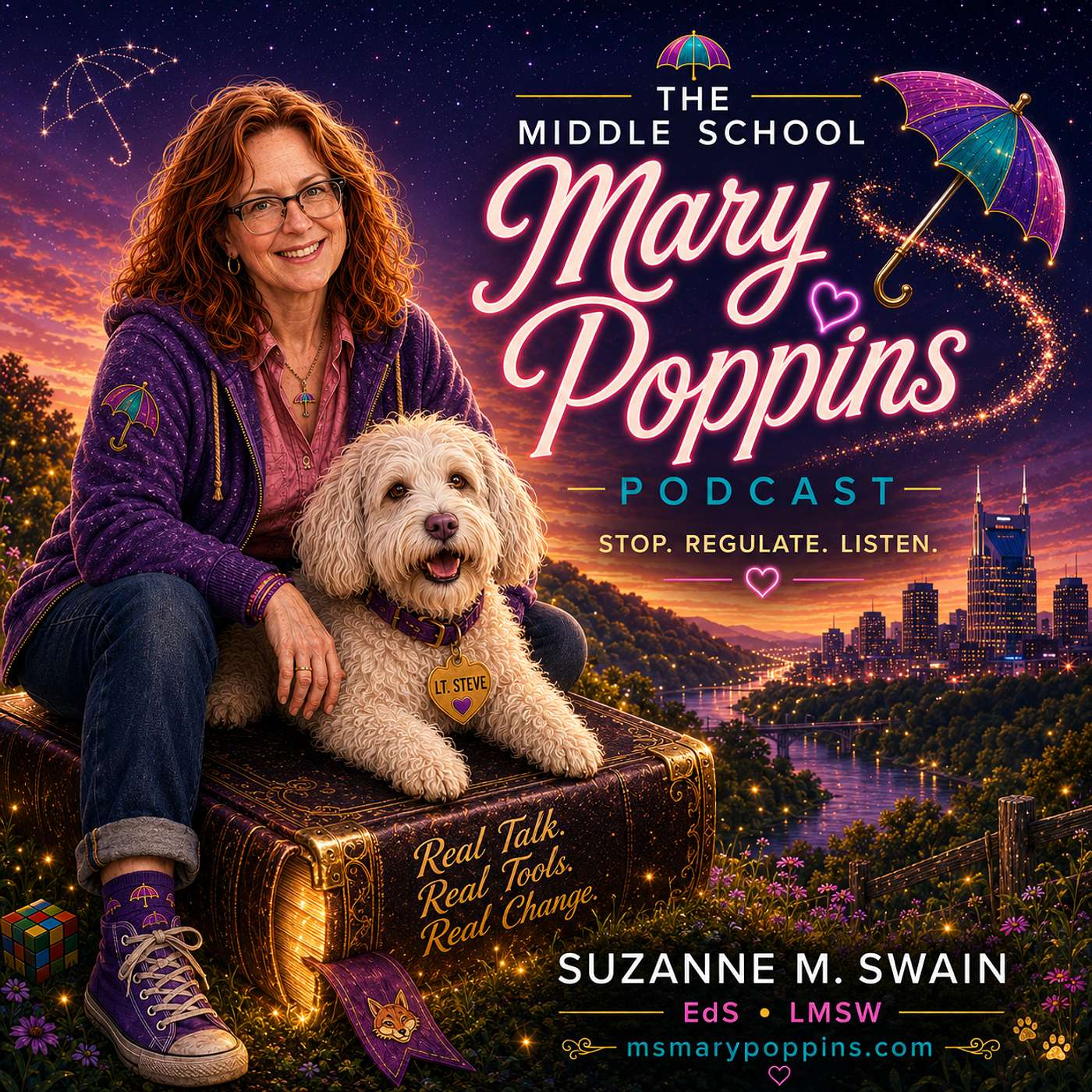
This week’s kid question takes us to India and gives Lieutenant Steve an opportunity to demonstrate his most important superpower. We also explore why animals can feel especially safe to neurodivergent young people, why support is a verb, and why my granny loved to say, “In Dog We Trust.”
This is a hopeful flashlight conversation—not a warning siren. There is also Madonna, Dolly Parton, a Disney-villain detour, and a dog guarding the bedroom from invaders who never arrive.
Recommended for middle schoolers ages 10–15 and the parents, educators, counselors, and caregivers who love them.
Visit https://msmarypoppins.com for more about the podcast and upcoming downloadable materials that will help families, teachers, and young people carry these ideas into real life.
Stay clever, little foxes. 🦊💜☂️🍪
More description
What happens when someone seems to value your talent, creativity, or helpfulness more than they value you?
In “Living in a Material World: Spotlight People, Scapegoats, and Staying Clever,” I explore something I desperately needed an adult to explain when I was young: other people do not necessarily think the way you do. That does not mean everyone is bad, and it certainly does not mean kids should become frightened or suspicious. It means we can keep our good hearts while learning to notice patterns, set boundaries, and choose carefully who receives access to our time, trust, and ideas.
We talk about “spotlight people,” the surprising strengths often found in the person who becomes the scapegoat, and why being useful to someone is not the same as being valued by them. For neurodivergent kids—and every helper, fixer, creative engine, and brave truth-teller—this episode offers permission to remain kind without measuring self-worth by how much you can do for everyone else.
This week’s kid question takes us to India and gives Lieutenant Steve an opportunity to demonstrate his most important superpower. We also explore why animals can feel especially safe to neurodivergent young people, why support is a verb, and why my granny loved to say, “In Dog We Trust.”
This is a hopeful flashlight conversation—not a warning siren. There is also Madonna, Dolly Parton, a Disney-villain detour, and a dog guarding the bedroom from invaders who never arrive.
Recommended for middle schoolers ages 10–15 and the parents, educators, counselors, and caregivers who love them.
Visit https://msmarypoppins.com for more about the podcast and upcoming downloadable materials that will help families, teachers, and young people carry these ideas into real life.
Stay clever, little foxes. 🦊💜☂️🍪
Listen elsewhere
Available Results
Generated results are saved to your library for reuse and search.