How To Cease Endless Fad Diets (And The #1 Question You Must Ask Yourself About Food).
I get diet books in the mail all the time. No, I don't have some kind of online shopping fetish for diet books. People just send them to me. Unsolicited. As a matter of fact, it's a well-known fact in the health and nutrition industry that one of the fastest ways to "make a buck" is to write and sell a diet book. It plays on the psychology that people are constantly looking for next answer to the diet that's not currently working for them. Or they're bored. Or have grass-is-always-greener syndrome.
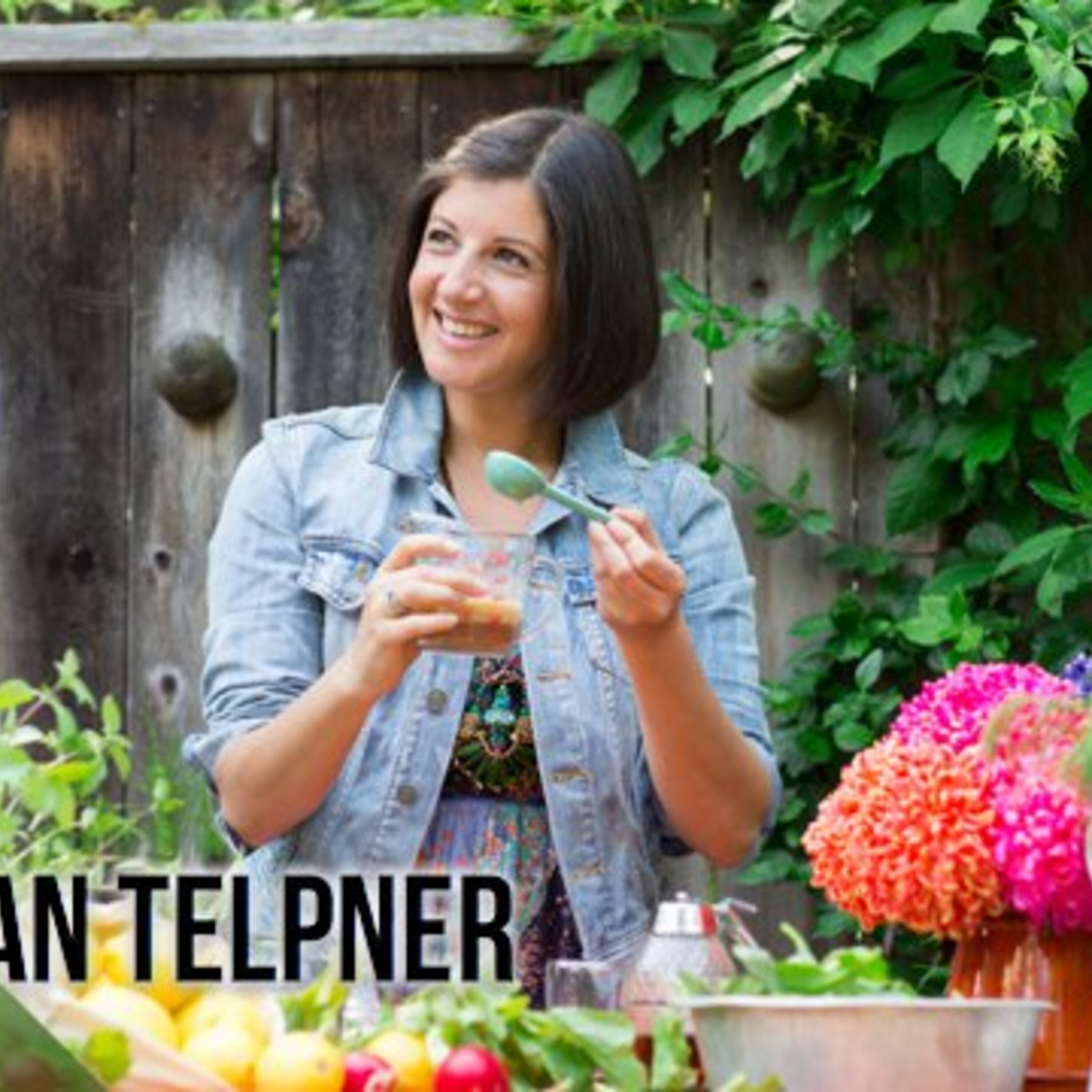
Anyhow, as you can imagine, I was quite pleased when I received an undieting book in the mail last week. UnDiet: Eat Your Way To Vibrant Health, which includes a plan for an 8-week transformation and more than 35 delicious gluten-free, plant-based recipes. Meghan Telpner, the author of UnDiet is a Toronto-based author, speaker, and nutritionist. She used to have Crohn's disease, but after throwing up her hands in frustration at the way the modern medical system was trying to heal her, and instead embarking upon her own path of healing, she's fixed her gut, and learned quite a bit about food, exercise, and psychology along the way.
If you find yourself constantly caught up in new diets... ....or you deal with stress constantly damaging your gut... ...or you have Crohn's or some other kind of gut issue... ...or you look good on the outside but feel like crap on the inside... ...then this episode is a must-listen for you.
In it, you'll discover:
-The exact steps Meghan used (after nearly having her colon removed from debilitating Crohn's disease) healed her entire gut in just 4 weeks...
-Why you should learn to cook, even if you have someone or some service who can do all the healthy cooking for you...
-What to do when you see a food, or a workout, or some other activity and it just doesn't "feel right"...
-Why Meghan thinks yoga is harder than a stairclimber or a high-intensity workout...
-Why a cute outfit doesn't mean much if you feel like total crappola...
-How you can get around the awkwardness of questioning paradigms, and being "that person" at a dinner party who perhaps doesn't use a microwave or drinks green smoothies...
-In the end, the most important question to ask yourself when it comes to "undieting"...
-And much more!
Resources from this episode:
-Book Ben mentions early in episode: The Hidden Half of Nature: Microbial Roots Of Life & Health
-Another book Ben mentions: Reclaiming Conversation
Do you have questions, comments or feedback about how to quit dieting? Leave your thoughts at BenGreenfieldFitness.com and either Meghan or I will reply!
See omnystudio.com/listener for privacy information.
Available Results
Generated results are saved to your library for reuse and search.
Choose Template
Pick the result you want. You can review provider and model before generating.
A concise first-pass summary for understanding the episode quickly.
A comprehensive, source-grounded extraction of the reusable knowledge in an episode.
A comprehensive extraction focused on health practices, protocols, claims, and safety caveats.
A dedicated analysis of warnings, limitations, trade-offs, weak evidence, and uncertainty.
Repeatable methods, frameworks, mental models, processes, and systems.
Technologies, AI models, technical methods, capabilities, limitations, and adoption implications.
A concise first-pass summary for understanding the episode quickly.
A detailed readable summary organized by chapter or topic.
A navigable map of subjects, topic flow, and suggested chapters.
A comprehensive, source-grounded extraction of the reusable knowledge in an episode.
Reusable atomic knowledge units extracted from the episode.
A comprehensive extraction focused on health practices, protocols, claims, and safety caveats.
A comprehensive extraction focused on opportunities, strategy, markets, and company building.
Explicit actions, next steps, habits, recommendations, and things to avoid.
A dedicated inventory of concrete resources named in the episode.
A dedicated analysis of warnings, limitations, trade-offs, weak evidence, and uncertainty.
A concise first-pass summary for understanding the episode quickly.
A detailed readable summary organized by chapter or topic.
A navigable map of subjects, topic flow, and suggested chapters.
A comprehensive, source-grounded extraction of the reusable knowledge in an episode.
Reusable atomic knowledge units extracted from the episode.
A comprehensive extraction focused on health practices, protocols, claims, and safety caveats.
A comprehensive extraction focused on opportunities, strategy, markets, and company building.
Scientific findings, mechanisms, studies, hypotheses, and the limits of the evidence discussed.
Technologies, AI models, technical methods, capabilities, limitations, and adoption implications.
Investment theses, assets, catalysts, valuation reasoning, time horizons, and risks.
Chronologies, actors, causes, consequences, turning points, and competing historical interpretations.
Policies, proposals, stakeholders, arguments, implementation constraints, and predicted effects.
Career paths, skills, hiring signals, workplace decisions, transitions, and limitations of the advice.
Behavioral mechanisms, biases, motivation, habits, emotions, interventions, and evidence limitations.
Economic mechanisms, incentives, indicators, market structure, forecasts, and uncertainty.
Leadership principles, team systems, organizational design, culture, feedback, and failure modes.
Audience, positioning, messaging, acquisition, retention, experiments, metrics, and failed approaches.
Teaching methods, learning strategies, practice, feedback, assessment, and effectiveness evidence.
Theses, premises, arguments, objections, values, thought experiments, and unresolved questions.
Communication patterns, conflict, boundaries, expectations, repair methods, and contextual limitations.
Books, papers, authors, courses, and other learning resources mentioned in the episode.
Repeatable methods, frameworks, mental models, processes, and systems.
Explicit actions, next steps, habits, recommendations, and things to avoid.
Memorable statements and important claims with attribution and source context.
A dedicated inventory of concrete resources named in the episode.
A dedicated analysis of warnings, limitations, trade-offs, weak evidence, and uncertainty.