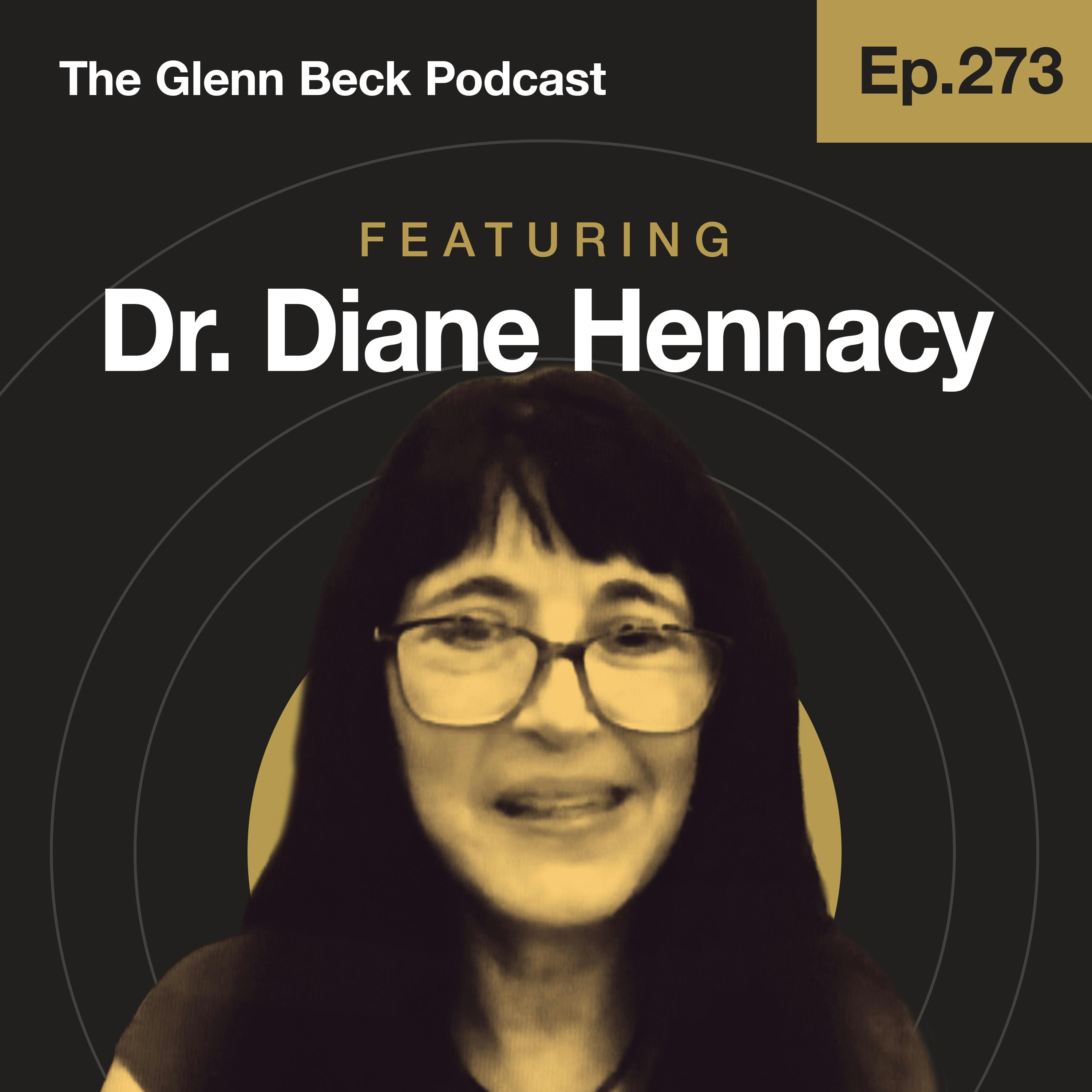
Ep 273 | Autistic Kids Can READ MINDS? ‘Telepathy Tapes’ Doctor Reveals All | The Glenn Beck Podcast
Autism may not be a curse ... "it may be a blessing that we just don’t understand yet,” says Glenn Beck to groundbreaking neuroscientist Dr. Diane Hennacy, whose research into the telepathic powers of autistic children left the nation stunned in “The Telepathy Tapes” podcast series. The pair go on a mind-bending exploration into psychic phenomena, savant syndrome, the secret messages in our dreams, and the possibility of a spiritual meeting place for autistic children guarded by angels. Glenn says, “This will make you reconsider everything you think you know about autism, the brain, ESP, human consciousness, everything.” That is, only if we’re willing to leave “scientism” behind us and embrace the fact that reality is much more than the material world ...
GLENN’S SPONSORS:
Chapter: When it comes to Medicare, Chapter puts you first. Dial #250 and say the keyword "Chapter,” or visit https://askchapter.org/BECK.
Moxie Pest Services: Right now, to celebrate 25 years in business, Moxie Pest Control is offering your first pest control service for just $25. Visit https://MoxieServices.com/BECK and use promo code “BECK.”
Audien Hearing: The Atom X hearing aid from Audien is a beautifully designed, ready-to-go device made by audiologists who actually listened to what people want — less clutter, less confusion, less fiddling around. Visit https://AudienHearing.com and take control of your hearing today.
Learn more about your ad choices. Visit megaphone.fm/adchoices
Available Results
Generated results are saved to your library for reuse and search.
Choose Template
Pick the result you want. You can review provider and model before generating.
A concise first-pass summary for understanding the episode quickly.
A comprehensive, source-grounded extraction of the reusable knowledge in an episode.
A comprehensive extraction focused on opportunities, strategy, markets, and company building.
Explicit actions, next steps, habits, recommendations, and things to avoid.
Repeatable methods, frameworks, mental models, processes, and systems.
A dedicated inventory of concrete resources named in the episode.
A concise first-pass summary for understanding the episode quickly.
A detailed readable summary organized by chapter or topic.
A navigable map of subjects, topic flow, and suggested chapters.
A comprehensive, source-grounded extraction of the reusable knowledge in an episode.
Reusable atomic knowledge units extracted from the episode.
A comprehensive extraction focused on health practices, protocols, claims, and safety caveats.
A comprehensive extraction focused on opportunities, strategy, markets, and company building.
Explicit actions, next steps, habits, recommendations, and things to avoid.
A dedicated inventory of concrete resources named in the episode.
A dedicated analysis of warnings, limitations, trade-offs, weak evidence, and uncertainty.
A concise first-pass summary for understanding the episode quickly.
A detailed readable summary organized by chapter or topic.
A navigable map of subjects, topic flow, and suggested chapters.
A comprehensive, source-grounded extraction of the reusable knowledge in an episode.
Reusable atomic knowledge units extracted from the episode.
A comprehensive extraction focused on health practices, protocols, claims, and safety caveats.
A comprehensive extraction focused on opportunities, strategy, markets, and company building.
Scientific findings, mechanisms, studies, hypotheses, and the limits of the evidence discussed.
Technologies, AI models, technical methods, capabilities, limitations, and adoption implications.
Investment theses, assets, catalysts, valuation reasoning, time horizons, and risks.
Chronologies, actors, causes, consequences, turning points, and competing historical interpretations.
Policies, proposals, stakeholders, arguments, implementation constraints, and predicted effects.
Career paths, skills, hiring signals, workplace decisions, transitions, and limitations of the advice.
Behavioral mechanisms, biases, motivation, habits, emotions, interventions, and evidence limitations.
Economic mechanisms, incentives, indicators, market structure, forecasts, and uncertainty.
Leadership principles, team systems, organizational design, culture, feedback, and failure modes.
Audience, positioning, messaging, acquisition, retention, experiments, metrics, and failed approaches.
Teaching methods, learning strategies, practice, feedback, assessment, and effectiveness evidence.
Theses, premises, arguments, objections, values, thought experiments, and unresolved questions.
Communication patterns, conflict, boundaries, expectations, repair methods, and contextual limitations.
Books, papers, authors, courses, and other learning resources mentioned in the episode.
Repeatable methods, frameworks, mental models, processes, and systems.
Explicit actions, next steps, habits, recommendations, and things to avoid.
Memorable statements and important claims with attribution and source context.
A dedicated inventory of concrete resources named in the episode.
A dedicated analysis of warnings, limitations, trade-offs, weak evidence, and uncertainty.