7 Cutting-Edge Physical Therapy & Recovery Techniques You Can Use To Heal Your Body Fast.
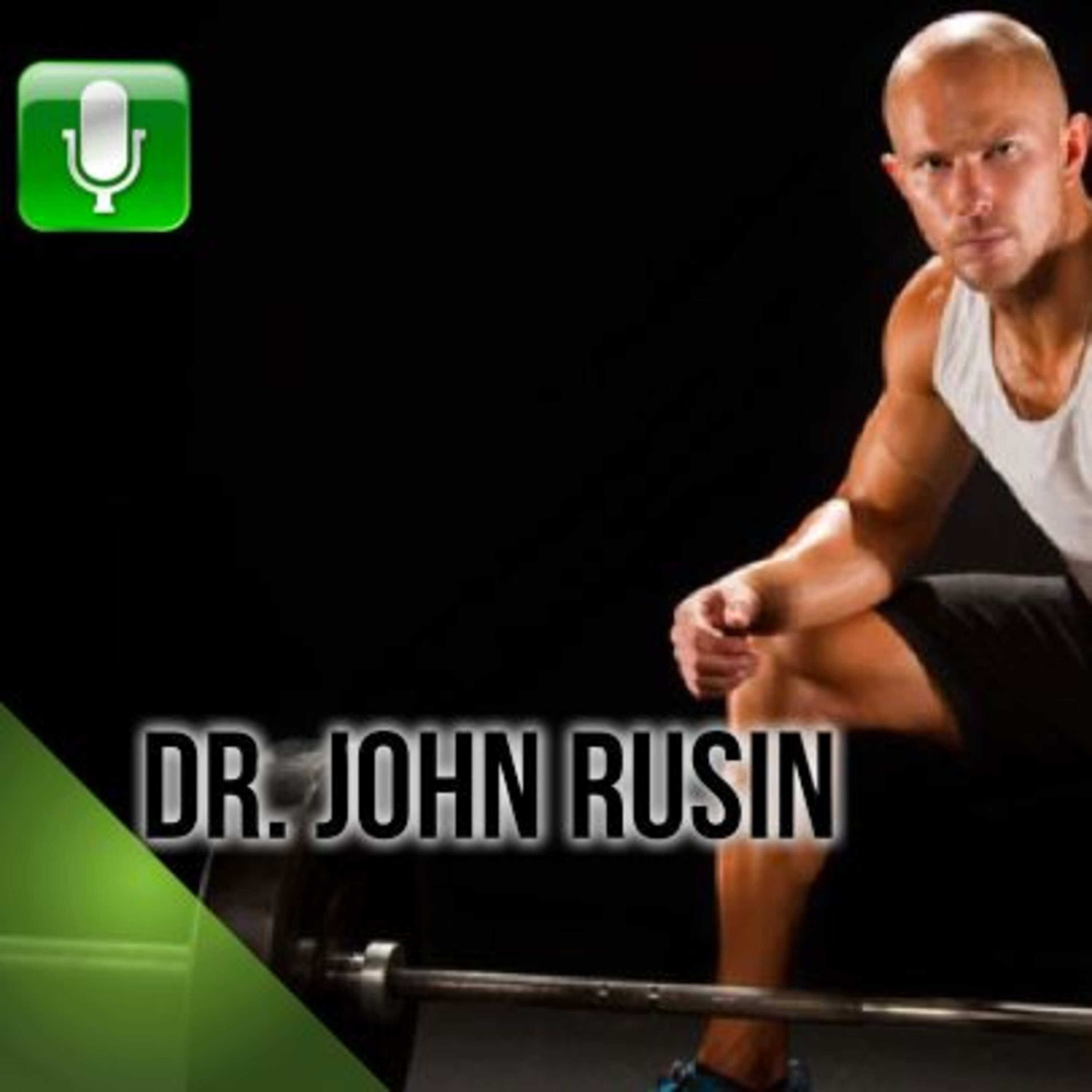
Dr. John Rusin has a lot of alphabet letters after his name.
He is, after all, Dr. John Rusin, PT, DPT, CSCS, ART, FMS1-2, YBT, SFMA, FDN.
So when it comes to the best and the worst of physical therapy modalities, and the most cutting-edge physical therapy and recovery techniques you can use to heal your body fast, John is a wealth of knowledge. This guy has more than a decade of elite-level training experience and advanced degrees in both exercise science and physical therapy, and his job is to develop performance, regeneration, and aesthetics programs for some of the world's best power athletes, NFL and MLB athletes, gold-medal Olympians, competitive powerlifters, and bodybuilders. In addition to his sports-performance physical-therapy practice in Madison, Wisconsin, he's also the owner of John Rusin Fitness Systems, an online fitness platform geared toward synergizing the best of high-performance training and intelligently designed physiotherapy/regeneration programming to athletes and clients across the world.
During our discussion, you'll discover:
-Why John says he's not a "run-of-the-mill" physical therapist...[11:10]
-The important difference between acupuncture and functional dry needling for healing an injury fast...[15:20]
-Whether Instrument Assisted Soft Tissue Mobilization (IASTM) - also known as "scraping" - works...[22:45]
-How you can retrain your pelvis and bowel function using something called Pelvic Floor Postural Reeducation...[29:55]
-If "cupping" really works, and why Dr. Rusin thinks it is much like the infamous pump from the Austin Power's movie...[38:50]
-Dr. Rusin's opinions on blood flow restriction training, also known as Kaatsu...[44:55]
-How Dr. Rusin created the 12-week training program called "FHTP"...[51:20]
-How you can use elastic bands to get what is called "Rhythmic and Reactionary Dynamic Stability, Strength and Stabilization"...[53:00]
-And much more!
Resources from this show: -Dr. Rusin's Functional Hypertrophy Training Program (coupon code: “BG25” gets you $25 off of his FHT program) -This T-Nation article: The Absolute Best and Worst Therapy Methods -Chinese method of Gua sha rock scraping -The Edge tool that Dr. Rusin uses -Kaatsu occlusion training bands -Rogue Fitness bandbell bars
Do you have questions, comments or feedback for Dr. Rusin or me? Leave your thoughts at BenGreenfieldFitness.com and one of us will reply!
See omnystudio.com/listener for privacy information.
Available Results
Generated results are saved to your library for reuse and search.
Choose Template
Pick the result you want. You can review provider and model before generating.
A concise first-pass summary for understanding the episode quickly.
A comprehensive, source-grounded extraction of the reusable knowledge in an episode.
A comprehensive extraction focused on health practices, protocols, claims, and safety caveats.
A dedicated analysis of warnings, limitations, trade-offs, weak evidence, and uncertainty.
Repeatable methods, frameworks, mental models, processes, and systems.
Scientific findings, mechanisms, studies, hypotheses, and the limits of the evidence discussed.
A concise first-pass summary for understanding the episode quickly.
A detailed readable summary organized by chapter or topic.
A navigable map of subjects, topic flow, and suggested chapters.
A comprehensive, source-grounded extraction of the reusable knowledge in an episode.
Reusable atomic knowledge units extracted from the episode.
A comprehensive extraction focused on health practices, protocols, claims, and safety caveats.
A comprehensive extraction focused on opportunities, strategy, markets, and company building.
Explicit actions, next steps, habits, recommendations, and things to avoid.
A dedicated inventory of concrete resources named in the episode.
A dedicated analysis of warnings, limitations, trade-offs, weak evidence, and uncertainty.
A concise first-pass summary for understanding the episode quickly.
A detailed readable summary organized by chapter or topic.
A navigable map of subjects, topic flow, and suggested chapters.
A comprehensive, source-grounded extraction of the reusable knowledge in an episode.
Reusable atomic knowledge units extracted from the episode.
A comprehensive extraction focused on health practices, protocols, claims, and safety caveats.
A comprehensive extraction focused on opportunities, strategy, markets, and company building.
Scientific findings, mechanisms, studies, hypotheses, and the limits of the evidence discussed.
Technologies, AI models, technical methods, capabilities, limitations, and adoption implications.
Investment theses, assets, catalysts, valuation reasoning, time horizons, and risks.
Chronologies, actors, causes, consequences, turning points, and competing historical interpretations.
Policies, proposals, stakeholders, arguments, implementation constraints, and predicted effects.
Career paths, skills, hiring signals, workplace decisions, transitions, and limitations of the advice.
Behavioral mechanisms, biases, motivation, habits, emotions, interventions, and evidence limitations.
Economic mechanisms, incentives, indicators, market structure, forecasts, and uncertainty.
Leadership principles, team systems, organizational design, culture, feedback, and failure modes.
Audience, positioning, messaging, acquisition, retention, experiments, metrics, and failed approaches.
Teaching methods, learning strategies, practice, feedback, assessment, and effectiveness evidence.
Theses, premises, arguments, objections, values, thought experiments, and unresolved questions.
Communication patterns, conflict, boundaries, expectations, repair methods, and contextual limitations.
Books, papers, authors, courses, and other learning resources mentioned in the episode.
Repeatable methods, frameworks, mental models, processes, and systems.
Explicit actions, next steps, habits, recommendations, and things to avoid.
Memorable statements and important claims with attribution and source context.
A dedicated inventory of concrete resources named in the episode.
A dedicated analysis of warnings, limitations, trade-offs, weak evidence, and uncertainty.