Sandro Botticelli | The Birth of Venus
Sandro Botticelli, born Alessandro di Mariano di Vanni Filipepi, was a renowned Florentine painter during the Renaissance. By the 1470s, Botticelli established his own workshop and gained recognition for his unique style. He received commissions from wealthy patrons, including the powerful Medici family. For the Medici, Botticelli painted portraits and created allegorical and mythological works that showcased his mastery of line, color, and composition. His most famous paintings, "The Birth of Venus" and "Primavera," were created during this period.
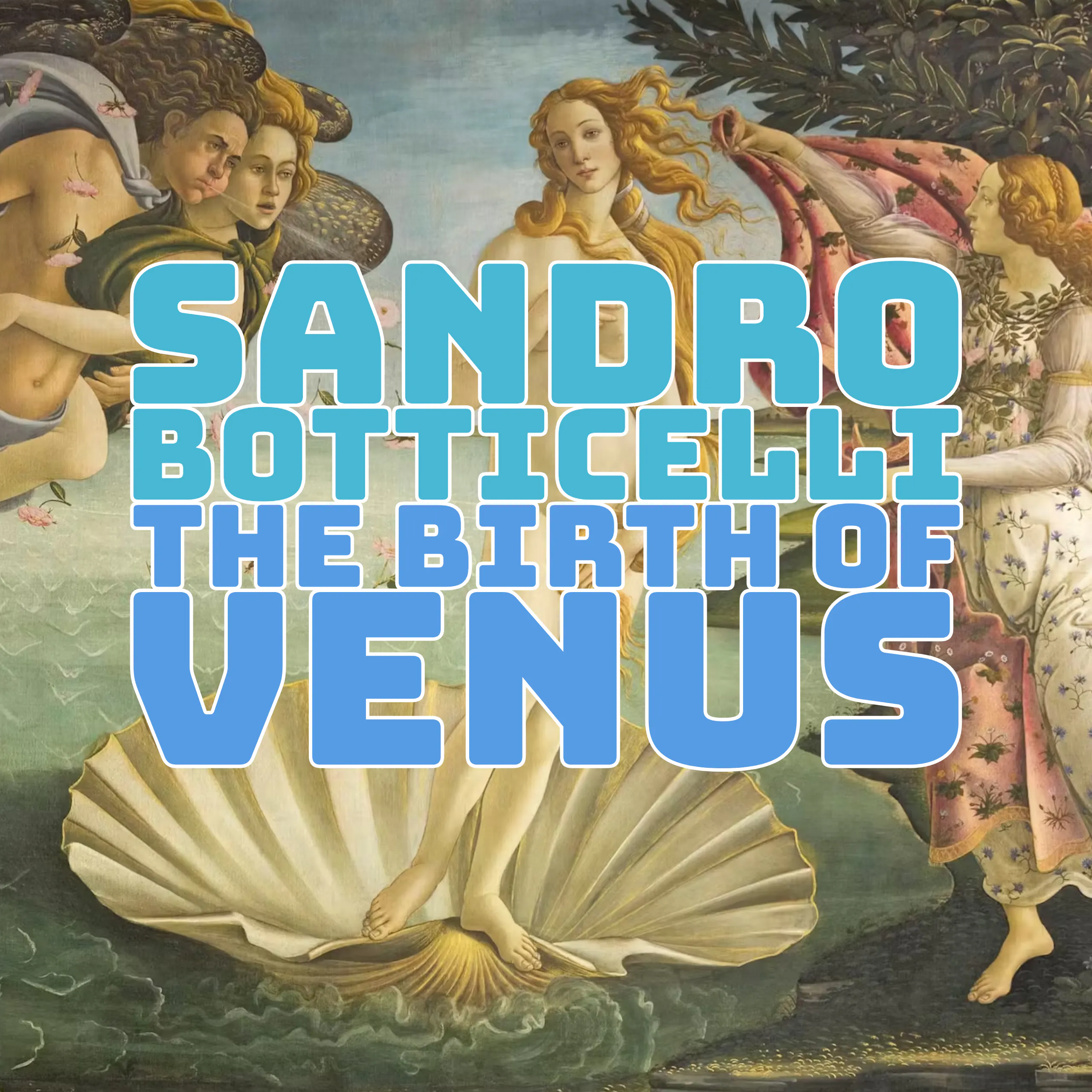
"The Birth of Venus" depicts the arrival of the goddess Venus on the shore after emerging from the sea. The painting is rich in symbolism, drawing from classical mythology, Neoplatonic philosophy, and Christian theology. Venus, the Roman goddess of love, beauty, and fertility, is the central figure. Her nudity, while controversial today, was associated with purity in classical art. The painting is filled with symbolic elements, like the wind gods Zephyrus and Aura representing the forces of nature, and the Hora of Spring welcoming Venus with flowers, signifying her connection to fertility.
Check out my other podcasts Art Smart | Rainbow Puppy Science Lab
Who ARTed is an Airwave Media Podcast. If you are interested in advertising on this or any other Airwave Media show, email: advertising@airwavemedia.com
Learn more about your ad choices. Visit megaphone.fm/adchoices
More description
Sandro Botticelli, born Alessandro di Mariano di Vanni Filipepi, was a renowned Florentine painter during the Renaissance. By the 1470s, Botticelli established his own workshop and gained recognition for his unique style. He received commissions from wealthy patrons, including the powerful Medici family. For the Medici, Botticelli painted portraits and created allegorical and mythological works that showcased his mastery of line, color, and composition. His most famous paintings, "The Birth of Venus" and "Primavera," were created during this period.
"The Birth of Venus" depicts the arrival of the goddess Venus on the shore after emerging from the sea. The painting is rich in symbolism, drawing from classical mythology, Neoplatonic philosophy, and Christian theology. Venus, the Roman goddess of love, beauty, and fertility, is the central figure. Her nudity, while controversial today, was associated with purity in classical art. The painting is filled with symbolic elements, like the wind gods Zephyrus and Aura representing the forces of nature, and the Hora of Spring welcoming Venus with flowers, signifying her connection to fertility.
Check out my other podcasts Art Smart | Rainbow Puppy Science Lab
Who ARTed is an Airwave Media Podcast. If you are interested in advertising on this or any other Airwave Media show, email: advertising@airwavemedia.com
Learn more about your ad choices. Visit megaphone.fm/adchoices
Listen elsewhere
Available Results
Generated results are saved to your library for reuse and search.