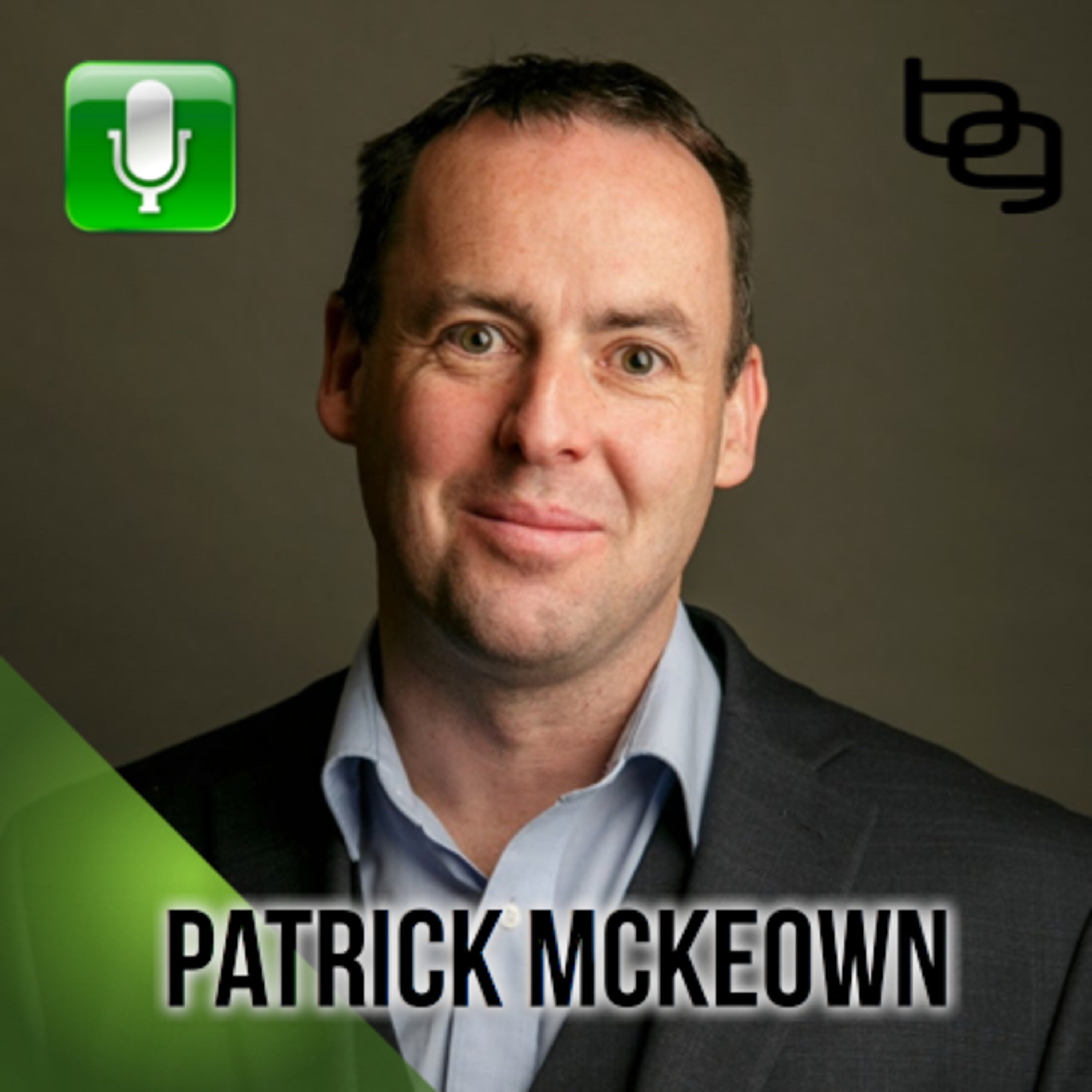
Maximize Oxygen Utilization Efficiency, Simulate High Altitude Training, Get The Cardiovascular Capacity of a Navy SEAL & More With "The Oxygen Advantage" Author Patrick McKeown.
https://bengreenfieldfitness.com/oxygenadvantage
It's no secret that I'm somewhat obsessed with breathing. In the past years I've written articles on everything from combining ketosis, breath holds and freediving, to how to make your own hyperbaric “exercise with oxygen therapy” (EWOT) device, to Wim Hof style breathing for cold thermogenesis to underwater workouts with Laird Hamilton to making yourself high with holotropic breathwork to the use of fancy breath strips and “Turbine” devices to enhance nasal breathing during both exercise and sleep… ...and recorded plenty of podcasts with breathing experts too.
Several years ago, Wim Hof appeared on the BenGreenfieldFitness show for one of his first ever podcasts, entitled “Conquer The Cold And Get Quantum Leaps In Performance In This Exclusive Interview With The Amazing Iceman Wim Hof“. He came back again for "The Iceman Returns: Wim Hof On Climbing Frigid Mountains In Underwear, Eating Only Once A Day, Activating Hormones With Breathing & More." Then there's my interview with freediving expert Ted Harty "Freediving, Breathholding, Iceman Wim Hof, Tom Cruise’s Mission Impossible Training, How To Use Static Apnea Tables & More!" along with my performance breathing interview with Brian Mackenzie on "How To Hold Your Breath For Four Minutes, Training Mask Myths, Performance Breathing & More". Just a few months ago, I interviewed Dr. Belisa Vranich for the episode "Pee Strips, Power Lungs & Pulse Oximeters: How To Flip The Switch On Your Body’s Own Natural Ability To Heal Itself (& Little-Known Ways To Breathe Better)." And then there's this epic XPT performance breathing workshop you can join me at in Kauai, Hawaii Dec 7-10, where guys like me, Brain Mackenzie and Laird Hamilton will teach you every form of breathwork on the face of the planet. Today's guest is yet another oxygen expert, and the author of The Oxygen Advantage, one of the best breathing books I've read.
In The Oxygen Advantage, the man who has trained over 5,000 people—including Olympic and professional athletes—in reduced breathing exercises, shares his scientifically validated techniques to help you breathe more efficiently. His name is Patrick McKeown, and in his book, you learn everything from the fundamental relationship between oxygen and the body, to how to use a Body Oxygen Level Test (BOLT) to determine how efficiently your body uses oxygen to how to increase your BOLT score by using light breathing exercises and learning how to simulate high altitude training, along with techniques used by Navy SEALs and professional athletes to help increase endurance, weight loss, and vital red blood cells to dramatically improve cardiovascular fitness. Patrick McKeown completed his clinical training in the Buteyko Breathing Method at the Buteyko Clinic, Moscow, Russia in 2002 and was accredited by the late Professor Konstantin Buteyko. Patrick has spent the last 15 years working with tens of thousands of children and adults worldwide, who experience breathing pattern disorders, sleep disordered breathing and anxiety. To date, he has written eight books on the subject, including Close Your Mouth, Anxiety Free: Stop Worrying and Quieten Your Mind, Asthma Free Naturally, Always Breathe Correctly and Sleep with Buteyko. To date, Patrick has worked with some of the top athletes in the world across a variety of sports including tennis, cycling, American Football, MMA and track and field.
During our discussion, you'll discover:
-Why we have always thought shallow underbreathing was a health problem, but why Patrick says the opposite: that's it's chronic overbreathing that is the issue...[9:18]
-The scientifically proven benefits of nasal breathing...[13:20]
-The fascinating links between acidity, alkalinity, overbreathing and weight gain...[19:30]
-What happens if you're breathing 'too much' for shorter periods of time, like during exercise...[22:50]
-What the BOLT measurement is and why it's important that you have a long BOLT measurement...[28:56]
-Why Patrick is such a fan of humming...[32:00]
-The best simple exercise you can do to increase breathing efficiency and increase your BOLT score...[37:00]
-The oxygen saturation percentage level you need to get to before you start getting the benefits of holding your breath during exercise...[46:40]
-The sprint and track breathholding workouts Patrick implements with the athletes he coaches...[48:00]
-A quick breathing trick you can use to decongest congestion from a head cold...[51:45]
-A baking soda, apple cider vinegar and carbonated water hack you can use to increase your breathhold time...[55:35]
-Why you may want to consider taping your mouth shut while you sleep...[58:25]
-How the way you breathe actually changes the structure of your face...[60:25]
-Why the naked mole rat lives so long, and what this has to do with breathing...[64:30]
-And much more!
Resources from this episode: -Patrick's latest book and the topic of our discussion "The Oxygen Advantage" -Pulse oximeter -3m micropore tape for taping your mouth shut during sleep -Living High and Healthy: Why Coloradans and Others Who Live at High Altitude Live Longer, and What Flatlanders Can Learn From Them
Do you have questions, thoughts or feedback for Patrick or me? Leave your comments at BenGreenfieldFitness.com and one of us will reply.
See omnystudio.com/listener for privacy information.
Available Results
Generated results are saved to your library for reuse and search.
Choose Template
Pick the result you want. You can review provider and model before generating.
A concise first-pass summary for understanding the episode quickly.
A comprehensive, source-grounded extraction of the reusable knowledge in an episode.
A comprehensive extraction focused on health practices, protocols, claims, and safety caveats.
A dedicated analysis of warnings, limitations, trade-offs, weak evidence, and uncertainty.
Repeatable methods, frameworks, mental models, processes, and systems.
Technologies, AI models, technical methods, capabilities, limitations, and adoption implications.
A concise first-pass summary for understanding the episode quickly.
A detailed readable summary organized by chapter or topic.
A navigable map of subjects, topic flow, and suggested chapters.
A comprehensive, source-grounded extraction of the reusable knowledge in an episode.
Reusable atomic knowledge units extracted from the episode.
A comprehensive extraction focused on health practices, protocols, claims, and safety caveats.
A comprehensive extraction focused on opportunities, strategy, markets, and company building.
Explicit actions, next steps, habits, recommendations, and things to avoid.
A dedicated inventory of concrete resources named in the episode.
A dedicated analysis of warnings, limitations, trade-offs, weak evidence, and uncertainty.
A concise first-pass summary for understanding the episode quickly.
A detailed readable summary organized by chapter or topic.
A navigable map of subjects, topic flow, and suggested chapters.
A comprehensive, source-grounded extraction of the reusable knowledge in an episode.
Reusable atomic knowledge units extracted from the episode.
A comprehensive extraction focused on health practices, protocols, claims, and safety caveats.
A comprehensive extraction focused on opportunities, strategy, markets, and company building.
Scientific findings, mechanisms, studies, hypotheses, and the limits of the evidence discussed.
Technologies, AI models, technical methods, capabilities, limitations, and adoption implications.
Investment theses, assets, catalysts, valuation reasoning, time horizons, and risks.
Chronologies, actors, causes, consequences, turning points, and competing historical interpretations.
Policies, proposals, stakeholders, arguments, implementation constraints, and predicted effects.
Career paths, skills, hiring signals, workplace decisions, transitions, and limitations of the advice.
Behavioral mechanisms, biases, motivation, habits, emotions, interventions, and evidence limitations.
Economic mechanisms, incentives, indicators, market structure, forecasts, and uncertainty.
Leadership principles, team systems, organizational design, culture, feedback, and failure modes.
Audience, positioning, messaging, acquisition, retention, experiments, metrics, and failed approaches.
Teaching methods, learning strategies, practice, feedback, assessment, and effectiveness evidence.
Theses, premises, arguments, objections, values, thought experiments, and unresolved questions.
Communication patterns, conflict, boundaries, expectations, repair methods, and contextual limitations.
Books, papers, authors, courses, and other learning resources mentioned in the episode.
Repeatable methods, frameworks, mental models, processes, and systems.
Explicit actions, next steps, habits, recommendations, and things to avoid.
Memorable statements and important claims with attribution and source context.
A dedicated inventory of concrete resources named in the episode.
A dedicated analysis of warnings, limitations, trade-offs, weak evidence, and uncertainty.