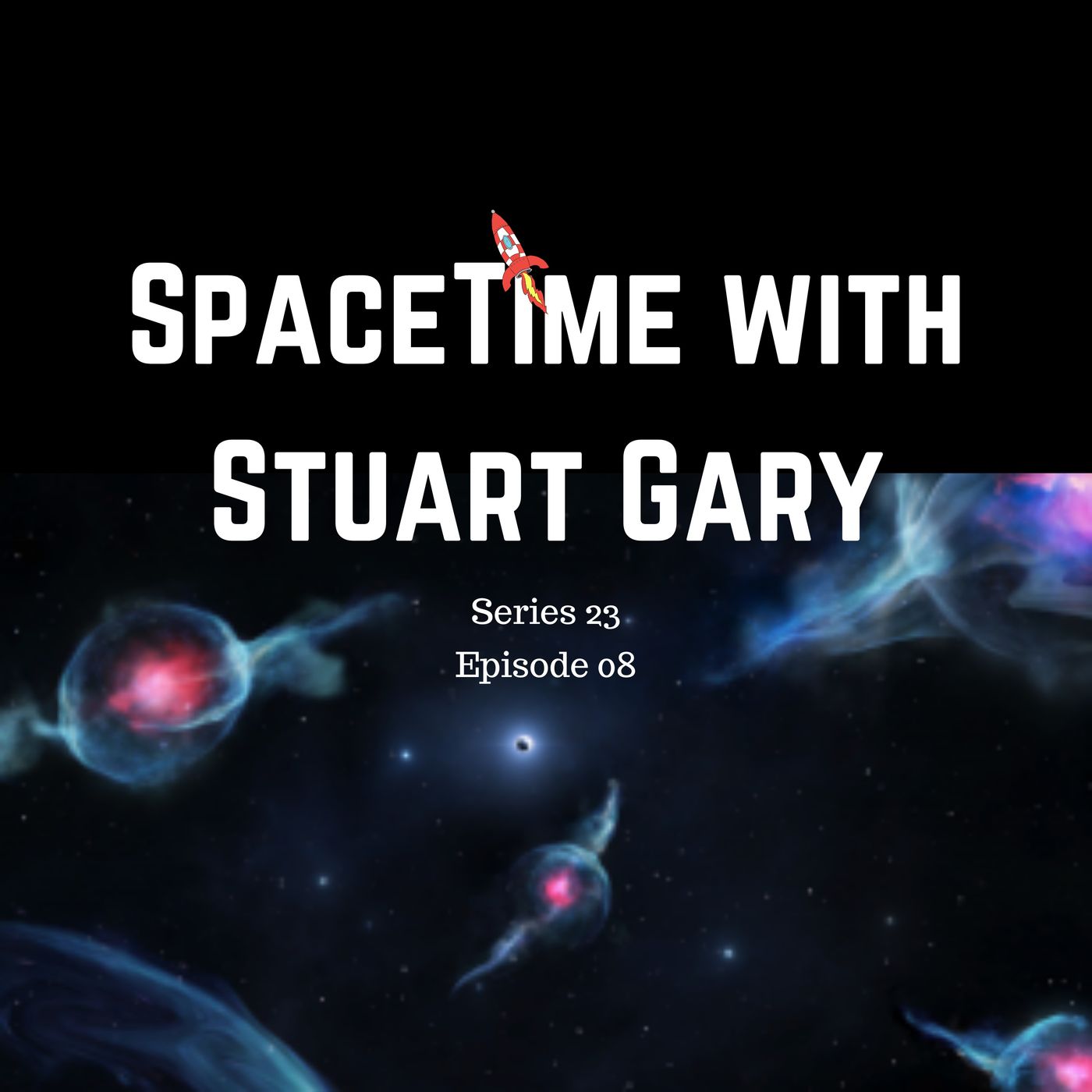
08: New type of object discovered at the galactic centre
Astronomers have discovered four bizarre objects near the supermassive black hole at the center of the Milky Way galaxy.
*Tatooine like world discovered
NASA’s TESS spacecraft has discovered its first circumbinary exo-planet.
*New instrument to weigh planets
A new instrument designed to measure the masses of exoplanets has received first light at the Kitt Peak National Observatory in Arizona.
*Solar wind is slowing beyond Pluto
New measurements by NASA’s New Horizons spacecraft has confirmed earlier data showing that the solar wind – the supersonic stream of charged particles emitted by the Sun – slows down the further away it gets.
*China to undertake 50 rocket launches in 2020
China says it will undertake up to fifty rocket launches this year – dramatically upping the anti from the 34 launches it carried out in 2019.
*New Chinese sounding rocket test flight
Meanwhile, the private Chinese company Space Trek has launched its Tansuo-1 commercial suborbital carrier rocket on a test flight.
*The Science Report
Warnings that ice shelves in the eastern Antarctic Peninsula may have been predisposed to collapse.
One of the world’s largest fish has gone extinct due to overfishing and dam construction in China.
New clues about the cause of autism.
Finding out about the genetic history of the Cassowary.
Claims drinking tea at least three times a week could help you live longer.
True confessions of a phone in astrologer.
For enhanced Show Notes including photos to accompany this episode, visit: http://www.bitesz.com/spacetimeshownotes
Sponsor Link:
This episode of SpaceTime has been brought to you with the support of The Great Courses Plus...lifelong learning from the best in their field. To take up our limited time half-price offer, visit www.thegreatcoursesplus.com/space
Get immediate access to over 175 commercial-free, double episode editions of SpaceTime plus extended interview bonus content. Subscribe via Patreon or Supercast....and share in the rewards. Details at www.patreon.com/spacetimewithstuartgary or if you’re not a fan of Patreon, go to Supercast - https://bitesz.supercast.tech/
RSS feed: https://rss.acast.com/spacetime
Email: SpaceTime@bitesz.com
To receive the Astronomy Daily Newsletter free, direct to your inbox...just join our mailing list at www.bitesz.com/mailinglist For information regarding your data privacy, visit acast.com/privacy
Become a supporter of this podcast: https://www.spreaker.com/podcast/spacetime-with-stuart-gary--2458531/support.
Available Results
Generated results are saved to your library for reuse and search.
Choose Template
Pick the result you want. You can review provider and model before generating.
A concise first-pass summary for understanding the episode quickly.
A comprehensive, source-grounded extraction of the reusable knowledge in an episode.
A comprehensive extraction focused on opportunities, strategy, markets, and company building.
Explicit actions, next steps, habits, recommendations, and things to avoid.
Repeatable methods, frameworks, mental models, processes, and systems.
A dedicated inventory of concrete resources named in the episode.
A concise first-pass summary for understanding the episode quickly.
A detailed readable summary organized by chapter or topic.
A navigable map of subjects, topic flow, and suggested chapters.
A comprehensive, source-grounded extraction of the reusable knowledge in an episode.
Reusable atomic knowledge units extracted from the episode.
A comprehensive extraction focused on health practices, protocols, claims, and safety caveats.
A comprehensive extraction focused on opportunities, strategy, markets, and company building.
Explicit actions, next steps, habits, recommendations, and things to avoid.
A dedicated inventory of concrete resources named in the episode.
A dedicated analysis of warnings, limitations, trade-offs, weak evidence, and uncertainty.
A concise first-pass summary for understanding the episode quickly.
A detailed readable summary organized by chapter or topic.
A navigable map of subjects, topic flow, and suggested chapters.
A comprehensive, source-grounded extraction of the reusable knowledge in an episode.
Reusable atomic knowledge units extracted from the episode.
A comprehensive extraction focused on health practices, protocols, claims, and safety caveats.
A comprehensive extraction focused on opportunities, strategy, markets, and company building.
Scientific findings, mechanisms, studies, hypotheses, and the limits of the evidence discussed.
Technologies, AI models, technical methods, capabilities, limitations, and adoption implications.
Investment theses, assets, catalysts, valuation reasoning, time horizons, and risks.
Chronologies, actors, causes, consequences, turning points, and competing historical interpretations.
Policies, proposals, stakeholders, arguments, implementation constraints, and predicted effects.
Career paths, skills, hiring signals, workplace decisions, transitions, and limitations of the advice.
Behavioral mechanisms, biases, motivation, habits, emotions, interventions, and evidence limitations.
Economic mechanisms, incentives, indicators, market structure, forecasts, and uncertainty.
Leadership principles, team systems, organizational design, culture, feedback, and failure modes.
Audience, positioning, messaging, acquisition, retention, experiments, metrics, and failed approaches.
Teaching methods, learning strategies, practice, feedback, assessment, and effectiveness evidence.
Theses, premises, arguments, objections, values, thought experiments, and unresolved questions.
Communication patterns, conflict, boundaries, expectations, repair methods, and contextual limitations.
Books, papers, authors, courses, and other learning resources mentioned in the episode.
Repeatable methods, frameworks, mental models, processes, and systems.
Explicit actions, next steps, habits, recommendations, and things to avoid.
Memorable statements and important claims with attribution and source context.
A dedicated inventory of concrete resources named in the episode.
A dedicated analysis of warnings, limitations, trade-offs, weak evidence, and uncertainty.