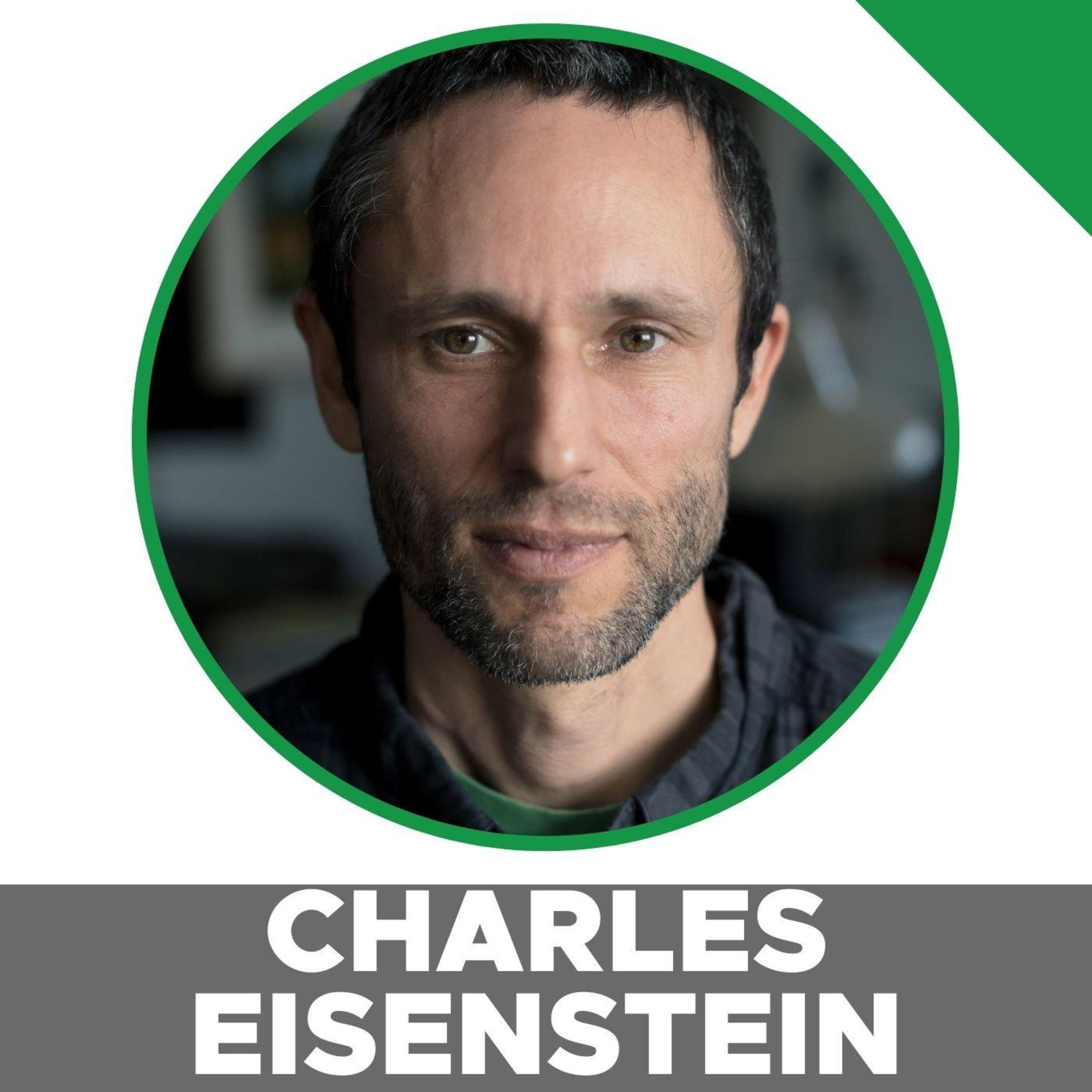
The Most Important Book About Money I've Ever Read - Sacred Economics: Money, Gift & Society in the Age of Transition With Charles Eisenstein.
BenGreenfieldFitness.com/sacredeconomics
I recently finished what I now consider to be one of the most important and transformative financial books I've ever read: Sacred Economics, Revised: Money, Gift & Society in the Age of Transition by Charles Eisenstein.
The book traces the history of money, from ancient gift economies to modern capitalism, and the new revised edition includes new material on cryptocurrencies and emerging research that has come out since the book's original publication. Charles shows how capitalism contributes to alienation, competition, and scarcity; destroys community; and necessitates endless growth at the cost of social and environmental devastation.
Today, these trends have reached their extreme - and their collapse presents a golden opportunity to transition to a more connected, ecological, and sustainable way of being. Charles describes the deeper narratives beneath our economic system, and how we can reimagine it to align with a new story.
Applying a broadly integrated synthesis of theory, policy, and practice, he explores avant-garde concepts of the New Economics, including negative-interest currencies, local economies, gift economics, cryptocurrencies, and the restoration of the commons.
Tapping into a rich lineage of conventional and unconventional economic thought, he presents a vision that is original yet commonsense, radical yet gentle, and increasingly relevant as the crises of our civilization deepen. Charles is an American public speaker and author. His work covers a wide range of topics, including the history of human civilization, economics, spirituality, and the ecology movement.
Key themes explored include anti-consumerism, interdependence, and how myth and narrative influence culture. His books include:
- Sacred Economics
- Climate: A New Story
- The Ascent of Humanity, and
- The More Beautiful World our Hearts Know is Possible
My initial introduction to Charles and his writing was when I discovered his wonderful essay The Coronation, which you can read here.
During our discussion, you'll discover: -What is "sacredness" and how has humanity strayed from it...08:27 -How a "gift economy" facilitated community in past ages...15:01 -How our own "inner compass" might dictate fairness and equity in a gift economy...23:48 -Why did money come about in the first place?...33:11 -How relationships deteriorate when money becomes the source of value, versus that which it once symbolized...38:22 -Environmental implications of this loss of sacredness in economy...40:43 -The problem with usury aka interest...47:12 -How money is created by debt...51:15 -How to begin to shift to a more sacred economy...57:28 -Why Charles' book may be one of the most important financial books you've ever read...1:05:11 -And much more! Upcoming Events:- Las Vegas Keto Expo (October 15-16, 2021). Ben will be speaking at the Las Vegas Keto Expo along with 13 other keto experts. The first 300 guests to register here will get a free drink chip for the poolside party and a free t-shirt.
- Keep up on Ben's LIVE appearances by following bengreenfieldfitness.com/calendar
See omnystudio.com/listener for privacy information.
Available Results
Generated results are saved to your library for reuse and search.
Choose Template
Pick the result you want. You can review provider and model before generating.
A concise first-pass summary for understanding the episode quickly.
A comprehensive, source-grounded extraction of the reusable knowledge in an episode.
A comprehensive extraction focused on health practices, protocols, claims, and safety caveats.
A dedicated analysis of warnings, limitations, trade-offs, weak evidence, and uncertainty.
Repeatable methods, frameworks, mental models, processes, and systems.
Scientific findings, mechanisms, studies, hypotheses, and the limits of the evidence discussed.
A concise first-pass summary for understanding the episode quickly.
A detailed readable summary organized by chapter or topic.
A navigable map of subjects, topic flow, and suggested chapters.
A comprehensive, source-grounded extraction of the reusable knowledge in an episode.
Reusable atomic knowledge units extracted from the episode.
A comprehensive extraction focused on health practices, protocols, claims, and safety caveats.
A comprehensive extraction focused on opportunities, strategy, markets, and company building.
Explicit actions, next steps, habits, recommendations, and things to avoid.
A dedicated inventory of concrete resources named in the episode.
A dedicated analysis of warnings, limitations, trade-offs, weak evidence, and uncertainty.
A concise first-pass summary for understanding the episode quickly.
A detailed readable summary organized by chapter or topic.
A navigable map of subjects, topic flow, and suggested chapters.
A comprehensive, source-grounded extraction of the reusable knowledge in an episode.
Reusable atomic knowledge units extracted from the episode.
A comprehensive extraction focused on health practices, protocols, claims, and safety caveats.
A comprehensive extraction focused on opportunities, strategy, markets, and company building.
Scientific findings, mechanisms, studies, hypotheses, and the limits of the evidence discussed.
Technologies, AI models, technical methods, capabilities, limitations, and adoption implications.
Investment theses, assets, catalysts, valuation reasoning, time horizons, and risks.
Chronologies, actors, causes, consequences, turning points, and competing historical interpretations.
Policies, proposals, stakeholders, arguments, implementation constraints, and predicted effects.
Career paths, skills, hiring signals, workplace decisions, transitions, and limitations of the advice.
Behavioral mechanisms, biases, motivation, habits, emotions, interventions, and evidence limitations.
Economic mechanisms, incentives, indicators, market structure, forecasts, and uncertainty.
Leadership principles, team systems, organizational design, culture, feedback, and failure modes.
Audience, positioning, messaging, acquisition, retention, experiments, metrics, and failed approaches.
Teaching methods, learning strategies, practice, feedback, assessment, and effectiveness evidence.
Theses, premises, arguments, objections, values, thought experiments, and unresolved questions.
Communication patterns, conflict, boundaries, expectations, repair methods, and contextual limitations.
Books, papers, authors, courses, and other learning resources mentioned in the episode.
Repeatable methods, frameworks, mental models, processes, and systems.
Explicit actions, next steps, habits, recommendations, and things to avoid.
Memorable statements and important claims with attribution and source context.
A dedicated inventory of concrete resources named in the episode.
A dedicated analysis of warnings, limitations, trade-offs, weak evidence, and uncertainty.