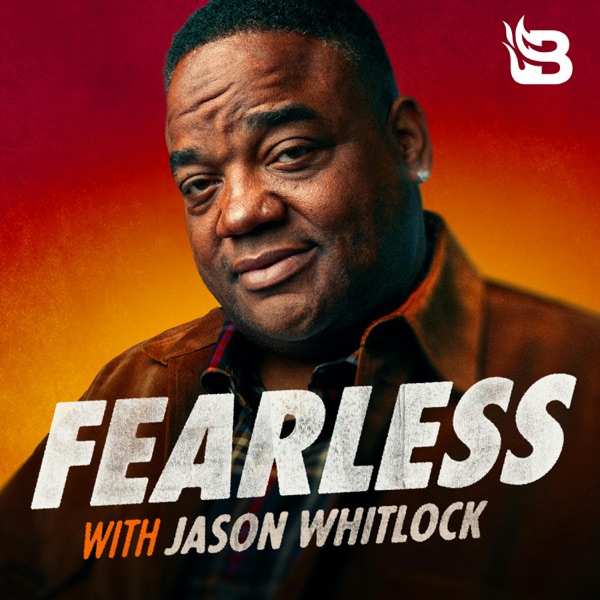
Ep 137 | Dolphins Owner NOT Racist | Stephen Ross & Hue Jackson Cast New Light on Brian Flores Suit
As the fallout from Brian Flores' blockbuster racism lawsuit against the NFL continues, Jason brings in the foremost authority on Miami sports to get the inside information. Journalist Dave Hyde explains why the real issues with Dolphins owner Stephen Ross are not race-related. “Fearless” contributor Steve Kim says Ross should not be removed unless the “$100,000 accusation” can be proved. Former Mizzou football star T.J. Moe compares the NFL’s Rooney rule to Joe Biden’s method of picking Supreme Court judges. The guys discuss whether or not the "tanking" accusations against the Browns by former head coach Hue Jackson are to be believed. Plus, Uncle Jimmy calls out ESPN’s Ryan Clark for his NFL/plantation analogy.
Today's Sponsors:
CB Distillery is your new headquarters for CBD products to improve your health. Use promo code FEARLESS for 20% off at https://www.thecbdistillery.com
It's clear that you simply can't rely on the government or big pharma to protect you or your family. That’s where Z-Stack comes in. Visit https://zstacklife.com/FEARLESS to get 5% off your first order today!
PolicyGenius is your one-stop shop for all your insurance needs. Head to https://www.PolicyGenius.com/FEARLESS to get your free quotes and see how much you could save.
Get your swag on! Go to: https://shop.blazemedia.com/fearless to make yourself an official member of the “Fearless Army.”
Learn more about your ad choices. Visit megaphone.fm/adchoices
Available Results
Generated results are saved to your library for reuse and search.
Choose Template
Pick the result you want. You can review provider and model before generating.
A concise first-pass summary for understanding the episode quickly.
A comprehensive, source-grounded extraction of the reusable knowledge in an episode.
A comprehensive extraction focused on health practices, protocols, claims, and safety caveats.
A dedicated analysis of warnings, limitations, trade-offs, weak evidence, and uncertainty.
Repeatable methods, frameworks, mental models, processes, and systems.
Technologies, AI models, technical methods, capabilities, limitations, and adoption implications.
A concise first-pass summary for understanding the episode quickly.
A detailed readable summary organized by chapter or topic.
A navigable map of subjects, topic flow, and suggested chapters.
A comprehensive, source-grounded extraction of the reusable knowledge in an episode.
Reusable atomic knowledge units extracted from the episode.
A comprehensive extraction focused on health practices, protocols, claims, and safety caveats.
A comprehensive extraction focused on opportunities, strategy, markets, and company building.
Explicit actions, next steps, habits, recommendations, and things to avoid.
A dedicated inventory of concrete resources named in the episode.
A dedicated analysis of warnings, limitations, trade-offs, weak evidence, and uncertainty.
A concise first-pass summary for understanding the episode quickly.
A detailed readable summary organized by chapter or topic.
A navigable map of subjects, topic flow, and suggested chapters.
A comprehensive, source-grounded extraction of the reusable knowledge in an episode.
Reusable atomic knowledge units extracted from the episode.
A comprehensive extraction focused on health practices, protocols, claims, and safety caveats.
A comprehensive extraction focused on opportunities, strategy, markets, and company building.
Scientific findings, mechanisms, studies, hypotheses, and the limits of the evidence discussed.
Technologies, AI models, technical methods, capabilities, limitations, and adoption implications.
Investment theses, assets, catalysts, valuation reasoning, time horizons, and risks.
Chronologies, actors, causes, consequences, turning points, and competing historical interpretations.
Policies, proposals, stakeholders, arguments, implementation constraints, and predicted effects.
Career paths, skills, hiring signals, workplace decisions, transitions, and limitations of the advice.
Behavioral mechanisms, biases, motivation, habits, emotions, interventions, and evidence limitations.
Economic mechanisms, incentives, indicators, market structure, forecasts, and uncertainty.
Leadership principles, team systems, organizational design, culture, feedback, and failure modes.
Audience, positioning, messaging, acquisition, retention, experiments, metrics, and failed approaches.
Teaching methods, learning strategies, practice, feedback, assessment, and effectiveness evidence.
Theses, premises, arguments, objections, values, thought experiments, and unresolved questions.
Communication patterns, conflict, boundaries, expectations, repair methods, and contextual limitations.
Books, papers, authors, courses, and other learning resources mentioned in the episode.
Repeatable methods, frameworks, mental models, processes, and systems.
Explicit actions, next steps, habits, recommendations, and things to avoid.
Memorable statements and important claims with attribution and source context.
A dedicated inventory of concrete resources named in the episode.
A dedicated analysis of warnings, limitations, trade-offs, weak evidence, and uncertainty.