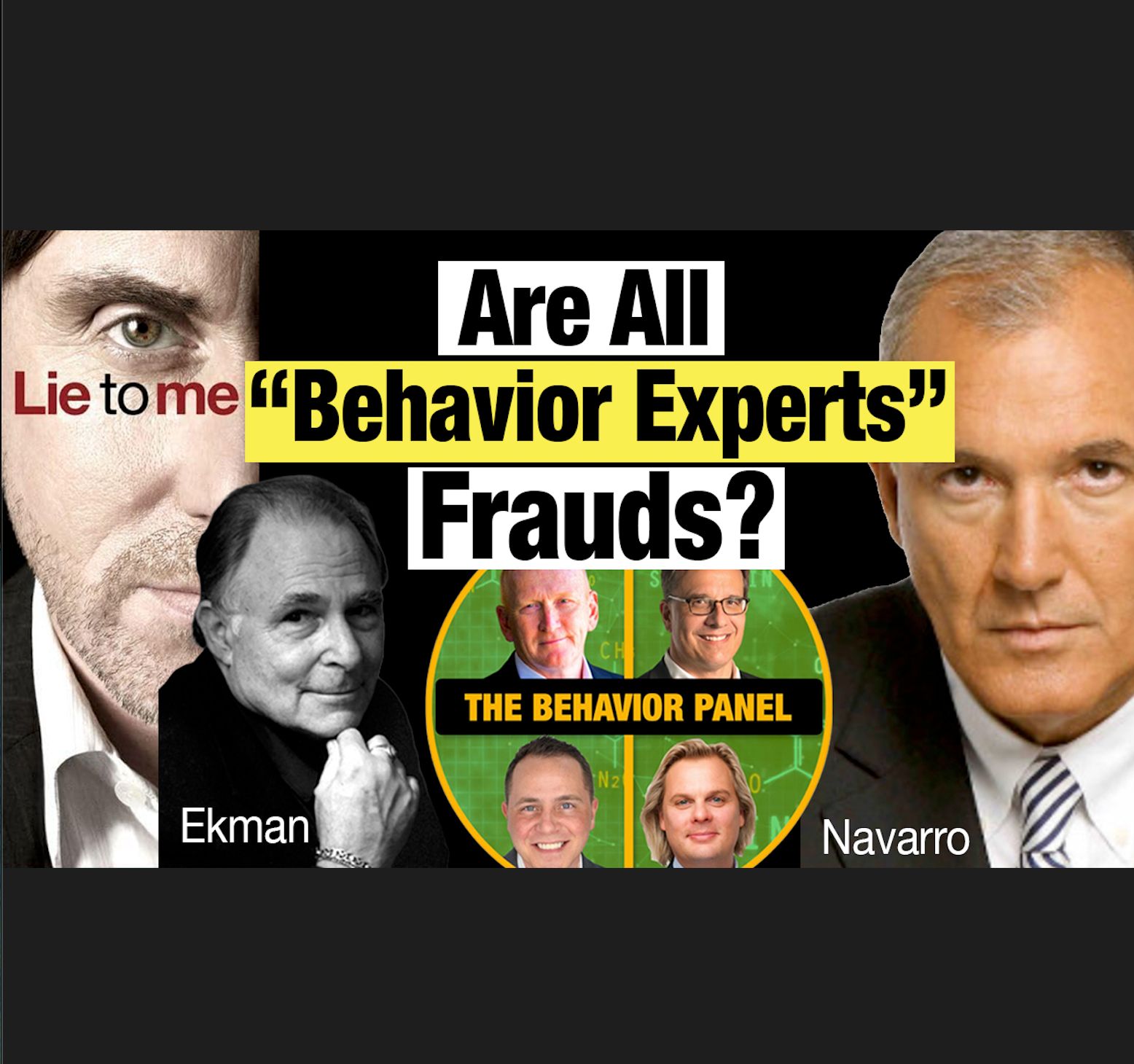
A critical look at Paul Ekman, Joe Navarro, and the entire "behavior expert" industry
A talk with former CIA officer Kent Clizbe about the exaggerated, irresponsible claims made by many self-described “behavior experts,” focusing especially on Paul Ekman, Joe Navarro, microexpressions, and attempts to detect deception from body language. We discuss why facial expressions and physical movements cannot be interpreted through a universal dictionary, how cultural and individual differences make behavioral judgments especially difficult, and why nervousness or discomfort is rarely meaningful evidence of guilt or deception in high-stakes situations. We examine the failed TSA SPOT program, the influence of shows like “Lie to Me” (which was loosely based on Paul Ekman’s work), and the lack of convincing real-world, high-stakes examples supporting “behavior expert” claims. We also explore how behavioral hunches can contribute to tunnel vision, false confessions, and wrongful convictions; why games like poker can offer a more constrained and useful setting for behavioral reads; and why the most actionable information in high-stakes situations almost always comes from what people say, what they leave out, and how their statements compare with known facts.
Hosted by Simplecast, an AdsWizz company. See pcm.adswizz.com for information about our collection and use of personal data for advertising.
More description
A talk with former CIA officer Kent Clizbe about the exaggerated, irresponsible claims made by many self-described “behavior experts,” focusing especially on Paul Ekman, Joe Navarro, microexpressions, and attempts to detect deception from body language. We discuss why facial expressions and physical movements cannot be interpreted through a universal dictionary, how cultural and individual differences make behavioral judgments especially difficult, and why nervousness or discomfort is rarely meaningful evidence of guilt or deception in high-stakes situations. We examine the failed TSA SPOT program, the influence of shows like “Lie to Me” (which was loosely based on Paul Ekman’s work), and the lack of convincing real-world, high-stakes examples supporting “behavior expert” claims. We also explore how behavioral hunches can contribute to tunnel vision, false confessions, and wrongful convictions; why games like poker can offer a more constrained and useful setting for behavioral reads; and why the most actionable information in high-stakes situations almost always comes from what people say, what they leave out, and how their statements compare with known facts.
Hosted by Simplecast, an AdsWizz company. See pcm.adswizz.com for information about our collection and use of personal data for advertising.
Listen elsewhere
Available Results
Generated results are saved to your library for reuse and search.