The Perfect 11-Minute Morning Routine: How To Make Your Day Better By Using Ancient Ayurvedic Principles To Optimize Your Morning Routine.
It's no secret that I weave into my personal health protocol many "ancient" tactics I've borrowed from the fields of Traditional Chinese Medicine and also Ayurveda, including...
...tooth and oral care via coconut oil pulling and tongue scraping...
...Tai Chi and Qi Gong-esque morning exercises...
...acupuncture, acupressure, and tapping...
...digestive organ massage...
...dry skin brushing...
...cooking and blending with ghee...
...and much more...
I find Ayurveda particularly intriguing.
After all, these days, time is scarce and precious in today’s world and we seek solutions that are quick. While allopathic medicine tends to focus on the management of disease, the ancient study of Ayurveda provides us with holistic knowledge for preventing disease and eliminating its root cause.
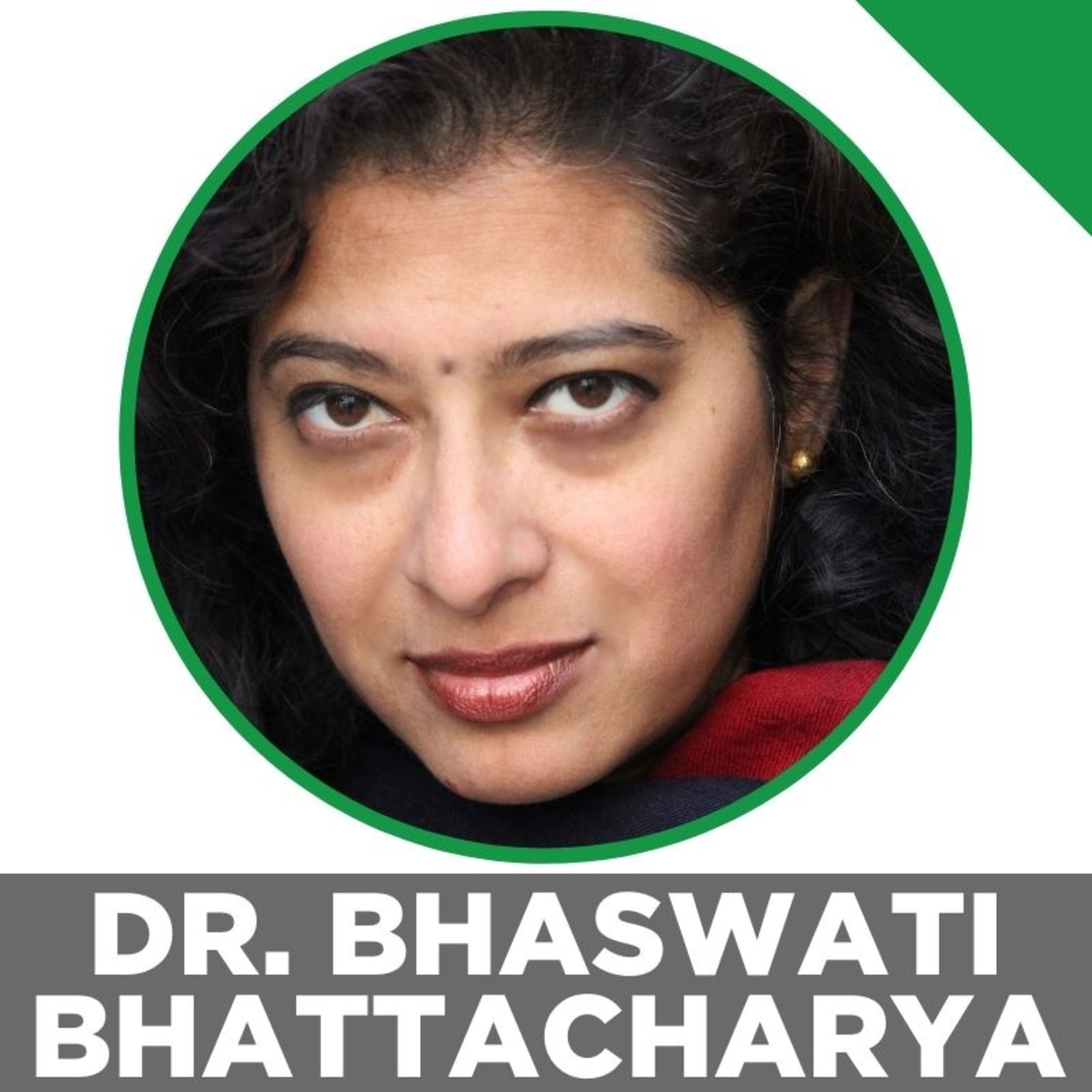
For the past 21 years, my guest on today's podcast and author of the excellent book Everyday Ayurveda: Daily Habits That Can Change Your Life in a Day, Dr. Bhaswati Bhattacharya, MPH, MD, Ph.D., DABHM, FABPM, HHC, CAP, has been practicing holistic family medicine emphasizing Ayurveda and teaching best clinical practices and educational techniques for learning Integrative Medicine.
She currently works between her private consultation medical practice in Manhattan and her deeper study of indigenous medicines around the world, when she consults with patients via phone/video conference.
She has recently completed a Ph.D. in Ayurveda at Banaras Hindu University (BHU) in the ancient city of Varanasi in India. As the first U.S. Fulbright Scholar sponsored jointly in 2013-2014 by the U.S. Department of State and the Government of India to research and teach Ayurvedic medicine, Dr. Bhattacharya continued research in the clinical and physicochemical bases of bhasmas, which are herbometallic compounds that often work quickly and cleanly to rebalance the body from "incurable" diseases.
For her Ph.D. thesis 2014-2018, she studied how plants work medicinally, from soil to stomach to cell. Specializing in The Patient, Dr. Bhattacharya actively incorporates traditional and indigenous medical systems into her clinical practice of holistic family medicine, using modern science only where it actually works for real patients.
The goal is not a clinical trial; it is to help each patient improve his/her quality of life, health, and well-being. She defines, refines, and practices medicine on a holistic and truly integrative path. She provides holistic medical care for the underserved as well as for insured patients.
Modalities that Dr. Bhattacharya uses include herbs, nutrition, yoga, breathwork (pranayama), exercise counseling, energy work, mind-body medicine, homeopathy, and aromatherapy, with a strong underpinning of Ayurveda, as well as the use of biomedical drugs and procedures as needed.
During this discussion, you'll discover: -Bhaswati's childhood development as an ayurvedic practitioner...7:30 -How phases of the moon affect the quality of ghee while it's being made...13:45 -How the day is split up according to Ayurvedic principles...21:30 -Bhaswati's morning routine ...36:15- Bhaswati writes a weekly column for South Asian Times
- Bhaswati's 12-step morning routine:
-
- Rise an hour before dawn
- Lie still and listen to your belly
- Your belly conveys how it's doing (your second brain—your gut—talks to your first brain)
- The gut tells you what it wants (if you are hungry) and any other information (gut instinct)
- Bend fully down and touch the ground with your hands; say a prayer before stepping on the earth
- When you twist your body you twist your gut; waking it up
- Sit up, take a small sip of water from your right palm and swallow
- Gives information from your mouth's microbiome to your body (do this only when you are healthy)
- Things growing in your mouth signals the body to produce natural antibodies as well as hormones
- Head to the toilet
- Wash your hands, wash your face with cold water, a little bit of water into each nostril and expel
- Swish some water in your mouth
- Clean your teeth
- Use a small Nim tree branch (4 inches long), chew on it, brush teeth with it, spit the bitter juice, rinse your mouth with water
- Tongue scraping
- Swish your mouth with sesame oil; very good for lubricating the nerves
- Put some oil on your fingers, swipe on the insides of your cheek, gums, and put some hot water in the mouth
- Fill the 5 senses with beauty, good things, light a candle, light incense, touch something soft, tulsi plant
- Look in the mirror, present yourself for the day; head to the kitchen to sip your first beverage
-Ben Recommends: Curated by yours truly, each and every item on this list will take you one step closer to living your best, healthiest, most fulfilling life—every hour, every minute, and every second of every day.
Do you have questions, thoughts, or feedback for Dr. Bhaswati Bhattacharya or me? Leave your comments at bengreenfieldfitness.com/ayurveda and one of us will reply!See omnystudio.com/listener for privacy information.
Available Results
Generated results are saved to your library for reuse and search.
Choose Template
Pick the result you want. You can review provider and model before generating.
A concise first-pass summary for understanding the episode quickly.
A comprehensive, source-grounded extraction of the reusable knowledge in an episode.
A comprehensive extraction focused on health practices, protocols, claims, and safety caveats.
A dedicated analysis of warnings, limitations, trade-offs, weak evidence, and uncertainty.
Repeatable methods, frameworks, mental models, processes, and systems.
Scientific findings, mechanisms, studies, hypotheses, and the limits of the evidence discussed.
A concise first-pass summary for understanding the episode quickly.
A detailed readable summary organized by chapter or topic.
A navigable map of subjects, topic flow, and suggested chapters.
A comprehensive, source-grounded extraction of the reusable knowledge in an episode.
Reusable atomic knowledge units extracted from the episode.
A comprehensive extraction focused on health practices, protocols, claims, and safety caveats.
A comprehensive extraction focused on opportunities, strategy, markets, and company building.
Explicit actions, next steps, habits, recommendations, and things to avoid.
A dedicated inventory of concrete resources named in the episode.
A dedicated analysis of warnings, limitations, trade-offs, weak evidence, and uncertainty.
A concise first-pass summary for understanding the episode quickly.
A detailed readable summary organized by chapter or topic.
A navigable map of subjects, topic flow, and suggested chapters.
A comprehensive, source-grounded extraction of the reusable knowledge in an episode.
Reusable atomic knowledge units extracted from the episode.
A comprehensive extraction focused on health practices, protocols, claims, and safety caveats.
A comprehensive extraction focused on opportunities, strategy, markets, and company building.
Scientific findings, mechanisms, studies, hypotheses, and the limits of the evidence discussed.
Technologies, AI models, technical methods, capabilities, limitations, and adoption implications.
Investment theses, assets, catalysts, valuation reasoning, time horizons, and risks.
Chronologies, actors, causes, consequences, turning points, and competing historical interpretations.
Policies, proposals, stakeholders, arguments, implementation constraints, and predicted effects.
Career paths, skills, hiring signals, workplace decisions, transitions, and limitations of the advice.
Behavioral mechanisms, biases, motivation, habits, emotions, interventions, and evidence limitations.
Economic mechanisms, incentives, indicators, market structure, forecasts, and uncertainty.
Leadership principles, team systems, organizational design, culture, feedback, and failure modes.
Audience, positioning, messaging, acquisition, retention, experiments, metrics, and failed approaches.
Teaching methods, learning strategies, practice, feedback, assessment, and effectiveness evidence.
Theses, premises, arguments, objections, values, thought experiments, and unresolved questions.
Communication patterns, conflict, boundaries, expectations, repair methods, and contextual limitations.
Books, papers, authors, courses, and other learning resources mentioned in the episode.
Repeatable methods, frameworks, mental models, processes, and systems.
Explicit actions, next steps, habits, recommendations, and things to avoid.
Memorable statements and important claims with attribution and source context.
A dedicated inventory of concrete resources named in the episode.
A dedicated analysis of warnings, limitations, trade-offs, weak evidence, and uncertainty.