How To Treat Your Own Joint Pain (Without Visiting An Expensive Doctor or Therapist).
I'll admit it: I'm a complete nerd when it comes to using a dizzying array of bodywork tools, massage and deep tissue manipulation, mobility methods and more.
I wake up every morning and "hit" my body with everything from a Rumble Roller to mobility bands to vibrating massage devices and more. It's like some kind of medieval torture experiment. So I was pretty excited when I got a chance to read a brand new book about how to create a "map" of your own connective tissue and then erase pain and / or increase mobility in specific areas of your body using that map.
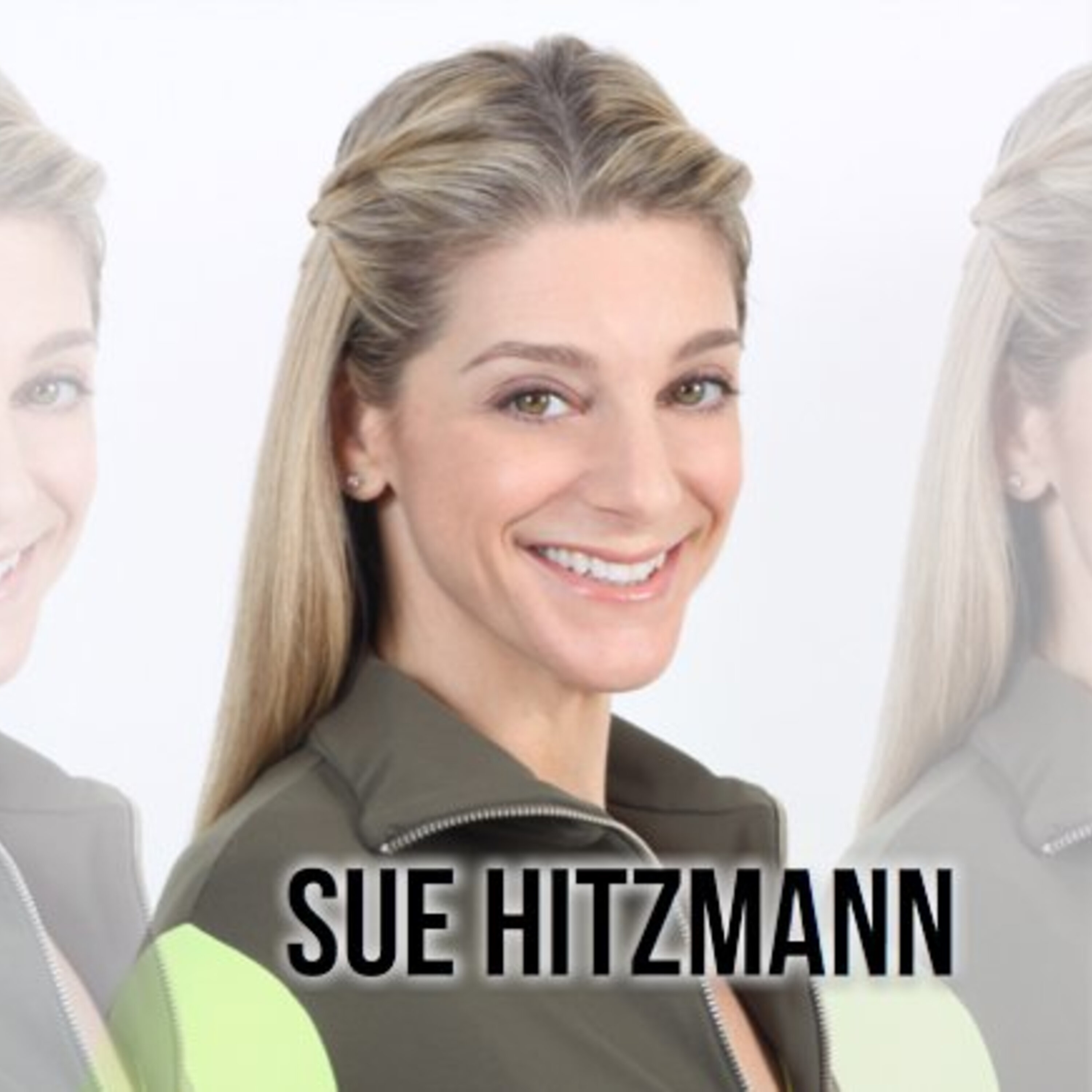
The name of the book is "The MELT Method: A Breakthrough Self-Treatment System to Eliminate Chronic Pain, Erase the Signs of Aging, and Feel Fantastic in Just 10 Minutes a Day!". In The MELT Method, manual therapist and exercise physiologist Sue Hitzmann describes a self-treatment system to combat chronic pain and erase the effects of aging and active living, in as little as ten minutes a day, all using techniques that can be done in your own home and taking advantage of the body's natural restorative properties. Sue has personally trained more than 1,300 professionals worldwide and is a leading presenter for national organizations such as IDEA, ECA, and PMA, and a CEU provider for ACE, AFAA, NASM, PMA, and NCBTMB. She has appeared on The Dr. Oz Show, The Rachael Ray Show, and Live! with Regis and Kelly, and the internationally translated MELT Method book has been featured in magazines such as SELF, More, and Prevention. I've been trying the methods in her book on areas like my low back, my hands, my feet and my elbows and they work with surprising efficacy, so I had to get her on the show!
During this episode, you'll discover... -Sue's fascinating story of how she began digging into fascia and connective tissue and its role in pain and movement... -What Sue discovered while dissecting cadavers and learning the truth about fascia that isn't taught in exercise science classes... -The concept of "fascial dehydration", and why it is much more than just a matter of drinking more water... -What most foam rolling and deep tissue work neglects... -Why you shouldn't necessarily use the hardest foam roller you can find... -How to "glide", "shear" and "rinse" specific areas of your body... -Why doing a "rest and assess" prior to doing the MELT method can enhance results... -And much more...
Do you have questions, comments or feedback for Sue or I about the MELT method or anything else we discuss in this episode? Leave your thoughts at BenGreenfieldFitness.com and one of us will reply!
See omnystudio.com/listener for privacy information.
Available Results
Generated results are saved to your library for reuse and search.
Choose Template
Pick the result you want. You can review provider and model before generating.
A concise first-pass summary for understanding the episode quickly.
A comprehensive, source-grounded extraction of the reusable knowledge in an episode.
A comprehensive extraction focused on health practices, protocols, claims, and safety caveats.
A dedicated analysis of warnings, limitations, trade-offs, weak evidence, and uncertainty.
Repeatable methods, frameworks, mental models, processes, and systems.
Scientific findings, mechanisms, studies, hypotheses, and the limits of the evidence discussed.
A concise first-pass summary for understanding the episode quickly.
A detailed readable summary organized by chapter or topic.
A navigable map of subjects, topic flow, and suggested chapters.
A comprehensive, source-grounded extraction of the reusable knowledge in an episode.
Reusable atomic knowledge units extracted from the episode.
A comprehensive extraction focused on health practices, protocols, claims, and safety caveats.
A comprehensive extraction focused on opportunities, strategy, markets, and company building.
Explicit actions, next steps, habits, recommendations, and things to avoid.
A dedicated inventory of concrete resources named in the episode.
A dedicated analysis of warnings, limitations, trade-offs, weak evidence, and uncertainty.
A concise first-pass summary for understanding the episode quickly.
A detailed readable summary organized by chapter or topic.
A navigable map of subjects, topic flow, and suggested chapters.
A comprehensive, source-grounded extraction of the reusable knowledge in an episode.
Reusable atomic knowledge units extracted from the episode.
A comprehensive extraction focused on health practices, protocols, claims, and safety caveats.
A comprehensive extraction focused on opportunities, strategy, markets, and company building.
Scientific findings, mechanisms, studies, hypotheses, and the limits of the evidence discussed.
Technologies, AI models, technical methods, capabilities, limitations, and adoption implications.
Investment theses, assets, catalysts, valuation reasoning, time horizons, and risks.
Chronologies, actors, causes, consequences, turning points, and competing historical interpretations.
Policies, proposals, stakeholders, arguments, implementation constraints, and predicted effects.
Career paths, skills, hiring signals, workplace decisions, transitions, and limitations of the advice.
Behavioral mechanisms, biases, motivation, habits, emotions, interventions, and evidence limitations.
Economic mechanisms, incentives, indicators, market structure, forecasts, and uncertainty.
Leadership principles, team systems, organizational design, culture, feedback, and failure modes.
Audience, positioning, messaging, acquisition, retention, experiments, metrics, and failed approaches.
Teaching methods, learning strategies, practice, feedback, assessment, and effectiveness evidence.
Theses, premises, arguments, objections, values, thought experiments, and unresolved questions.
Communication patterns, conflict, boundaries, expectations, repair methods, and contextual limitations.
Books, papers, authors, courses, and other learning resources mentioned in the episode.
Repeatable methods, frameworks, mental models, processes, and systems.
Explicit actions, next steps, habits, recommendations, and things to avoid.
Memorable statements and important claims with attribution and source context.
A dedicated inventory of concrete resources named in the episode.
A dedicated analysis of warnings, limitations, trade-offs, weak evidence, and uncertainty.