The Mystery of the 95 Year Old Track Star and What She Can Teach Us About Living Longer, Happier Lives
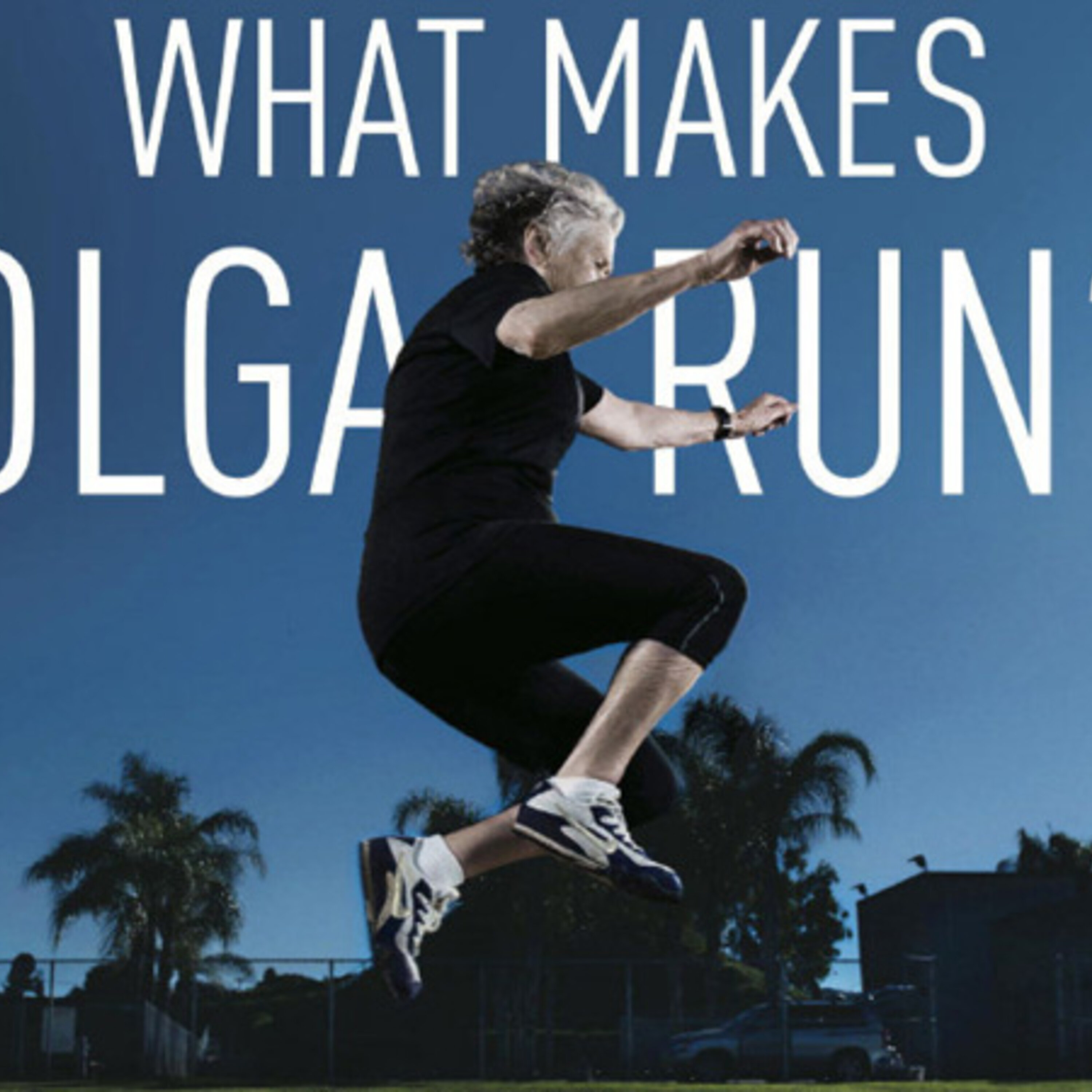
Olga Kotelko (see video below) is not your average ninety-five-year-old.
She not only looks and acts like a much younger woman, she holds over twenty-three world records in track and field, seventeen in her current ninety to ninety-five category. Convinced that this remarkable woman could help unlock many of the mysteries of aging, my guest on today's podcast, Bruce Grierson, set out to uncover what it is that’s driving Olga.
He considers every piece of the puzzle, from her diet and sleep habits to how she scores on various personality traits, to what she does in her spare time to her family history. In the book "What Makes Olga Run?: The Mystery of the 90-Something Track Star and What She Can Teach Us About Living Longer, Happier Lives", Bruce details how Olga participates in tests administered by some of the world’s leading scientists and offers her DNA to groundbreaking research trials. What you'll get to hear today is not only a tremendously uplifting personal story but a look at which parts of our health and longevity are determined by the DNA we inherit at birth, and which parts we can shape ourselves. You'll discover how your genes, opportunities, and choices forge the course of your life, especially during your golden years. During our discussion, you'll discover: -The fascinating story of Olga and how she has defied aging... -How to discover if you have the the Superstar gene, the Worrier gene or Warrior gene, and how this affects your longevity... -One big myth about stress, adversity and aging... -What Bruce thinks about the new class of telomere activating drugs... -Why plaques in your brain may not be as big an issue as you may think... -The single cognitive-boosting activity that is far more important than Sudoku, crossword puzzles and brain games... -When it is too late for exercise to make a difference... -The surprising truth about exercise intensity... -Why sleeping steadily 8-9 hours through the night may not actually be necessary for longevity... -A trick that Olga does with an old wine bottle that keeps her joints young and supple... -The single most important personality trait for achieving long age... -How you can change your living and working environment to maximize longevity...
What do you think? If you have questions, comments or feedback for author Bruce Grierson or any of the anti-aging tips you learn in the episode, leave your thoughts at BenGreenfieldFitness.com...
...and be sure to grab your copy of What Makes Olga Run?: The Mystery of the 90-Something Track Star and What She Can Teach Us About Living Longer, Happier Lives.
See omnystudio.com/listener for privacy information.
Available Results
Generated results are saved to your library for reuse and search.
Choose Template
Pick the result you want. You can review provider and model before generating.
A concise first-pass summary for understanding the episode quickly.
A comprehensive, source-grounded extraction of the reusable knowledge in an episode.
A comprehensive extraction focused on health practices, protocols, claims, and safety caveats.
A dedicated analysis of warnings, limitations, trade-offs, weak evidence, and uncertainty.
Repeatable methods, frameworks, mental models, processes, and systems.
Scientific findings, mechanisms, studies, hypotheses, and the limits of the evidence discussed.
A concise first-pass summary for understanding the episode quickly.
A detailed readable summary organized by chapter or topic.
A navigable map of subjects, topic flow, and suggested chapters.
A comprehensive, source-grounded extraction of the reusable knowledge in an episode.
Reusable atomic knowledge units extracted from the episode.
A comprehensive extraction focused on health practices, protocols, claims, and safety caveats.
A comprehensive extraction focused on opportunities, strategy, markets, and company building.
Explicit actions, next steps, habits, recommendations, and things to avoid.
A dedicated inventory of concrete resources named in the episode.
A dedicated analysis of warnings, limitations, trade-offs, weak evidence, and uncertainty.
A concise first-pass summary for understanding the episode quickly.
A detailed readable summary organized by chapter or topic.
A navigable map of subjects, topic flow, and suggested chapters.
A comprehensive, source-grounded extraction of the reusable knowledge in an episode.
Reusable atomic knowledge units extracted from the episode.
A comprehensive extraction focused on health practices, protocols, claims, and safety caveats.
A comprehensive extraction focused on opportunities, strategy, markets, and company building.
Scientific findings, mechanisms, studies, hypotheses, and the limits of the evidence discussed.
Technologies, AI models, technical methods, capabilities, limitations, and adoption implications.
Investment theses, assets, catalysts, valuation reasoning, time horizons, and risks.
Chronologies, actors, causes, consequences, turning points, and competing historical interpretations.
Policies, proposals, stakeholders, arguments, implementation constraints, and predicted effects.
Career paths, skills, hiring signals, workplace decisions, transitions, and limitations of the advice.
Behavioral mechanisms, biases, motivation, habits, emotions, interventions, and evidence limitations.
Economic mechanisms, incentives, indicators, market structure, forecasts, and uncertainty.
Leadership principles, team systems, organizational design, culture, feedback, and failure modes.
Audience, positioning, messaging, acquisition, retention, experiments, metrics, and failed approaches.
Teaching methods, learning strategies, practice, feedback, assessment, and effectiveness evidence.
Theses, premises, arguments, objections, values, thought experiments, and unresolved questions.
Communication patterns, conflict, boundaries, expectations, repair methods, and contextual limitations.
Books, papers, authors, courses, and other learning resources mentioned in the episode.
Repeatable methods, frameworks, mental models, processes, and systems.
Explicit actions, next steps, habits, recommendations, and things to avoid.
Memorable statements and important claims with attribution and source context.
A dedicated inventory of concrete resources named in the episode.
A dedicated analysis of warnings, limitations, trade-offs, weak evidence, and uncertainty.