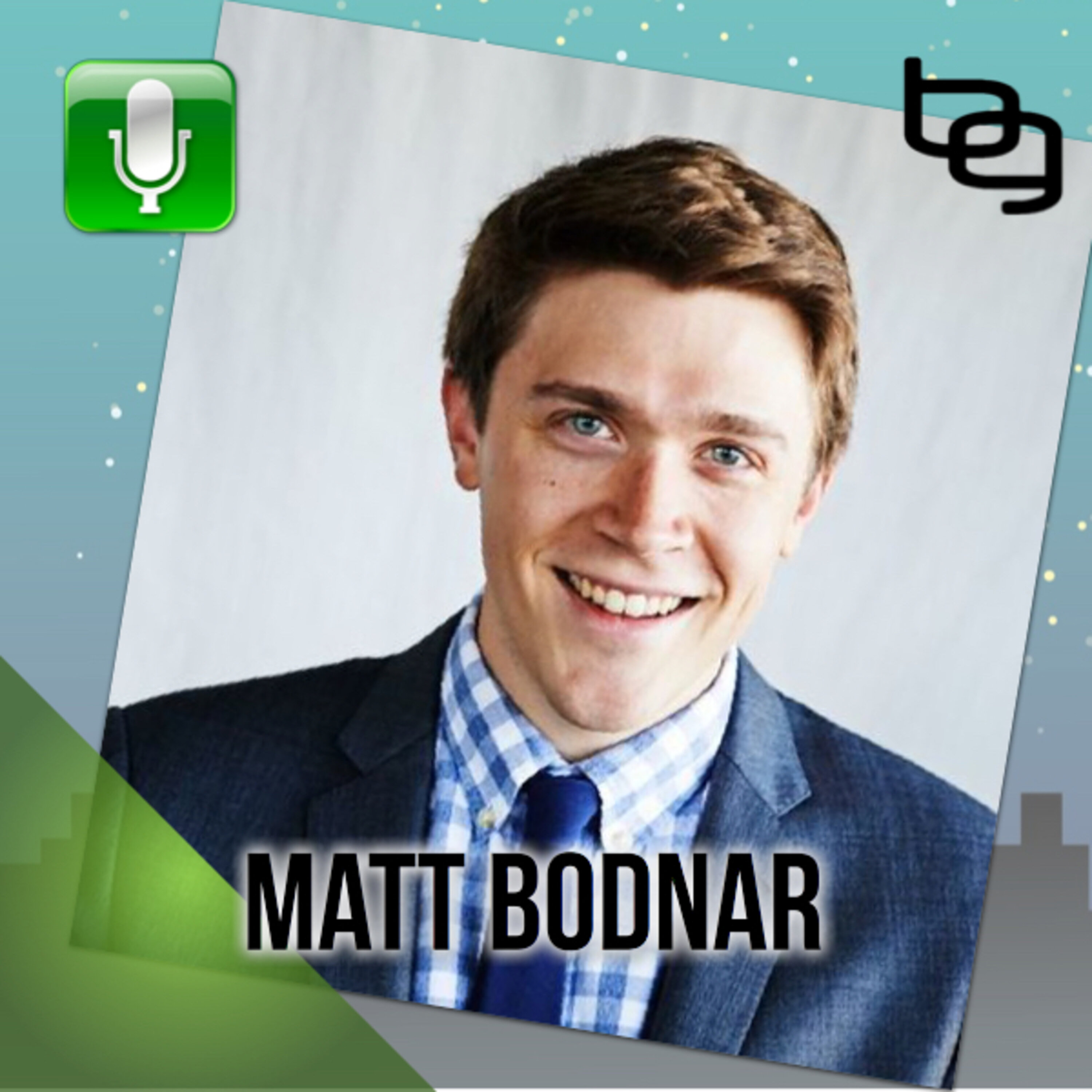
The Biggest Brain Hacks, Hyper-Productivity Tools, Sleeping Without Sleeping & Much More With Science of Success Host Matt Bodnar.
This is a special Premium audio episode. Click here to activate a Premium subscription to the BenGreenfieldFitness show and access this and over 300 additional hidden audios, videos, pdf's and more!
My guest on today's show, Matt Bodnar, was named to Forbes "30 Under 30", called a “Rising Restaurateur Star” by the National Restaurant Association and a “Strategy Pro” by Restaurant Hospitality Magazine, is a partner at early stage investment firm Fresh Hospitality where he focuses on deal making and strategy.
Matt is also the creator and host of "The Science of Success" a #1 New & Noteworthy podcast, which is focused on improving decision-making, understanding psychology, and sharing insights from experts in everything from sleep science to the mental tactics used by Olympians to how sound can be used to enhance the brain and much more. Matt previously worked as an import/export consultant in Nanjing, China and spent several years at Goldman Sachs before returning to his family roots in the hospitality space.
During our discussion, you'll discover: -How Matt got named to the Forbes 30 under 30 list...[3:10]
-The three supplements Matt takes every day...[14:15] -What Matt's morning routine looks like, and why he is a big fan of "steady state cardio" to improve cognitive function...[17:45]
-The ingredients of Matt's "vegan" morning protein shake...[21:20]
-The actual neuroscience of success, and how a "fixed mindset" can sabotage your efforts to succeed...[24:45]
-How people we consider "superhuman" like Warren Buffet, Ray Dalio, Charlie Munger, Carnegie, Rockefeller, Tony Robbins, Elon Musk, etc. get so much done...[33:05]
-How sound can help you to be happier and achieve more, and how Matt uses sound, music and frequencies to enhance mental performance and productivity...[44:25]
-How to use neuroscience to build habits that stick...[50:55]
-The science behind"sleeping without sleeping" and how you can do it...[53:30]
-Does Matt use any technology or biohacks to enhance his brain or cognitive performance? [57:05]
-And much more!
Resources from this episode: -The Science of Success podcast -The Effective Executive: The Definitive Guide to Getting the Right Things Done -Essentialism: The Disciplined Pursuit of Less -Poor Charlie's Almanack -Michael Tyrrell Podcast - Unleashing The Phenomenon Of Using Sound & Music For Performance, Recovery, Healing & More -How Dali, Einstein, And Aristotle Perfected The Power Nap -CBD capsules -The "God Pill" -The HALO tDCS -The Circadia for sleep enhancement (use code GREENFIELD)
Do you have questions, thoughts or feedback for Matt or me? Leave your comments at BenGreenfieldFitness.com and one of us will reply!
See omnystudio.com/listener for privacy information.
Available Results
Generated results are saved to your library for reuse and search.
Choose Template
Pick the result you want. You can review provider and model before generating.
A concise first-pass summary for understanding the episode quickly.
A comprehensive, source-grounded extraction of the reusable knowledge in an episode.
A comprehensive extraction focused on health practices, protocols, claims, and safety caveats.
A dedicated analysis of warnings, limitations, trade-offs, weak evidence, and uncertainty.
Repeatable methods, frameworks, mental models, processes, and systems.
A comprehensive extraction focused on opportunities, strategy, markets, and company building.
A concise first-pass summary for understanding the episode quickly.
A detailed readable summary organized by chapter or topic.
A navigable map of subjects, topic flow, and suggested chapters.
A comprehensive, source-grounded extraction of the reusable knowledge in an episode.
Reusable atomic knowledge units extracted from the episode.
A comprehensive extraction focused on health practices, protocols, claims, and safety caveats.
A comprehensive extraction focused on opportunities, strategy, markets, and company building.
Explicit actions, next steps, habits, recommendations, and things to avoid.
A dedicated inventory of concrete resources named in the episode.
A dedicated analysis of warnings, limitations, trade-offs, weak evidence, and uncertainty.
A concise first-pass summary for understanding the episode quickly.
A detailed readable summary organized by chapter or topic.
A navigable map of subjects, topic flow, and suggested chapters.
A comprehensive, source-grounded extraction of the reusable knowledge in an episode.
Reusable atomic knowledge units extracted from the episode.
A comprehensive extraction focused on health practices, protocols, claims, and safety caveats.
A comprehensive extraction focused on opportunities, strategy, markets, and company building.
Scientific findings, mechanisms, studies, hypotheses, and the limits of the evidence discussed.
Technologies, AI models, technical methods, capabilities, limitations, and adoption implications.
Investment theses, assets, catalysts, valuation reasoning, time horizons, and risks.
Chronologies, actors, causes, consequences, turning points, and competing historical interpretations.
Policies, proposals, stakeholders, arguments, implementation constraints, and predicted effects.
Career paths, skills, hiring signals, workplace decisions, transitions, and limitations of the advice.
Behavioral mechanisms, biases, motivation, habits, emotions, interventions, and evidence limitations.
Economic mechanisms, incentives, indicators, market structure, forecasts, and uncertainty.
Leadership principles, team systems, organizational design, culture, feedback, and failure modes.
Audience, positioning, messaging, acquisition, retention, experiments, metrics, and failed approaches.
Teaching methods, learning strategies, practice, feedback, assessment, and effectiveness evidence.
Theses, premises, arguments, objections, values, thought experiments, and unresolved questions.
Communication patterns, conflict, boundaries, expectations, repair methods, and contextual limitations.
Books, papers, authors, courses, and other learning resources mentioned in the episode.
Repeatable methods, frameworks, mental models, processes, and systems.
Explicit actions, next steps, habits, recommendations, and things to avoid.
Memorable statements and important claims with attribution and source context.
A dedicated inventory of concrete resources named in the episode.
A dedicated analysis of warnings, limitations, trade-offs, weak evidence, and uncertainty.