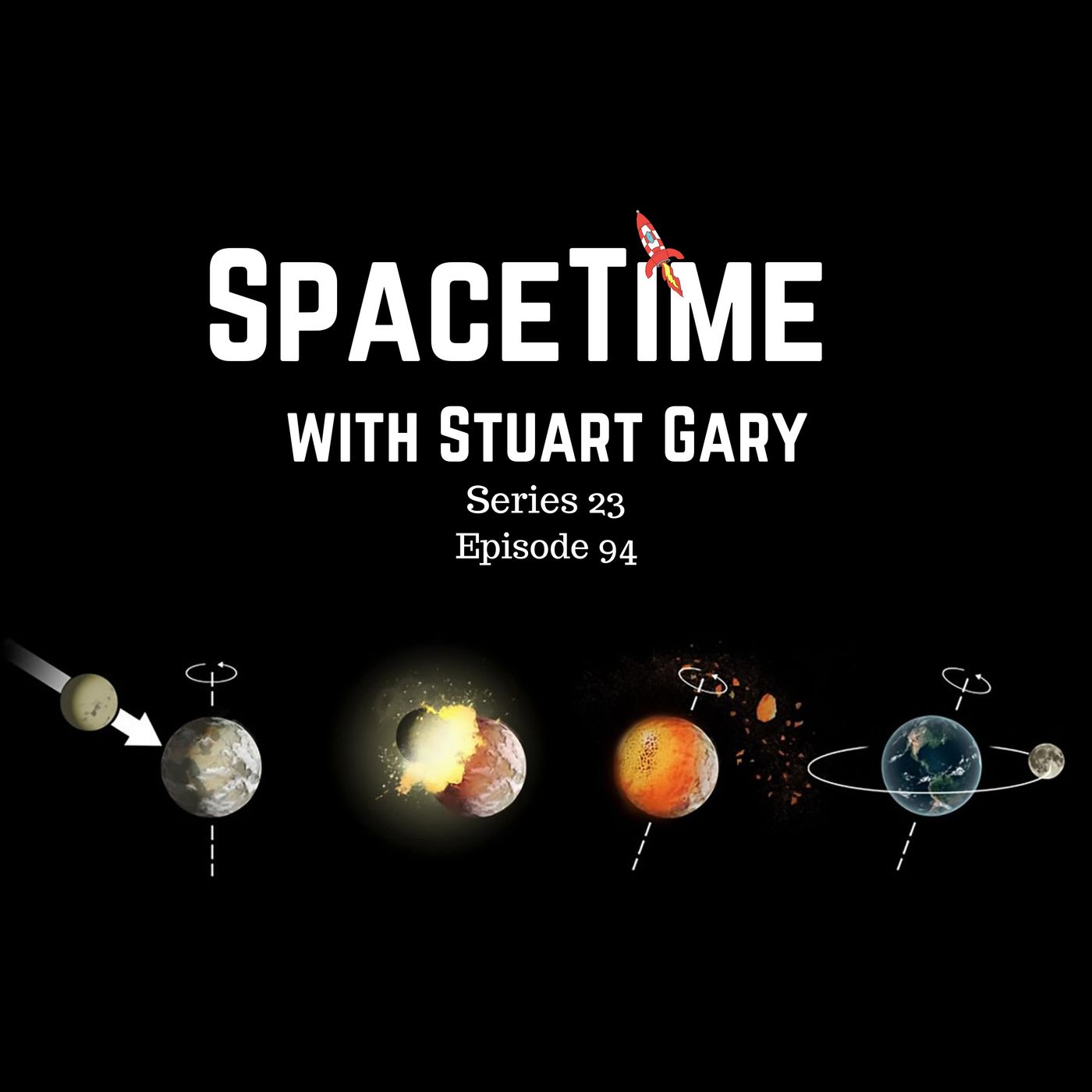
Earth May Have Been Wet Since it Formed
A new study of meteorites suggests Earth may always have been wet. The findings reported in the journal Science add a new chapter in to ongoing debate about the origins of Earth’s water.
*NASA’s planet-hunting TESS spacecraft completes its primary mission
NASA’s Transiting Exoplanet Survey Satellite – TESS – has finished its primary mission, imaging about 75% of the starry sky as part of a two-year-long survey.
*China launches its 189th spy satellite
China has successfully launched a new spy satellite as part of its ongoing program to provide Beijing with continuous uninterrupted satellite coverage of key strategic areas of the globe such as the South China Sea, the Taiwan straight, the border with India, Tibet, the citizens of Hong Kong and its Belt and Road initiative interests.
*The Science Report
New questions about just how effective remdesivir really is for treating COVID-19.
Mining threats to biodiversity caused by renewable energy to surpass climate change mitigation.
Why pregnant women shouldn’t have coffee.
Artificial intelligence now out flying fighter pilots in dogfights.
Skeptics guide to chiropractors
Sponsor:
This episode of SpaceTime is brought to you with the support of The Great Courses Plus - Lifelong learning from the best in their field. For our special free trial offer just visit www.thegreatcoursesplus.com/space and help support the show.
For more SpaceTime visit https://spacetimewithstuartgary.com (mobile friendly).
For enhanced Show Notes including photos to accompany this episode, visit: http://www.bitesz.com/spacetimeshownotes
Get immediate access to over 200 commercial-free, double and triple episode editions of SpaceTime plus extended interview bonus content. Subscribe via Patreon or Supercast....and share in the rewards. Details at www.patreon.com/spacetimewithstuartgary or Supercast - https://bitesznetwork.supercast.tech/
RSS feed: https://rss.acast.com/spacetime
Email: SpaceTime@bitesz.com
To receive the Astronomy Daily Newsletter free, direct to your inbox...just join our mailing list at www.bitesz.com/mailinglist or visit https://www.bitesz.com/astronomy-daily
See acast.com/privacy for privacy and opt-out information.
Become a supporter of this podcast: https://www.spreaker.com/podcast/spacetime-with-stuart-gary--2458531/support.
Available Results
Generated results are saved to your library for reuse and search.
Choose Template
Pick the result you want. You can review provider and model before generating.
A concise first-pass summary for understanding the episode quickly.
A comprehensive, source-grounded extraction of the reusable knowledge in an episode.
A comprehensive extraction focused on opportunities, strategy, markets, and company building.
Explicit actions, next steps, habits, recommendations, and things to avoid.
Repeatable methods, frameworks, mental models, processes, and systems.
A dedicated inventory of concrete resources named in the episode.
A concise first-pass summary for understanding the episode quickly.
A detailed readable summary organized by chapter or topic.
A navigable map of subjects, topic flow, and suggested chapters.
A comprehensive, source-grounded extraction of the reusable knowledge in an episode.
Reusable atomic knowledge units extracted from the episode.
A comprehensive extraction focused on health practices, protocols, claims, and safety caveats.
A comprehensive extraction focused on opportunities, strategy, markets, and company building.
Explicit actions, next steps, habits, recommendations, and things to avoid.
A dedicated inventory of concrete resources named in the episode.
A dedicated analysis of warnings, limitations, trade-offs, weak evidence, and uncertainty.
A concise first-pass summary for understanding the episode quickly.
A detailed readable summary organized by chapter or topic.
A navigable map of subjects, topic flow, and suggested chapters.
A comprehensive, source-grounded extraction of the reusable knowledge in an episode.
Reusable atomic knowledge units extracted from the episode.
A comprehensive extraction focused on health practices, protocols, claims, and safety caveats.
A comprehensive extraction focused on opportunities, strategy, markets, and company building.
Scientific findings, mechanisms, studies, hypotheses, and the limits of the evidence discussed.
Technologies, AI models, technical methods, capabilities, limitations, and adoption implications.
Investment theses, assets, catalysts, valuation reasoning, time horizons, and risks.
Chronologies, actors, causes, consequences, turning points, and competing historical interpretations.
Policies, proposals, stakeholders, arguments, implementation constraints, and predicted effects.
Career paths, skills, hiring signals, workplace decisions, transitions, and limitations of the advice.
Behavioral mechanisms, biases, motivation, habits, emotions, interventions, and evidence limitations.
Economic mechanisms, incentives, indicators, market structure, forecasts, and uncertainty.
Leadership principles, team systems, organizational design, culture, feedback, and failure modes.
Audience, positioning, messaging, acquisition, retention, experiments, metrics, and failed approaches.
Teaching methods, learning strategies, practice, feedback, assessment, and effectiveness evidence.
Theses, premises, arguments, objections, values, thought experiments, and unresolved questions.
Communication patterns, conflict, boundaries, expectations, repair methods, and contextual limitations.
Books, papers, authors, courses, and other learning resources mentioned in the episode.
Repeatable methods, frameworks, mental models, processes, and systems.
Explicit actions, next steps, habits, recommendations, and things to avoid.
Memorable statements and important claims with attribution and source context.
A dedicated inventory of concrete resources named in the episode.
A dedicated analysis of warnings, limitations, trade-offs, weak evidence, and uncertainty.