11 Ways To Age Like A Bad-Ass.
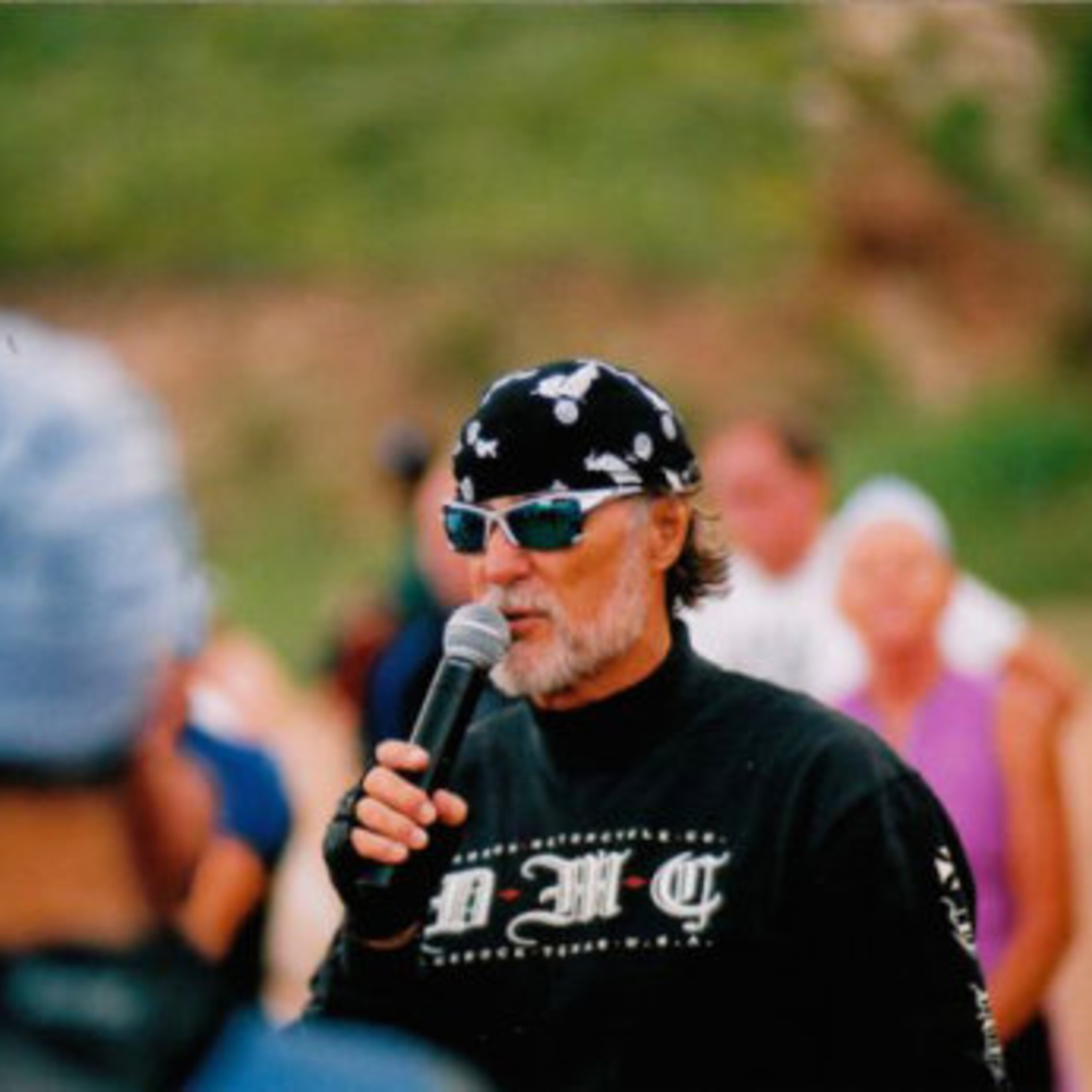
Mike Greer is one bad-ass old dude.
I first met Mike at the Become Superhuman live event. The guy wandered into our morning workout and proceeded to destroy a handful of fit young guys and girls at burpees, lunges, push-ups and Turkish get-ups. With his Ironman gear and well-tanned skin, I figured he was one of these 50-some year-old triathlete workout enthusiasts.
Then I found out he was 75.
As I got to know him, one of the first things I learned about Mike Greer is this: just call him Greer.
The guy has worn many hats over the years: entrepreneur who has started over eight businesses, a military career as a retired Lt. Colonel, a football player, a seven-time Ironman triathlete, the past president of the board of USA Triathlon, the president of the board and CEO of the Obstacle Racing Association, in the Texas Triathlon Hall of Fame, a father, grandfather, and a freaking great-grandfather...the list goes on and on and on.
Greer has what he calls “Eleven Points of Healthy Ageless Living”, and in this audio podcast episode, we delve into his anti-aging tips and ageless living secrets, including:
-What Greer means when he says "healthy, ageless living"...
-How to live an active sex life as you get older, and why you need to do it...
-Greer's tips for eating to live as long as possible...
-Greer's exercise protocol for healthy, ageless living...
-Why holding a grudge is one of the worst things you can do for your longevity...
-How stress can actually make you live longer...
-Greer's biggest mistake he's made that you can learn from...
-Greer's biggest tip for achieving amazing feats of physical performance without destroying your body...
If you enjoyed this episode, you may also want to tune into:
-7 Natural Anti-Aging Strategies That Will Stop Your Body From Getting Prematurely Old And Worn-Down.
-Why You’re Aging Faster And 5 Things You Can Do About It.
-The Zen Of Aging: How To Stay Fit and Look Amazing As You Get Older.
Questions, comments or feedback about Mike Greer and his anti-aging tips? Leave your thoughts at BenGreenfieldFitness.com!See omnystudio.com/listener for privacy information.
Available Results
Generated results are saved to your library for reuse and search.
Choose Template
Pick the result you want. You can review provider and model before generating.
A concise first-pass summary for understanding the episode quickly.
A comprehensive, source-grounded extraction of the reusable knowledge in an episode.
A comprehensive extraction focused on health practices, protocols, claims, and safety caveats.
A dedicated analysis of warnings, limitations, trade-offs, weak evidence, and uncertainty.
Repeatable methods, frameworks, mental models, processes, and systems.
A comprehensive extraction focused on opportunities, strategy, markets, and company building.
A concise first-pass summary for understanding the episode quickly.
A detailed readable summary organized by chapter or topic.
A navigable map of subjects, topic flow, and suggested chapters.
A comprehensive, source-grounded extraction of the reusable knowledge in an episode.
Reusable atomic knowledge units extracted from the episode.
A comprehensive extraction focused on health practices, protocols, claims, and safety caveats.
A comprehensive extraction focused on opportunities, strategy, markets, and company building.
Explicit actions, next steps, habits, recommendations, and things to avoid.
A dedicated inventory of concrete resources named in the episode.
A dedicated analysis of warnings, limitations, trade-offs, weak evidence, and uncertainty.
A concise first-pass summary for understanding the episode quickly.
A detailed readable summary organized by chapter or topic.
A navigable map of subjects, topic flow, and suggested chapters.
A comprehensive, source-grounded extraction of the reusable knowledge in an episode.
Reusable atomic knowledge units extracted from the episode.
A comprehensive extraction focused on health practices, protocols, claims, and safety caveats.
A comprehensive extraction focused on opportunities, strategy, markets, and company building.
Scientific findings, mechanisms, studies, hypotheses, and the limits of the evidence discussed.
Technologies, AI models, technical methods, capabilities, limitations, and adoption implications.
Investment theses, assets, catalysts, valuation reasoning, time horizons, and risks.
Chronologies, actors, causes, consequences, turning points, and competing historical interpretations.
Policies, proposals, stakeholders, arguments, implementation constraints, and predicted effects.
Career paths, skills, hiring signals, workplace decisions, transitions, and limitations of the advice.
Behavioral mechanisms, biases, motivation, habits, emotions, interventions, and evidence limitations.
Economic mechanisms, incentives, indicators, market structure, forecasts, and uncertainty.
Leadership principles, team systems, organizational design, culture, feedback, and failure modes.
Audience, positioning, messaging, acquisition, retention, experiments, metrics, and failed approaches.
Teaching methods, learning strategies, practice, feedback, assessment, and effectiveness evidence.
Theses, premises, arguments, objections, values, thought experiments, and unresolved questions.
Communication patterns, conflict, boundaries, expectations, repair methods, and contextual limitations.
Books, papers, authors, courses, and other learning resources mentioned in the episode.
Repeatable methods, frameworks, mental models, processes, and systems.
Explicit actions, next steps, habits, recommendations, and things to avoid.
Memorable statements and important claims with attribution and source context.
A dedicated inventory of concrete resources named in the episode.
A dedicated analysis of warnings, limitations, trade-offs, weak evidence, and uncertainty.