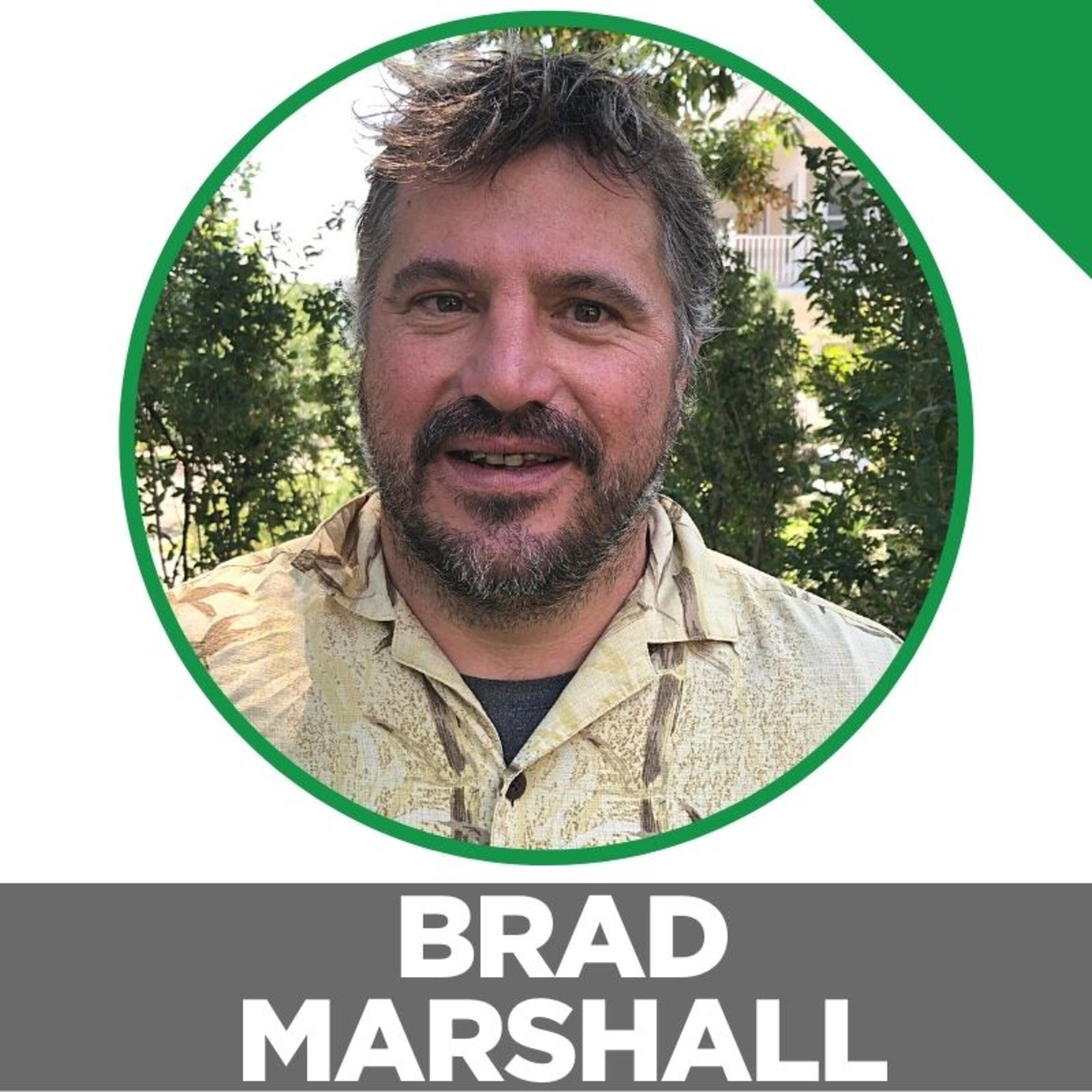
The Croissant Diet, Wine Fasting, Oodles Of Pork Lard, Keto Bricks & Much More With Brad Marshall.
bengreenfieldfitness.com/croissantdiet
My friend Ron Penna recently emailed me about a guy named Brad Marshall who...
"...has a fascinating take on why we get fat called the ROS (Reactive Oxygen Species) Theory of Obesity and how ROS signaling as a result of eating saturated fats is critical for satiety. Provocative stuff and the more I read the more I’m pretty sure he is onto something. Joel Greene thinks Brad is crazy on this point but I have a feeling he will end up being right on most if not all of it. You can read more here: "The ROS Theory Of Obesity"
Essentially, our entire meat supply (pork and chicken especially) is much higher in polyunsaturated fats than they should be and the only real way to change it is to change what we feed them. He is also starting to offer meats that are fed properly to ensure lower levels of PUFA. He also has been working on how eating croissants is the key to leanness. It has to be wrong but he makes VERY interesting arguments about it."
Naturally, I just had to get this guy on the show. Brad Marshall is the author of the Blog Fire In A Bottle and the creator of The Croissant Diet. Mildly obsessed with food and its history, his work focuses on trying to place current ideas about diet, including keto and carnivore diets into the framework of traditional Dietary patterns. For instance, the French diet before 1970 combined flour, sugar, butter and wine and the population was lean.
Brad wrote The ROS Theory of Obesity which posits that ROS generation in the mitochondria of fat cells could provide the mechanism that explains why a traditional chinese peasant diet - low fat with 85% of calories from starch; a French diet combining butter, wine and flour and a modern keto diet could all be expected to produce leanness but combining flour with polyunsaturated fats is a recipe for obesity. The core idea comes from the Protons thread of Peter Dobromylskyj’s blog Hyperlipid. Brad tested this hypothesis with his dietary experiment The Croissant Diet.
Brad is also the founder of Firebrand Meats, which is dedicated to producing pork and poultry products that are low in Linoleic acid, the n6 polyunsaturated fat (PUFA) whose intake has seen a dramatic worldwide increase in the last century. Animals cannot make PUFA and so we can create pork and chicken that is nearly free of them. You are what your animals eat.
Brad has a genetics degree from Cornell, a certificate from The French Culinary Institute, has studied cancer at Memorial Sloan-Kettering Cancer center and worked as a programmer for the Berkeley Drosophila Genome Project. He spent the last 15 years raising rotationally grazed pastured pork on his farm in upstate New York while running a butcher shop, local food restaurant and USDA inspected meat processing facility.
During our discussion, you'll discover: - Brad's background in molecular biology and cooking...8:00
- The production Reactive Oxygen Species (ROS) – and the ROS theory of obesity...18:43
- Unsaturated fats vs saturated fats in connection to ROS production and satiety...34:25
-What does all of this have to do with croissants?...44:45
-The Croissant Diet – getting specific...58:25
- Should we worry about endotoxemia with a diet high in saturated fats?...1:03:45
-The Wine Diet...1:09:30
bengreenfieldfitness.com/croissantdiet
See omnystudio.com/listener for privacy information.
Available Results
Generated results are saved to your library for reuse and search.
Choose Template
Pick the result you want. You can review provider and model before generating.
A concise first-pass summary for understanding the episode quickly.
A comprehensive, source-grounded extraction of the reusable knowledge in an episode.
A comprehensive extraction focused on health practices, protocols, claims, and safety caveats.
A dedicated analysis of warnings, limitations, trade-offs, weak evidence, and uncertainty.
Repeatable methods, frameworks, mental models, processes, and systems.
A comprehensive extraction focused on opportunities, strategy, markets, and company building.
A concise first-pass summary for understanding the episode quickly.
A detailed readable summary organized by chapter or topic.
A navigable map of subjects, topic flow, and suggested chapters.
A comprehensive, source-grounded extraction of the reusable knowledge in an episode.
Reusable atomic knowledge units extracted from the episode.
A comprehensive extraction focused on health practices, protocols, claims, and safety caveats.
A comprehensive extraction focused on opportunities, strategy, markets, and company building.
Explicit actions, next steps, habits, recommendations, and things to avoid.
A dedicated inventory of concrete resources named in the episode.
A dedicated analysis of warnings, limitations, trade-offs, weak evidence, and uncertainty.
A concise first-pass summary for understanding the episode quickly.
A detailed readable summary organized by chapter or topic.
A navigable map of subjects, topic flow, and suggested chapters.
A comprehensive, source-grounded extraction of the reusable knowledge in an episode.
Reusable atomic knowledge units extracted from the episode.
A comprehensive extraction focused on health practices, protocols, claims, and safety caveats.
A comprehensive extraction focused on opportunities, strategy, markets, and company building.
Scientific findings, mechanisms, studies, hypotheses, and the limits of the evidence discussed.
Technologies, AI models, technical methods, capabilities, limitations, and adoption implications.
Investment theses, assets, catalysts, valuation reasoning, time horizons, and risks.
Chronologies, actors, causes, consequences, turning points, and competing historical interpretations.
Policies, proposals, stakeholders, arguments, implementation constraints, and predicted effects.
Career paths, skills, hiring signals, workplace decisions, transitions, and limitations of the advice.
Behavioral mechanisms, biases, motivation, habits, emotions, interventions, and evidence limitations.
Economic mechanisms, incentives, indicators, market structure, forecasts, and uncertainty.
Leadership principles, team systems, organizational design, culture, feedback, and failure modes.
Audience, positioning, messaging, acquisition, retention, experiments, metrics, and failed approaches.
Teaching methods, learning strategies, practice, feedback, assessment, and effectiveness evidence.
Theses, premises, arguments, objections, values, thought experiments, and unresolved questions.
Communication patterns, conflict, boundaries, expectations, repair methods, and contextual limitations.
Books, papers, authors, courses, and other learning resources mentioned in the episode.
Repeatable methods, frameworks, mental models, processes, and systems.
Explicit actions, next steps, habits, recommendations, and things to avoid.
Memorable statements and important claims with attribution and source context.
A dedicated inventory of concrete resources named in the episode.
A dedicated analysis of warnings, limitations, trade-offs, weak evidence, and uncertainty.