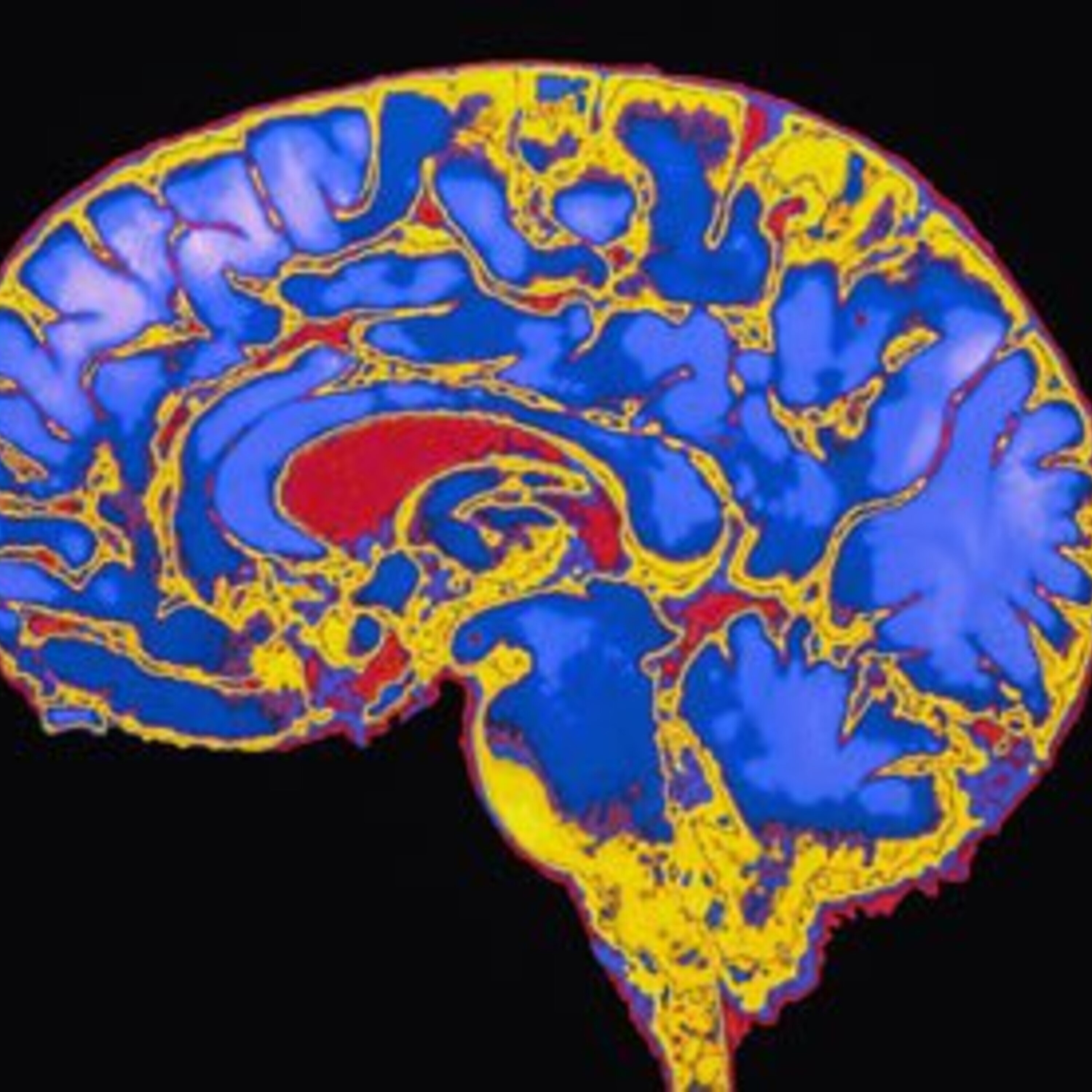
How To Dominate Cognitive Tasks, Think Faster And Get More Done.
I was a bit jet-lagged, tired and slightly below my desired cognitive capacity prior to hopping on stage this year to speak at the Bulletproof Biohacking conference.
So as I wandered through the expo, I thought to myself - why not try a new-fangled smart drug I haven't tried before? As you'd probably suspect, that's not something I advise to do prior to getting on stage in front of hundreds of people, but I occasionally live life on the wild side, so I grabbed a handful of some stuff called "CILTEP" (which is basically a mix of artichoke extract and forskolin), washed it down with a glass of water, and then gave my presentation. I did not get sick, vomit, or die, and things went pretty well during the presentation. I also got an email a few weeks later from the folks at NaturalStacks (the developers of CILTEP) asking me if I'd like to interview their co-founder Roy Krebs, who is a former college football player, an ex-sushi chef, and is now in charge of helping to develop smart drugs and designed strategies for hard-charging individuals to mentally dominate cognitive tasks. Roy sounded like a fascinating guy, so I said yes.
And now you get to listen in to our discussion, during which I ask Roy: -How does one become a developer and designer of smart drugs? -What is your approach to developing a smart drug? -What are your top strategies for people to dominate cognitive tasks? -What's the best way to get things done faster: routine or randomness? -Do you use to-do lists, or do you just "flow"? -I've heard you're into sensory deprivation and float tanks. What's the best way to use those?
Resource we discuss in this episode: -CILTEP -FocusAtWill -RescueTime -Inversion Table -Marinara Timer for Pomodoro Technique -Float Seattle Do you have questions, comments or feedback about CILTEP, thinking faster, enhancing cognitive performance or anything else that Roy and I discuss? Leave your thoughts BenGreenfieldFitness.com.
See omnystudio.com/listener for privacy information.
Available Results
Generated results are saved to your library for reuse and search.
Choose Template
Pick the result you want. You can review provider and model before generating.
A concise first-pass summary for understanding the episode quickly.
A comprehensive, source-grounded extraction of the reusable knowledge in an episode.
A comprehensive extraction focused on health practices, protocols, claims, and safety caveats.
A dedicated analysis of warnings, limitations, trade-offs, weak evidence, and uncertainty.
Repeatable methods, frameworks, mental models, processes, and systems.
A comprehensive extraction focused on opportunities, strategy, markets, and company building.
A concise first-pass summary for understanding the episode quickly.
A detailed readable summary organized by chapter or topic.
A navigable map of subjects, topic flow, and suggested chapters.
A comprehensive, source-grounded extraction of the reusable knowledge in an episode.
Reusable atomic knowledge units extracted from the episode.
A comprehensive extraction focused on health practices, protocols, claims, and safety caveats.
A comprehensive extraction focused on opportunities, strategy, markets, and company building.
Explicit actions, next steps, habits, recommendations, and things to avoid.
A dedicated inventory of concrete resources named in the episode.
A dedicated analysis of warnings, limitations, trade-offs, weak evidence, and uncertainty.
A concise first-pass summary for understanding the episode quickly.
A detailed readable summary organized by chapter or topic.
A navigable map of subjects, topic flow, and suggested chapters.
A comprehensive, source-grounded extraction of the reusable knowledge in an episode.
Reusable atomic knowledge units extracted from the episode.
A comprehensive extraction focused on health practices, protocols, claims, and safety caveats.
A comprehensive extraction focused on opportunities, strategy, markets, and company building.
Scientific findings, mechanisms, studies, hypotheses, and the limits of the evidence discussed.
Technologies, AI models, technical methods, capabilities, limitations, and adoption implications.
Investment theses, assets, catalysts, valuation reasoning, time horizons, and risks.
Chronologies, actors, causes, consequences, turning points, and competing historical interpretations.
Policies, proposals, stakeholders, arguments, implementation constraints, and predicted effects.
Career paths, skills, hiring signals, workplace decisions, transitions, and limitations of the advice.
Behavioral mechanisms, biases, motivation, habits, emotions, interventions, and evidence limitations.
Economic mechanisms, incentives, indicators, market structure, forecasts, and uncertainty.
Leadership principles, team systems, organizational design, culture, feedback, and failure modes.
Audience, positioning, messaging, acquisition, retention, experiments, metrics, and failed approaches.
Teaching methods, learning strategies, practice, feedback, assessment, and effectiveness evidence.
Theses, premises, arguments, objections, values, thought experiments, and unresolved questions.
Communication patterns, conflict, boundaries, expectations, repair methods, and contextual limitations.
Books, papers, authors, courses, and other learning resources mentioned in the episode.
Repeatable methods, frameworks, mental models, processes, and systems.
Explicit actions, next steps, habits, recommendations, and things to avoid.
Memorable statements and important claims with attribution and source context.
A dedicated inventory of concrete resources named in the episode.
A dedicated analysis of warnings, limitations, trade-offs, weak evidence, and uncertainty.