Biohacking Your Brain With Precision Medicine, Genomics, Psychedelics, Advanced Nutritional Strategies & Much More!
bengreenfieldfitness.com/wildhealthbrain
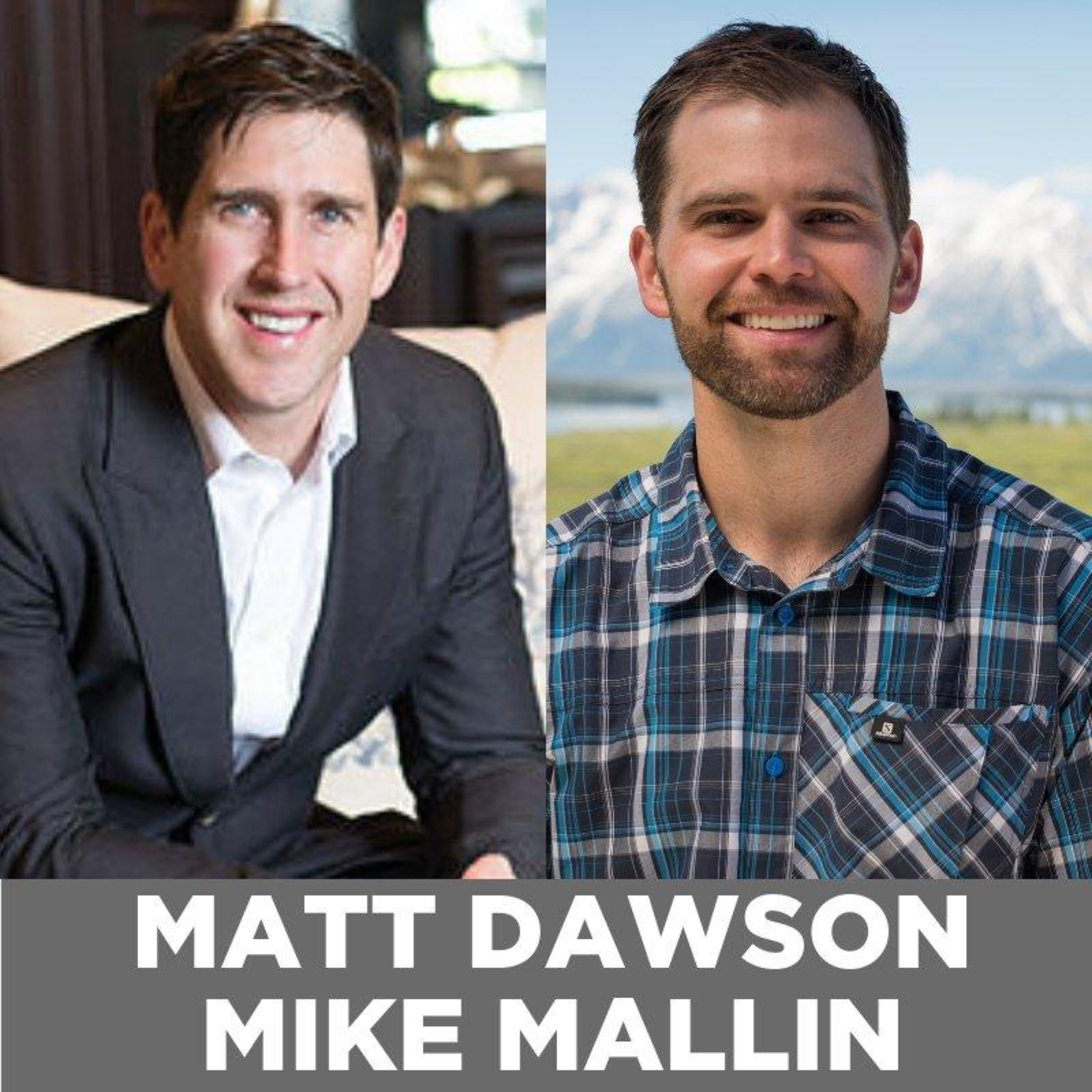
Dr. Matt Dawson and Dr. Mike Mallin are the head honcho docs at Wild Health, with locations in Versailles, KY and Bend, OR. I first interviewed these guys in the episode "How To Use Precision Medicine To Enhance Athletic Performance, Defy Aging, Balance Hormones, Fix The Heart & Much More." then again in "Why Your DNA Is Worthless (& What You Need To Focus On Instead)", and in this episode, they're back to talk all things brain optimization, brain biohacking and a medical-based precision genomics approach to upgrading the brain.
Dr. Matt Dawson is a precision medicine physician in Lexington, KY, co-host of the Wild Health Podcast, and has been obsessed with performance optimization as long as he can remember. He received scholarships to play two sports in college even with “minimal talent” because of his voracious reading and implementation of any fitness or nutritional techniques that would give him an edge. Dr. Dawson continued that obsession in medical school, and as a physician, he has won national awards for education, innovation, and leadership. He has lectured in over 20 countries and trained thousands of other physicians through live lectures, online education, two textbooks, and an educational app. Dr. Dawson combines his training in genomics and functional medicine to give personalized, precise medical guidance. His obsession with performance optimization has morphed from, initially athletic, to now mental performance and longevity. Whether it's a professional athlete or a grandparent optimizing their mental clarity and mobility to keep up with their grandkids, Dr. Dawson is passionate about helping everyone perform at their absolute peak.
Dr. Mike Mallin is a physician in Bend, OR who is obsessed with health performance and precision medicine and is co-founder of the Wild Health Podcast. He completed medical school in South Carolina and trained in Emergency Medicine in Salt Lake City, UT where he competed in several ultramarathons and found his love for the mountains and performance. Mike currently practices in Bend, OR and Lexington, KY in his precision medicine clinics. He is also co-founder of the Ultrasound Podcast, an educational podcast that has taught thousands of physicians all over the world how to use ultrasound.
In this podcast, we discuss the September brain biohacking event coming up in Lexington, KY, September 26-28 (use code BEN for a discount).
During our discussion, you'll discover: -Matt and Mark's work on the frontlines of the COVID-19 pandemic...10:30
-Tests that determine cognitive function...19:10
-The link between immune function and the brain...39:00
-Recommended brain optimization modalities and strategies...43:30
-How to and how not to use plant medicines for cognitive function and brain health...57:15
-Peptides, ketamine, synthetic substitutes for plant medicines...1:04:20
-About the event being held at the Kentucky Castle this September...1:06:00
-And much more!
bengreenfieldfitness.com/wildhealthbrain
See omnystudio.com/listener for privacy information.
Available Results
Generated results are saved to your library for reuse and search.
Choose Template
Pick the result you want. You can review provider and model before generating.
A concise first-pass summary for understanding the episode quickly.
A comprehensive, source-grounded extraction of the reusable knowledge in an episode.
A comprehensive extraction focused on health practices, protocols, claims, and safety caveats.
A dedicated analysis of warnings, limitations, trade-offs, weak evidence, and uncertainty.
Repeatable methods, frameworks, mental models, processes, and systems.
A comprehensive extraction focused on opportunities, strategy, markets, and company building.
A concise first-pass summary for understanding the episode quickly.
A detailed readable summary organized by chapter or topic.
A navigable map of subjects, topic flow, and suggested chapters.
A comprehensive, source-grounded extraction of the reusable knowledge in an episode.
Reusable atomic knowledge units extracted from the episode.
A comprehensive extraction focused on health practices, protocols, claims, and safety caveats.
A comprehensive extraction focused on opportunities, strategy, markets, and company building.
Explicit actions, next steps, habits, recommendations, and things to avoid.
A dedicated inventory of concrete resources named in the episode.
A dedicated analysis of warnings, limitations, trade-offs, weak evidence, and uncertainty.
A concise first-pass summary for understanding the episode quickly.
A detailed readable summary organized by chapter or topic.
A navigable map of subjects, topic flow, and suggested chapters.
A comprehensive, source-grounded extraction of the reusable knowledge in an episode.
Reusable atomic knowledge units extracted from the episode.
A comprehensive extraction focused on health practices, protocols, claims, and safety caveats.
A comprehensive extraction focused on opportunities, strategy, markets, and company building.
Scientific findings, mechanisms, studies, hypotheses, and the limits of the evidence discussed.
Technologies, AI models, technical methods, capabilities, limitations, and adoption implications.
Investment theses, assets, catalysts, valuation reasoning, time horizons, and risks.
Chronologies, actors, causes, consequences, turning points, and competing historical interpretations.
Policies, proposals, stakeholders, arguments, implementation constraints, and predicted effects.
Career paths, skills, hiring signals, workplace decisions, transitions, and limitations of the advice.
Behavioral mechanisms, biases, motivation, habits, emotions, interventions, and evidence limitations.
Economic mechanisms, incentives, indicators, market structure, forecasts, and uncertainty.
Leadership principles, team systems, organizational design, culture, feedback, and failure modes.
Audience, positioning, messaging, acquisition, retention, experiments, metrics, and failed approaches.
Teaching methods, learning strategies, practice, feedback, assessment, and effectiveness evidence.
Theses, premises, arguments, objections, values, thought experiments, and unresolved questions.
Communication patterns, conflict, boundaries, expectations, repair methods, and contextual limitations.
Books, papers, authors, courses, and other learning resources mentioned in the episode.
Repeatable methods, frameworks, mental models, processes, and systems.
Explicit actions, next steps, habits, recommendations, and things to avoid.
Memorable statements and important claims with attribution and source context.
A dedicated inventory of concrete resources named in the episode.
A dedicated analysis of warnings, limitations, trade-offs, weak evidence, and uncertainty.