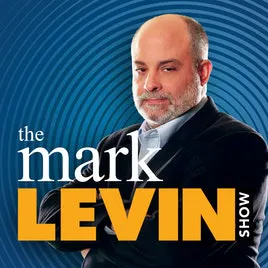
Mark Levin Audio Rewind - 1/31/23
On Tuesday’s Mark Levin Show, Larry O’Connor from WMAL fills in for Mark. The Department of Justice is a corrupt enterprise under President Biden and Merrick Garland. If the DOJ and FBI can violate the rights of Donald Trump, they can do it to anyone. The FACE Act was used as a weapon against Mark Houck, who was an innocent victim of one of the grossest abuses of power by the DOJ. Houck was used as a political prop and subject to an FBI raid at gunpoint in front of his 7 children. We need the good men and women in the FBI to stand up to the corrupt orders they’re being given by the Biden Administration. Also, it’s good to see Congress back in action under Republican leadership again which is a game changer. Having a majority in the House can kill any bill passed by the Democrat-majority Senate, but even more importantly it determines the committees in the House. Now we get to have people like Chip Roy on the Rules Committee so we can challenge Democrat socialists like Maxine Waters. Later, Democrat prospects for president after Biden are horrendous with Kamala Harris, Hillary, and Gavin Newsom in the front of the line. Finally, what happened to Georgia being ground zero for Jim Crow 2.0 like we were told from Biden, dividing Americans along political and racial lines like he’s done his whole career. Georgia was too racist for Major League Baseball to have the All-Star Game in Atlanta, but might be the location for the Democrat National Convention in 2024. Every single election law passed by Democrat is about letting anyone they want to vote, while Republican bills actually secure the vote and make it harder to cheat.
Learn more about your ad choices. Visit podcastchoices.com/adchoices
Available Results
Generated results are saved to your library for reuse and search.
Choose Template
Pick the result you want. You can review provider and model before generating.
A concise first-pass summary for understanding the episode quickly.
A comprehensive, source-grounded extraction of the reusable knowledge in an episode.
Technologies, AI models, technical methods, capabilities, limitations, and adoption implications.
Repeatable methods, frameworks, mental models, processes, and systems.
A dedicated analysis of warnings, limitations, trade-offs, weak evidence, and uncertainty.
A dedicated inventory of concrete resources named in the episode.
A concise first-pass summary for understanding the episode quickly.
A detailed readable summary organized by chapter or topic.
A navigable map of subjects, topic flow, and suggested chapters.
A comprehensive, source-grounded extraction of the reusable knowledge in an episode.
Reusable atomic knowledge units extracted from the episode.
A comprehensive extraction focused on health practices, protocols, claims, and safety caveats.
A comprehensive extraction focused on opportunities, strategy, markets, and company building.
Explicit actions, next steps, habits, recommendations, and things to avoid.
A dedicated inventory of concrete resources named in the episode.
A dedicated analysis of warnings, limitations, trade-offs, weak evidence, and uncertainty.
A concise first-pass summary for understanding the episode quickly.
A detailed readable summary organized by chapter or topic.
A navigable map of subjects, topic flow, and suggested chapters.
A comprehensive, source-grounded extraction of the reusable knowledge in an episode.
Reusable atomic knowledge units extracted from the episode.
A comprehensive extraction focused on health practices, protocols, claims, and safety caveats.
A comprehensive extraction focused on opportunities, strategy, markets, and company building.
Scientific findings, mechanisms, studies, hypotheses, and the limits of the evidence discussed.
Technologies, AI models, technical methods, capabilities, limitations, and adoption implications.
Investment theses, assets, catalysts, valuation reasoning, time horizons, and risks.
Chronologies, actors, causes, consequences, turning points, and competing historical interpretations.
Policies, proposals, stakeholders, arguments, implementation constraints, and predicted effects.
Career paths, skills, hiring signals, workplace decisions, transitions, and limitations of the advice.
Behavioral mechanisms, biases, motivation, habits, emotions, interventions, and evidence limitations.
Economic mechanisms, incentives, indicators, market structure, forecasts, and uncertainty.
Leadership principles, team systems, organizational design, culture, feedback, and failure modes.
Audience, positioning, messaging, acquisition, retention, experiments, metrics, and failed approaches.
Teaching methods, learning strategies, practice, feedback, assessment, and effectiveness evidence.
Theses, premises, arguments, objections, values, thought experiments, and unresolved questions.
Communication patterns, conflict, boundaries, expectations, repair methods, and contextual limitations.
Books, papers, authors, courses, and other learning resources mentioned in the episode.
Repeatable methods, frameworks, mental models, processes, and systems.
Explicit actions, next steps, habits, recommendations, and things to avoid.
Memorable statements and important claims with attribution and source context.
A dedicated inventory of concrete resources named in the episode.
A dedicated analysis of warnings, limitations, trade-offs, weak evidence, and uncertainty.