A New Way To Get Unstoppable Conditioning, Maximum Strength, Speed, Power & Muscle...In 3 Hours Per Week (Or Less).
On several recent podcasts, I've mentioned that (especially when I've been traveling and have limited equipment), one of my key, go-to workouts is a program known as "Neuro-Mass", which I now consider to be one of fastest methods for developing power and strength with little more than your own bodyweight and, optionally, a kettlebell or two, adding slabs of functional muscle to a lean frame quickly, and building muscle recruitment and explosiveness in a smart, systematic way.
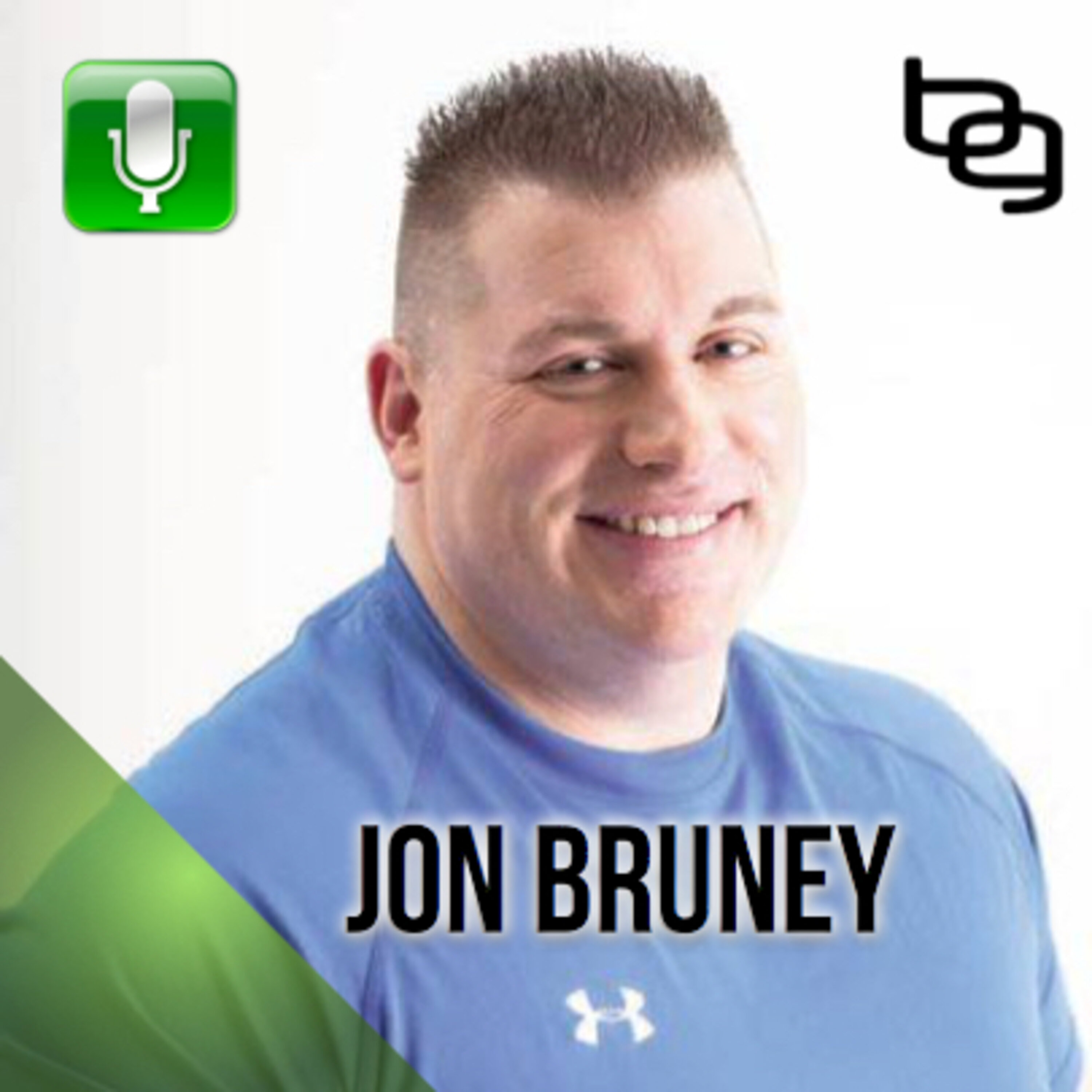
Neuro-Mass gives you the exact protocols you need to create an impressive, functional, athletic physique, combining the best kettlebell resistance and bodyweight exercises with a new cutting edge training method called "Neuro-Sets". These Neuro-Sets, comprised of grinds, isometrics and explosive movements, create rapid physique transformation. While most training programs only focus on one approach to create growth or lean muscle or power or strength, Neuro-Mass uses multiple stressors in a single workout to create a better and smarter body, developing pure power combined with amazing capacity for sustained and continual strength output. The entire program was designed by this episode's podcast guest: Jon Bruney. Jon's exploits as Guinness World Record-holding strongman have been immortalized in Ripley’s Believe it or Not and seen on NBC’s: America’s got Talent, The Today Show and TruTv’s Guinness World Records Unleashed. A true renaissance man in the realm of strength-development, Jon is a best-selling author, world-class trainer, coach, motivational speaker, strongman, and pastor. Jon’s work with competitive athletes includes Olympians and NFL players. He is the author of the best-seller “Neuro-Mass – The Ultimate System for Spectacular Strength”. He also writes a training series called “Foundations” which is featured in MILO, widely considered the world’s most prestigious strength training journal. As co-owner of Submit Strength Equipment, Jon has been responsible for the design of numerous pieces of cutting-edge training equipment now in use around the world. Jon is also a veteran of numerous trainer certification courses.
During our discussion, you'll discover:
-Why one of Jon's favorite tricks is to attach two Harley-Davidson motorcycles to his body...[11:15]
-How to start each set that you do with something called a "grind" to stimulate maximum muscle recruitment...[17:40]
-The best way to breathe if you are lifting a weight to maximize muscle tension...[21:45]
-Why Jon is such a fan of the Powerlung, and also putting a paper bag over your face...[24:10]
-A surprising training trick you can do with a yoga block while you are sprinting...[33:45]
-Why you should create "controlled trauma" in a muscle during an exercise...[36:40]
-The reason most people do isometric exercises like a wall squat the wrong way, and how you should actually do it...[43:00]
-How to exhaust a muscle completely with nothing more than a bath towel...[44:25]
-And much more!
Resources from this episode: -Book: Neuro-Mass – The Ultimate System for Spectacular Strength -Magazine: MILO -The Powerlung -Neurogrips -Compex -Captain Of Crush hand grip strengthener
Do you have questions, comments or feedback for Jon or me? Leave your thoughts at BenGreenfieldFitness.com and one of us will reply!
See omnystudio.com/listener for privacy information.
Available Results
Generated results are saved to your library for reuse and search.
Choose Template
Pick the result you want. You can review provider and model before generating.
A concise first-pass summary for understanding the episode quickly.
A comprehensive, source-grounded extraction of the reusable knowledge in an episode.
A comprehensive extraction focused on health practices, protocols, claims, and safety caveats.
A dedicated analysis of warnings, limitations, trade-offs, weak evidence, and uncertainty.
Repeatable methods, frameworks, mental models, processes, and systems.
Technologies, AI models, technical methods, capabilities, limitations, and adoption implications.
A concise first-pass summary for understanding the episode quickly.
A detailed readable summary organized by chapter or topic.
A navigable map of subjects, topic flow, and suggested chapters.
A comprehensive, source-grounded extraction of the reusable knowledge in an episode.
Reusable atomic knowledge units extracted from the episode.
A comprehensive extraction focused on health practices, protocols, claims, and safety caveats.
A comprehensive extraction focused on opportunities, strategy, markets, and company building.
Explicit actions, next steps, habits, recommendations, and things to avoid.
A dedicated inventory of concrete resources named in the episode.
A dedicated analysis of warnings, limitations, trade-offs, weak evidence, and uncertainty.
A concise first-pass summary for understanding the episode quickly.
A detailed readable summary organized by chapter or topic.
A navigable map of subjects, topic flow, and suggested chapters.
A comprehensive, source-grounded extraction of the reusable knowledge in an episode.
Reusable atomic knowledge units extracted from the episode.
A comprehensive extraction focused on health practices, protocols, claims, and safety caveats.
A comprehensive extraction focused on opportunities, strategy, markets, and company building.
Scientific findings, mechanisms, studies, hypotheses, and the limits of the evidence discussed.
Technologies, AI models, technical methods, capabilities, limitations, and adoption implications.
Investment theses, assets, catalysts, valuation reasoning, time horizons, and risks.
Chronologies, actors, causes, consequences, turning points, and competing historical interpretations.
Policies, proposals, stakeholders, arguments, implementation constraints, and predicted effects.
Career paths, skills, hiring signals, workplace decisions, transitions, and limitations of the advice.
Behavioral mechanisms, biases, motivation, habits, emotions, interventions, and evidence limitations.
Economic mechanisms, incentives, indicators, market structure, forecasts, and uncertainty.
Leadership principles, team systems, organizational design, culture, feedback, and failure modes.
Audience, positioning, messaging, acquisition, retention, experiments, metrics, and failed approaches.
Teaching methods, learning strategies, practice, feedback, assessment, and effectiveness evidence.
Theses, premises, arguments, objections, values, thought experiments, and unresolved questions.
Communication patterns, conflict, boundaries, expectations, repair methods, and contextual limitations.
Books, papers, authors, courses, and other learning resources mentioned in the episode.
Repeatable methods, frameworks, mental models, processes, and systems.
Explicit actions, next steps, habits, recommendations, and things to avoid.
Memorable statements and important claims with attribution and source context.
A dedicated inventory of concrete resources named in the episode.
A dedicated analysis of warnings, limitations, trade-offs, weak evidence, and uncertainty.