Is This The Most Advanced Anti-Aging Analysis & Epigenetic Diagnostic Test Of The Future?
bengreenfieldfitness.com/trudiagnostic
The ability to track, measure and optimize your biological age is a field rife with confusion and a dizzying variety of testing methods such as telomere analysis and methylation clocks, transcriptomic-based, proteomic-based, metabolomic-based, composite Biomarkers
But a new biological age test developed by a company called TruDiagnostic claims that it will change how we measure health and ultimately, how we can improve it using epigenetics testing. In this episode, my guests from Tru Diagnostic talk about why this new development in epigenetics testing promises to be so revolutionary.
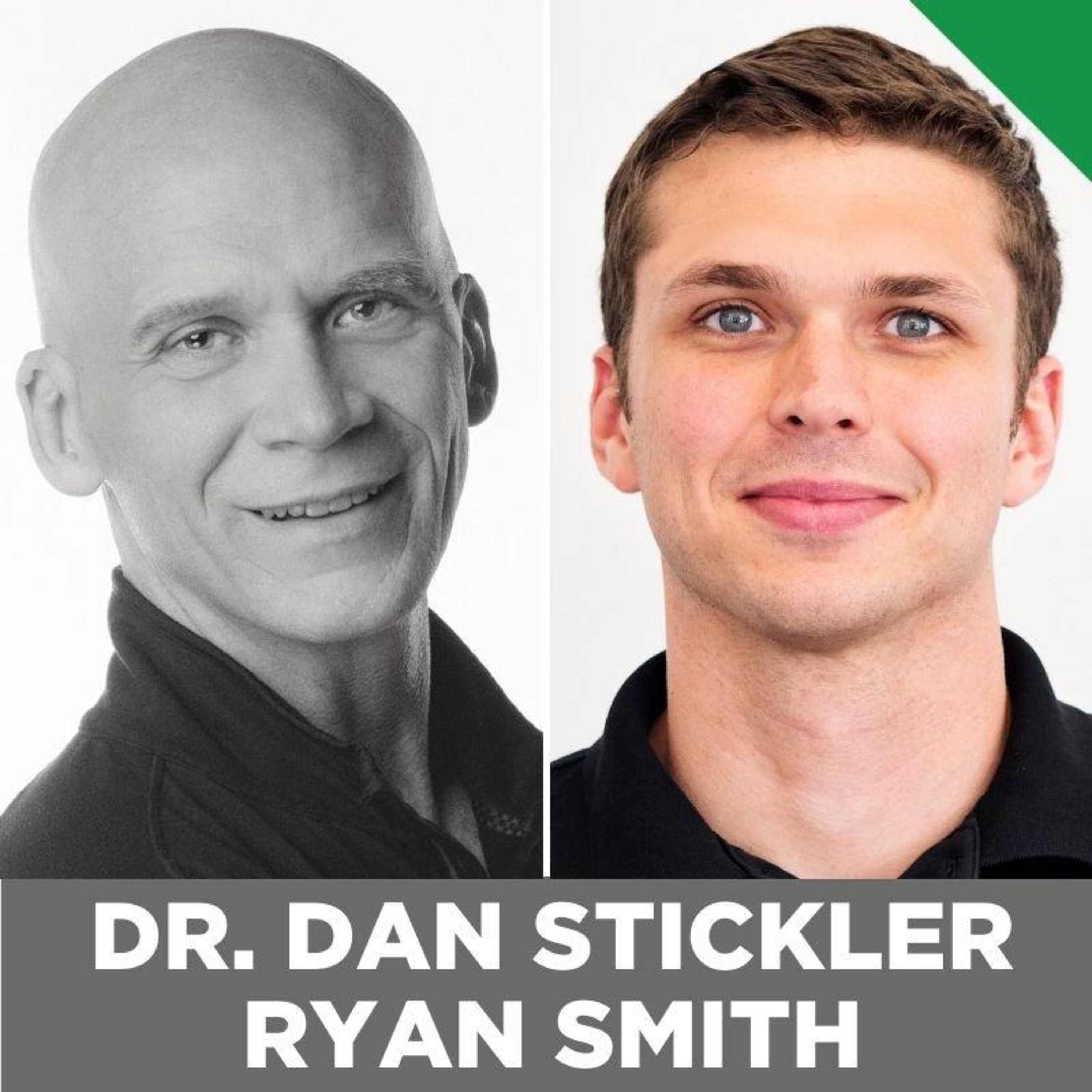
My first guest on this show, Ryan Smith, is part of the team that developed the biological age test and is working to bring it to market. My other guest is Dr. Daniel L. Stickler, who is the Co-Founder and Chief Medical Officer at Apeiron ZOH Inc. A physician to high-performing executives and entrepreneurs who want to upgrade their current state, he’s also an author, speaker, blogger and podcaster.
During our discussion, you'll discover: -The difference between biological and chronological age...10:15
-The connection between stem cells and telomere testing...14:05
-The difference between testing epigenetic markers vs. telomere lengths...16:20
-Different types and uses of epigenetic testing...21:25
-How the millions of CpG sites in the body are tested...28:25
-The key factors that indicate acceleration of aging...38:20
-How your diet affects your epigenetics...48:15
-Compounds that slow down aging with great efficacy...52:30
-What Dr. Stickler and Ryan Smith would do if their biological age was less than optimal...59:45
Episode sponsors: Beatin Path Media, Kion Bars, Joovv, Clearlight Saunas, Vuori Clothing
See omnystudio.com/listener for privacy information.
Available Results
Generated results are saved to your library for reuse and search.
Choose Template
Pick the result you want. You can review provider and model before generating.
A concise first-pass summary for understanding the episode quickly.
A comprehensive, source-grounded extraction of the reusable knowledge in an episode.
A comprehensive extraction focused on health practices, protocols, claims, and safety caveats.
A dedicated analysis of warnings, limitations, trade-offs, weak evidence, and uncertainty.
Repeatable methods, frameworks, mental models, processes, and systems.
A comprehensive extraction focused on opportunities, strategy, markets, and company building.
A concise first-pass summary for understanding the episode quickly.
A detailed readable summary organized by chapter or topic.
A navigable map of subjects, topic flow, and suggested chapters.
A comprehensive, source-grounded extraction of the reusable knowledge in an episode.
Reusable atomic knowledge units extracted from the episode.
A comprehensive extraction focused on health practices, protocols, claims, and safety caveats.
A comprehensive extraction focused on opportunities, strategy, markets, and company building.
Explicit actions, next steps, habits, recommendations, and things to avoid.
A dedicated inventory of concrete resources named in the episode.
A dedicated analysis of warnings, limitations, trade-offs, weak evidence, and uncertainty.
A concise first-pass summary for understanding the episode quickly.
A detailed readable summary organized by chapter or topic.
A navigable map of subjects, topic flow, and suggested chapters.
A comprehensive, source-grounded extraction of the reusable knowledge in an episode.
Reusable atomic knowledge units extracted from the episode.
A comprehensive extraction focused on health practices, protocols, claims, and safety caveats.
A comprehensive extraction focused on opportunities, strategy, markets, and company building.
Scientific findings, mechanisms, studies, hypotheses, and the limits of the evidence discussed.
Technologies, AI models, technical methods, capabilities, limitations, and adoption implications.
Investment theses, assets, catalysts, valuation reasoning, time horizons, and risks.
Chronologies, actors, causes, consequences, turning points, and competing historical interpretations.
Policies, proposals, stakeholders, arguments, implementation constraints, and predicted effects.
Career paths, skills, hiring signals, workplace decisions, transitions, and limitations of the advice.
Behavioral mechanisms, biases, motivation, habits, emotions, interventions, and evidence limitations.
Economic mechanisms, incentives, indicators, market structure, forecasts, and uncertainty.
Leadership principles, team systems, organizational design, culture, feedback, and failure modes.
Audience, positioning, messaging, acquisition, retention, experiments, metrics, and failed approaches.
Teaching methods, learning strategies, practice, feedback, assessment, and effectiveness evidence.
Theses, premises, arguments, objections, values, thought experiments, and unresolved questions.
Communication patterns, conflict, boundaries, expectations, repair methods, and contextual limitations.
Books, papers, authors, courses, and other learning resources mentioned in the episode.
Repeatable methods, frameworks, mental models, processes, and systems.
Explicit actions, next steps, habits, recommendations, and things to avoid.
Memorable statements and important claims with attribution and source context.
A dedicated inventory of concrete resources named in the episode.
A dedicated analysis of warnings, limitations, trade-offs, weak evidence, and uncertainty.