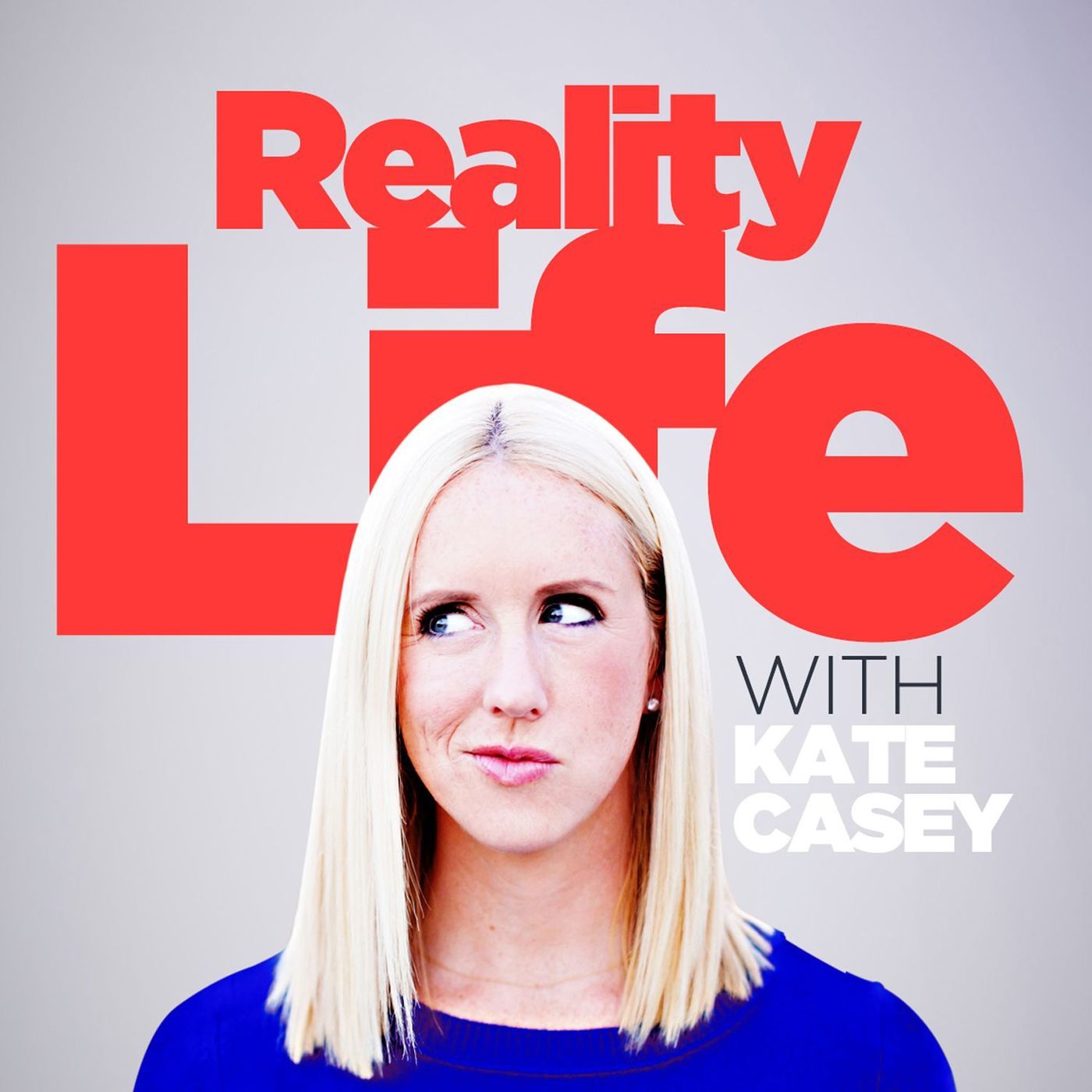
Ep - 146 - HOST OF TEMPTATION ISLAND / EXECUTIVE PRODUCER OF LEAH REMINI: SCIENTOLOGY AND THE AFTERMATH
Mark Walberg is host of the revived series Temptation Island on USA Network, the show which takes four couples to Maui, Hawaii only to be welcomed by 24 single men and women hoping to lure them out of their relationships and into their arms.
Jack Gashi lived through the Fyre Festival, a music festival scheduled to take place on the Bahamian island of Great Exuma over two weekends in April and May 2017. The event is the subject of two competing documentaries on Netflix and Hulu. During the Fyre Festival's inaugural weekend, the event experienced problems related to security, food, accommodations and artist relations. Eventually, the festival was indefinitely postponed after some attendees had arrived, finding tents and prepackaged sandwiches, instead of the luxury villas and gourmet meals they had been promised when they paid thousands of dollars for admission. Jack talks about his inside perspective and his thoughts about both documentaries.
Kate’s old friend Francine helps her review Tidying Up with Marie Kondo, a reality television series developed for Netflix that follows Marie Kondo, a Japanese organizing consultant and creator of the KonMari method, as she visits families to help them organize and tidy their homes.
Devon Hammonds is Executive Producer of Leah Remini: Scientology and the Aftermath, a documentary series that investigates the Church of Scientology on A&E.
Reality Life with Kate Casey
http://www.loveandknuckles.com
Twitter: @katecasey
Instagram: @katecaseyca
Facebook Group: https://www.facebook.com/groups/113157919338245/
Facebook.com/loveandknuckles
Amazon List: http://www.amazon.com/shop/katecaseyca
POSHMARK
CODE: REALITY5
MILKLIFE
ZIPRECRUITER
https://www.ziprecruiter.com/realitylife
See Privacy Policy at https://art19.com/privacy and California Privacy Notice at https://art19.com/privacy#do-not-sell-my-info.
Available Results
Generated results are saved to your library for reuse and search.
Choose Template
Pick the result you want. You can review provider and model before generating.
A concise first-pass summary for understanding the episode quickly.
A comprehensive, source-grounded extraction of the reusable knowledge in an episode.
Technologies, AI models, technical methods, capabilities, limitations, and adoption implications.
Repeatable methods, frameworks, mental models, processes, and systems.
A dedicated analysis of warnings, limitations, trade-offs, weak evidence, and uncertainty.
A dedicated inventory of concrete resources named in the episode.
A concise first-pass summary for understanding the episode quickly.
A detailed readable summary organized by chapter or topic.
A navigable map of subjects, topic flow, and suggested chapters.
A comprehensive, source-grounded extraction of the reusable knowledge in an episode.
Reusable atomic knowledge units extracted from the episode.
A comprehensive extraction focused on health practices, protocols, claims, and safety caveats.
A comprehensive extraction focused on opportunities, strategy, markets, and company building.
Explicit actions, next steps, habits, recommendations, and things to avoid.
A dedicated inventory of concrete resources named in the episode.
A dedicated analysis of warnings, limitations, trade-offs, weak evidence, and uncertainty.
A concise first-pass summary for understanding the episode quickly.
A detailed readable summary organized by chapter or topic.
A navigable map of subjects, topic flow, and suggested chapters.
A comprehensive, source-grounded extraction of the reusable knowledge in an episode.
Reusable atomic knowledge units extracted from the episode.
A comprehensive extraction focused on health practices, protocols, claims, and safety caveats.
A comprehensive extraction focused on opportunities, strategy, markets, and company building.
Scientific findings, mechanisms, studies, hypotheses, and the limits of the evidence discussed.
Technologies, AI models, technical methods, capabilities, limitations, and adoption implications.
Investment theses, assets, catalysts, valuation reasoning, time horizons, and risks.
Chronologies, actors, causes, consequences, turning points, and competing historical interpretations.
Policies, proposals, stakeholders, arguments, implementation constraints, and predicted effects.
Career paths, skills, hiring signals, workplace decisions, transitions, and limitations of the advice.
Behavioral mechanisms, biases, motivation, habits, emotions, interventions, and evidence limitations.
Economic mechanisms, incentives, indicators, market structure, forecasts, and uncertainty.
Leadership principles, team systems, organizational design, culture, feedback, and failure modes.
Audience, positioning, messaging, acquisition, retention, experiments, metrics, and failed approaches.
Teaching methods, learning strategies, practice, feedback, assessment, and effectiveness evidence.
Theses, premises, arguments, objections, values, thought experiments, and unresolved questions.
Communication patterns, conflict, boundaries, expectations, repair methods, and contextual limitations.
Books, papers, authors, courses, and other learning resources mentioned in the episode.
Repeatable methods, frameworks, mental models, processes, and systems.
Explicit actions, next steps, habits, recommendations, and things to avoid.
Memorable statements and important claims with attribution and source context.
A dedicated inventory of concrete resources named in the episode.
A dedicated analysis of warnings, limitations, trade-offs, weak evidence, and uncertainty.