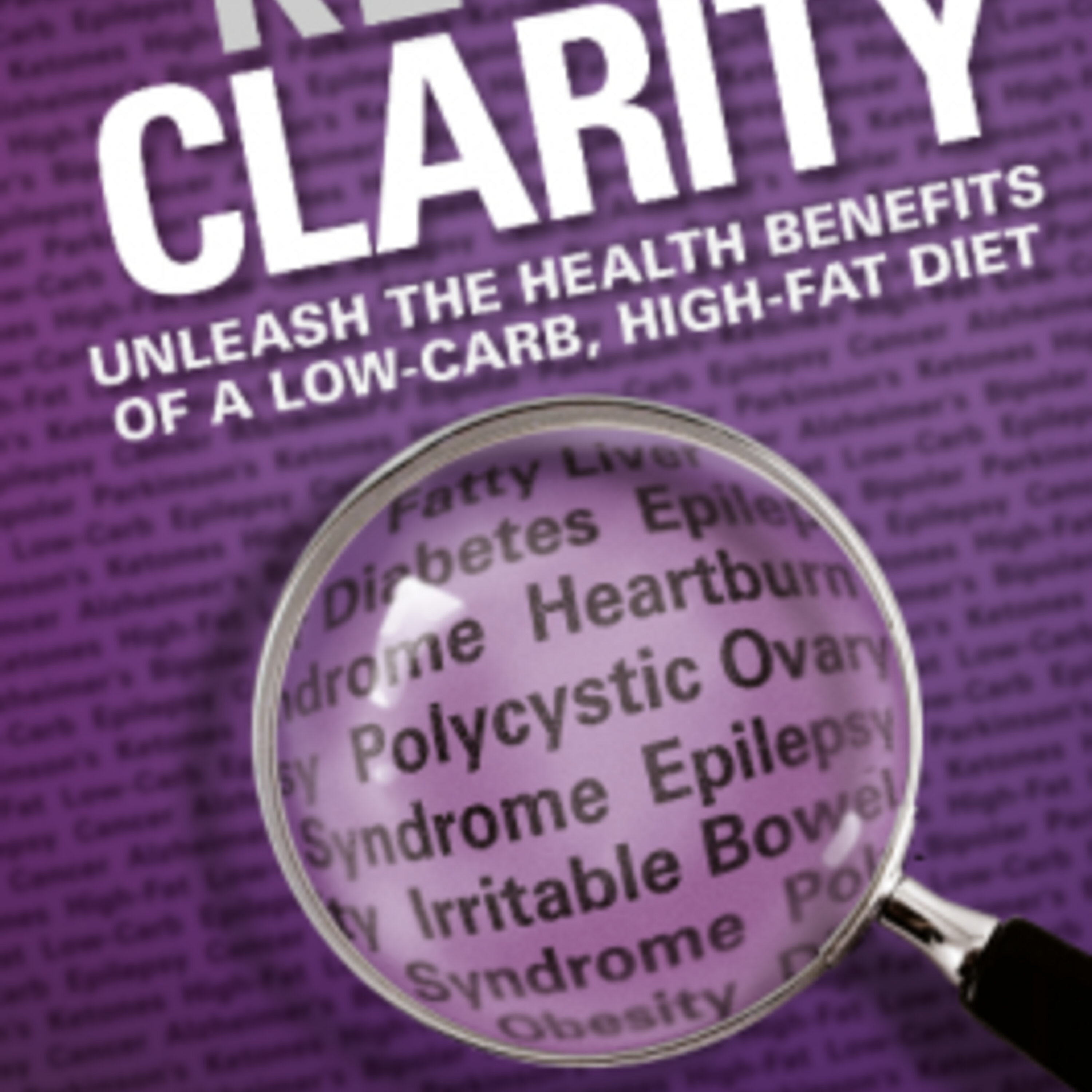
Everything You've Always Wanted To Know About Ketosis But Were Afraid To Ask.
Do you know what the similarities are between epilepsy, Type 2 diabetes, obesity, cardiovascular disease, metabolic syndrome, polycystic ovarian syndrome (PCOS), irritable bowel syndrome (IBS), heartburn (GERD), nonalcoholic fatty liver disease (NAFLD). Alzheimer’s Disease (AD), Parkinson’s Disease, dementia, mental illness, schizophrenia, bipolar, depression, narcolepsy, and sleep disorders, treating cancer, autism, migraines, chronic pain, brain injury, stroke, and kidney disease?
They can all be positively effected by a low-carb, high-fat, ketosis diet...
...and my guest today, Jimmy Moore, is going to tell you all about it.
Jimmy is world’s leading low-carb diet blogger and podcaster. Last year, he wrote the book Cholesterol Clarity with coauthor Dr. Eric C. Westman, a practicing internist and low-carb diet researcher, and I interviewed him about that book in the podcast episode "The Shocking Truth About Cholesterol & Why You Probably Don’t Even Need To Test For It."
Well now, Jimmy's back with a new book that pretty much answers everything you've always wanted to know about ketosis but were afraid to ask.
The new book is called Keto Clarity: Your Definitive Guide to the Benefits of a Low-Carb, High-Fat Diet and in the book, Jimmy shows you how a low-carb diet can be much more than simply as a means to lose weight, and how ketosis produces not only a powerful therapeutic effect on a wide variety of health conditions (that most people think requires medication to control) but can also be a pretty incredible biohack for both physical and mental performance.
The book includes interviews from twenty of the world’s authorities on low carb and ketosis diets, along with a step-by-step guide to help you produce more ketones and track your progress, real life success stories of people using a ketogenic diet, and more.
During my discussion with Jimmy, you'll find out: -Why not all low-carb diets are created equal... -How to find your carbohydrate tolerance level... -How to determine your personal protein threshold... -How much saturated fat is too much... -The biggest low carb mistakes that you can make... -Why you may not be producing adequate ketones... -And much more!
If you enjoyed this episode, you might also like:
-Ketosis Dangers: How To Maximize the Nutrient Density of a Low Carb Diet with Terry Wahls
-A Deep Dive Into Ketosis: How Navy Seals, Extreme Athletes & Busy Executives Can Enhance Physical and Mental Performance With The Secret Weapon of Ketone Fuel with Dr. Dominic D' Agostino
-The Ultimate Guide To Combining Fasting and Exercise: Everything You Need To Know with Dr. Peter Attia
Do you have questions about ketosis, Keto Clarity or the high-fat, low-carb approach we discuss in this episode? Leave your thoughts at BenGreenfieldFitness.com!
See omnystudio.com/listener for privacy information.
Available Results
Generated results are saved to your library for reuse and search.
Choose Template
Pick the result you want. You can review provider and model before generating.
A concise first-pass summary for understanding the episode quickly.
A comprehensive, source-grounded extraction of the reusable knowledge in an episode.
A comprehensive extraction focused on health practices, protocols, claims, and safety caveats.
A dedicated analysis of warnings, limitations, trade-offs, weak evidence, and uncertainty.
Repeatable methods, frameworks, mental models, processes, and systems.
Scientific findings, mechanisms, studies, hypotheses, and the limits of the evidence discussed.
A concise first-pass summary for understanding the episode quickly.
A detailed readable summary organized by chapter or topic.
A navigable map of subjects, topic flow, and suggested chapters.
A comprehensive, source-grounded extraction of the reusable knowledge in an episode.
Reusable atomic knowledge units extracted from the episode.
A comprehensive extraction focused on health practices, protocols, claims, and safety caveats.
A comprehensive extraction focused on opportunities, strategy, markets, and company building.
Explicit actions, next steps, habits, recommendations, and things to avoid.
A dedicated inventory of concrete resources named in the episode.
A dedicated analysis of warnings, limitations, trade-offs, weak evidence, and uncertainty.
A concise first-pass summary for understanding the episode quickly.
A detailed readable summary organized by chapter or topic.
A navigable map of subjects, topic flow, and suggested chapters.
A comprehensive, source-grounded extraction of the reusable knowledge in an episode.
Reusable atomic knowledge units extracted from the episode.
A comprehensive extraction focused on health practices, protocols, claims, and safety caveats.
A comprehensive extraction focused on opportunities, strategy, markets, and company building.
Scientific findings, mechanisms, studies, hypotheses, and the limits of the evidence discussed.
Technologies, AI models, technical methods, capabilities, limitations, and adoption implications.
Investment theses, assets, catalysts, valuation reasoning, time horizons, and risks.
Chronologies, actors, causes, consequences, turning points, and competing historical interpretations.
Policies, proposals, stakeholders, arguments, implementation constraints, and predicted effects.
Career paths, skills, hiring signals, workplace decisions, transitions, and limitations of the advice.
Behavioral mechanisms, biases, motivation, habits, emotions, interventions, and evidence limitations.
Economic mechanisms, incentives, indicators, market structure, forecasts, and uncertainty.
Leadership principles, team systems, organizational design, culture, feedback, and failure modes.
Audience, positioning, messaging, acquisition, retention, experiments, metrics, and failed approaches.
Teaching methods, learning strategies, practice, feedback, assessment, and effectiveness evidence.
Theses, premises, arguments, objections, values, thought experiments, and unresolved questions.
Communication patterns, conflict, boundaries, expectations, repair methods, and contextual limitations.
Books, papers, authors, courses, and other learning resources mentioned in the episode.
Repeatable methods, frameworks, mental models, processes, and systems.
Explicit actions, next steps, habits, recommendations, and things to avoid.
Memorable statements and important claims with attribution and source context.
A dedicated inventory of concrete resources named in the episode.
A dedicated analysis of warnings, limitations, trade-offs, weak evidence, and uncertainty.