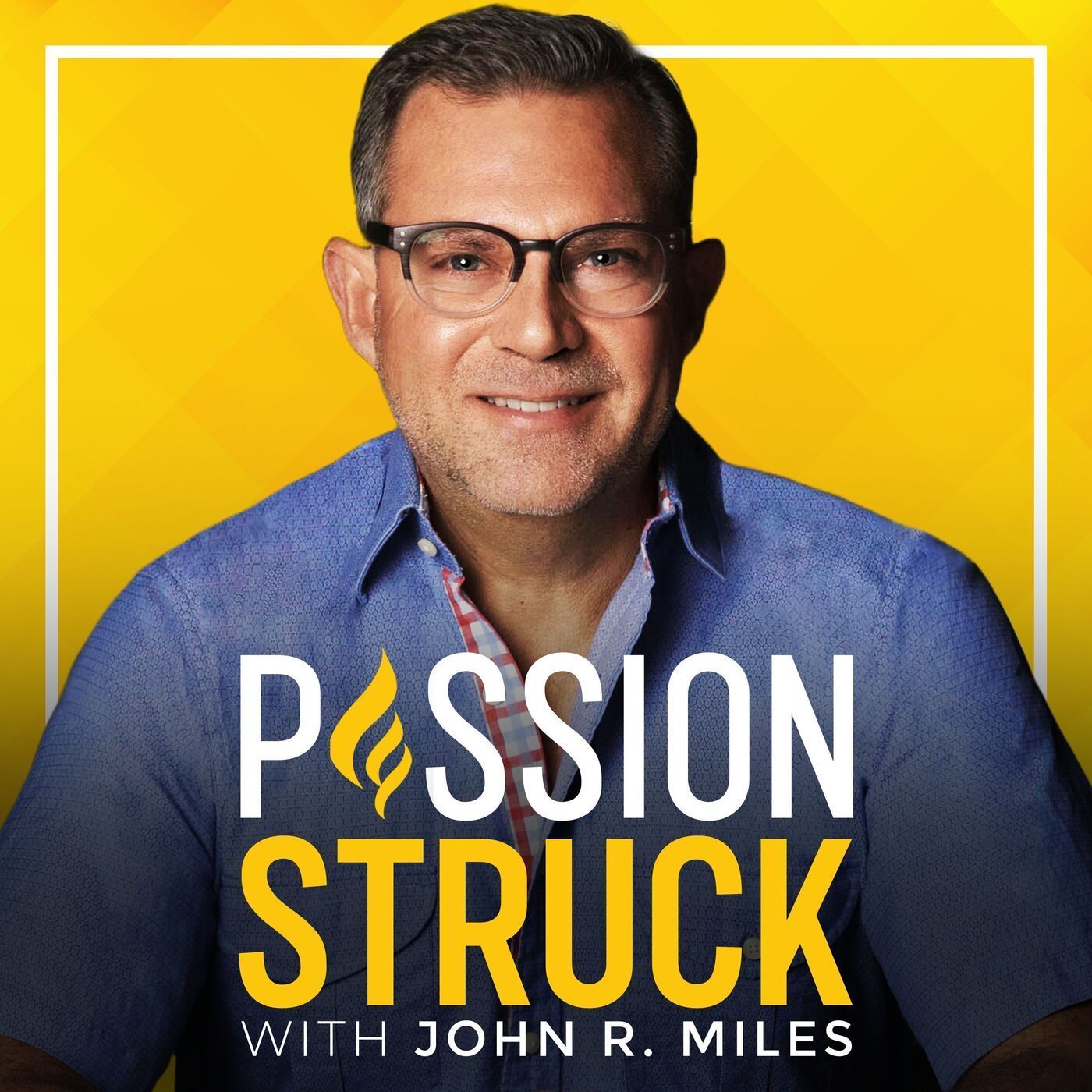
I Don’t Have Time Syndrome w/ John R. Miles Episode 27
In this episode, John discusses one of the most common obstacles he confronts with passion seekers - the I don't have time syndrome. I’m sure you’ve run into this person: The person who says, “I don’t have time for that” or “I’m way too busy to spend my time doing that.” In fact, that person may be you currently, and you know exactly how they feel. John discusses how growth seekers often, over and over, allow themselves to subsist in a chronic passion-less lifestyle driven by the choices that take them further from their dreams. He provides 4 ways to understand if you have a time management problem and provides some of the most common time wasters. And much more. Enjoy!! What You Will Learn In this Episode
- We All Have One Precious Commodity We Waste
- Something All Too Common In People He Has Mentored
- What You Are Potentially Giving Up
- Are Your Priorities in Alignment
- 3 Ways You Can Recognize If You Have A Time Problem
- The Most Common Time Wasters
- Changing How We Talk About Time
- Why Wasting Your Time Is The Problem
Connect with John
- Pre-Order The Mattering Effect: https://matteringeffect.com/
- Book John to Speak: https://johnrmiles.com/speaking/
- Keynotes, books, podcast, and resources: https://linktr.ee/John_R_Miles
- Children’s Book — You Matter, Luma: https://youmatterluma.com/
- Substack: https://www.theignitedlife.net/
Support the Movement: https://startmattering.com/. Every human deserves to feel seen, valued, and like they matter. Wear it. Live it. Show it.
Disclaimer
The Passion Struck podcast is for educational and entertainment purposes only. The views and opinions expressed do not necessarily reflect those of Passion Struck or its affiliates. This podcast is not a substitute for professional medical or psychological advice.
Pre-Order The Mattering Effect: https://matteringeffect.com/. Take the 90-second diagnostic to see if you're disappearing.
Explore the Show: https://passionstruck.com/starter-packs/. New to Passion Struck? Start with the best episodes curated for you.
Connect with John
- Website: https://johnrmiles.com
- Book John to Speak: https://johnrmiles.com/speaking/
- Substack: https://www.theignitedlife.net/
- Children’s Book — You Matter, Luma: https://youmatterluma.com/
Support the Movement: https://startmattering.com/. Every human deserves to feel seen, valued, and like they matter. Wear it. Live it. Show it.
Passion Struck — #1 Alternative Health Podcast. 85M+ downloads.
Disclaimer
The Passion Struck podcast is for educational and entertainment purposes only. The views and opinions expressed do not necessarily reflect those of Passion Struck or its affiliates. This podcast is not a substitute for professional medical or psychological advice.
Hosted by Simplecast, an AdsWizz company. See pcm.adswizz.com for information about our collection and use of personal data for advertising.
Available Results
Generated results are saved to your library for reuse and search.
Choose Template
Pick the result you want. You can review provider and model before generating.
A concise first-pass summary for understanding the episode quickly.
A comprehensive, source-grounded extraction of the reusable knowledge in an episode.
A comprehensive extraction focused on health practices, protocols, claims, and safety caveats.
A dedicated analysis of warnings, limitations, trade-offs, weak evidence, and uncertainty.
Repeatable methods, frameworks, mental models, processes, and systems.
A comprehensive extraction focused on opportunities, strategy, markets, and company building.
A concise first-pass summary for understanding the episode quickly.
A detailed readable summary organized by chapter or topic.
A navigable map of subjects, topic flow, and suggested chapters.
A comprehensive, source-grounded extraction of the reusable knowledge in an episode.
Reusable atomic knowledge units extracted from the episode.
A comprehensive extraction focused on health practices, protocols, claims, and safety caveats.
A comprehensive extraction focused on opportunities, strategy, markets, and company building.
Explicit actions, next steps, habits, recommendations, and things to avoid.
A dedicated inventory of concrete resources named in the episode.
A dedicated analysis of warnings, limitations, trade-offs, weak evidence, and uncertainty.
A concise first-pass summary for understanding the episode quickly.
A detailed readable summary organized by chapter or topic.
A navigable map of subjects, topic flow, and suggested chapters.
A comprehensive, source-grounded extraction of the reusable knowledge in an episode.
Reusable atomic knowledge units extracted from the episode.
A comprehensive extraction focused on health practices, protocols, claims, and safety caveats.
A comprehensive extraction focused on opportunities, strategy, markets, and company building.
Scientific findings, mechanisms, studies, hypotheses, and the limits of the evidence discussed.
Technologies, AI models, technical methods, capabilities, limitations, and adoption implications.
Investment theses, assets, catalysts, valuation reasoning, time horizons, and risks.
Chronologies, actors, causes, consequences, turning points, and competing historical interpretations.
Policies, proposals, stakeholders, arguments, implementation constraints, and predicted effects.
Career paths, skills, hiring signals, workplace decisions, transitions, and limitations of the advice.
Behavioral mechanisms, biases, motivation, habits, emotions, interventions, and evidence limitations.
Economic mechanisms, incentives, indicators, market structure, forecasts, and uncertainty.
Leadership principles, team systems, organizational design, culture, feedback, and failure modes.
Audience, positioning, messaging, acquisition, retention, experiments, metrics, and failed approaches.
Teaching methods, learning strategies, practice, feedback, assessment, and effectiveness evidence.
Theses, premises, arguments, objections, values, thought experiments, and unresolved questions.
Communication patterns, conflict, boundaries, expectations, repair methods, and contextual limitations.
Books, papers, authors, courses, and other learning resources mentioned in the episode.
Repeatable methods, frameworks, mental models, processes, and systems.
Explicit actions, next steps, habits, recommendations, and things to avoid.
Memorable statements and important claims with attribution and source context.
A dedicated inventory of concrete resources named in the episode.
A dedicated analysis of warnings, limitations, trade-offs, weak evidence, and uncertainty.