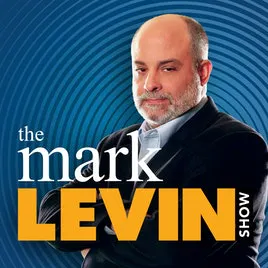
Mark Levin Audio Rewind - 11/14/23
On Tuesday’s Mark Levin Show, over 290,000 people were at the National Mall in Washington D.C. today to protest against anti-Semitism, support Israel, and raise support for hostages taken by Hamas, and it was 100% peaceful. Mark speaks with a victim of Hamas, Yarden, who has multiple family members being held hostage and has also had family killed by Hamas. Also, the media in America is destructive, inhumane, utterly immoral, and has no conscience as a group whatsoever, and they are tearing this country apart through their lies and projection. Donald Trump has been the greatest friend Israel and the Jewish people have ever had in the Oval Office, and the only president to have a Jewish family, but to people who don’t like him, he is Hitler. Democrat media outlets like Media Matters and people like Joe Scarborough make a mockery of the Holocaust by calling their political opponents Hitler as they do to Donald Trump, while they repeat Hamas propaganda to attack Israel. This is what the media from totalitarian regimes do; they turn people like Trump into the devil so that no matter what they do or say, we are supposed to believe they are the enemy. Meanwhile, 32 Americans have been killed by Iran and the Biden State Department is acting like it never happened. Instead, Biden and Antony Blinken have waived sanctions on Iran again and are giving them more money to re-arm themselves and its surrogate terrorists, while at the same time telling Israel to slow down their attack on Hamas. The Democrat party today is the Democrat party of FDR, who turned a blind eye to the Holocaust, although at least FDR didn’t directly fund Germany while they attacked Europe like how Biden is funding Iran while they attack Israel and American troops. Later, Mark is joined by Fox News host and author Gregg Jarrett to discuss his new book, The Constitution of the United States and Other Patriotic Documents.
Learn more about your ad choices. Visit podcastchoices.com/adchoices
Available Results
Generated results are saved to your library for reuse and search.
Choose Template
Pick the result you want. You can review provider and model before generating.
A concise first-pass summary for understanding the episode quickly.
A comprehensive, source-grounded extraction of the reusable knowledge in an episode.
Scientific findings, mechanisms, studies, hypotheses, and the limits of the evidence discussed.
A dedicated analysis of warnings, limitations, trade-offs, weak evidence, and uncertainty.
Memorable statements and important claims with attribution and source context.
Technologies, AI models, technical methods, capabilities, limitations, and adoption implications.
A concise first-pass summary for understanding the episode quickly.
A detailed readable summary organized by chapter or topic.
A navigable map of subjects, topic flow, and suggested chapters.
A comprehensive, source-grounded extraction of the reusable knowledge in an episode.
Reusable atomic knowledge units extracted from the episode.
A comprehensive extraction focused on health practices, protocols, claims, and safety caveats.
A comprehensive extraction focused on opportunities, strategy, markets, and company building.
Explicit actions, next steps, habits, recommendations, and things to avoid.
A dedicated inventory of concrete resources named in the episode.
A dedicated analysis of warnings, limitations, trade-offs, weak evidence, and uncertainty.
A concise first-pass summary for understanding the episode quickly.
A detailed readable summary organized by chapter or topic.
A navigable map of subjects, topic flow, and suggested chapters.
A comprehensive, source-grounded extraction of the reusable knowledge in an episode.
Reusable atomic knowledge units extracted from the episode.
A comprehensive extraction focused on health practices, protocols, claims, and safety caveats.
A comprehensive extraction focused on opportunities, strategy, markets, and company building.
Scientific findings, mechanisms, studies, hypotheses, and the limits of the evidence discussed.
Technologies, AI models, technical methods, capabilities, limitations, and adoption implications.
Investment theses, assets, catalysts, valuation reasoning, time horizons, and risks.
Chronologies, actors, causes, consequences, turning points, and competing historical interpretations.
Policies, proposals, stakeholders, arguments, implementation constraints, and predicted effects.
Career paths, skills, hiring signals, workplace decisions, transitions, and limitations of the advice.
Behavioral mechanisms, biases, motivation, habits, emotions, interventions, and evidence limitations.
Economic mechanisms, incentives, indicators, market structure, forecasts, and uncertainty.
Leadership principles, team systems, organizational design, culture, feedback, and failure modes.
Audience, positioning, messaging, acquisition, retention, experiments, metrics, and failed approaches.
Teaching methods, learning strategies, practice, feedback, assessment, and effectiveness evidence.
Theses, premises, arguments, objections, values, thought experiments, and unresolved questions.
Communication patterns, conflict, boundaries, expectations, repair methods, and contextual limitations.
Books, papers, authors, courses, and other learning resources mentioned in the episode.
Repeatable methods, frameworks, mental models, processes, and systems.
Explicit actions, next steps, habits, recommendations, and things to avoid.
Memorable statements and important claims with attribution and source context.
A dedicated inventory of concrete resources named in the episode.
A dedicated analysis of warnings, limitations, trade-offs, weak evidence, and uncertainty.