How Dr. Bronner's Magical Soaps Are Fighting Toxic GMO Crop Production.
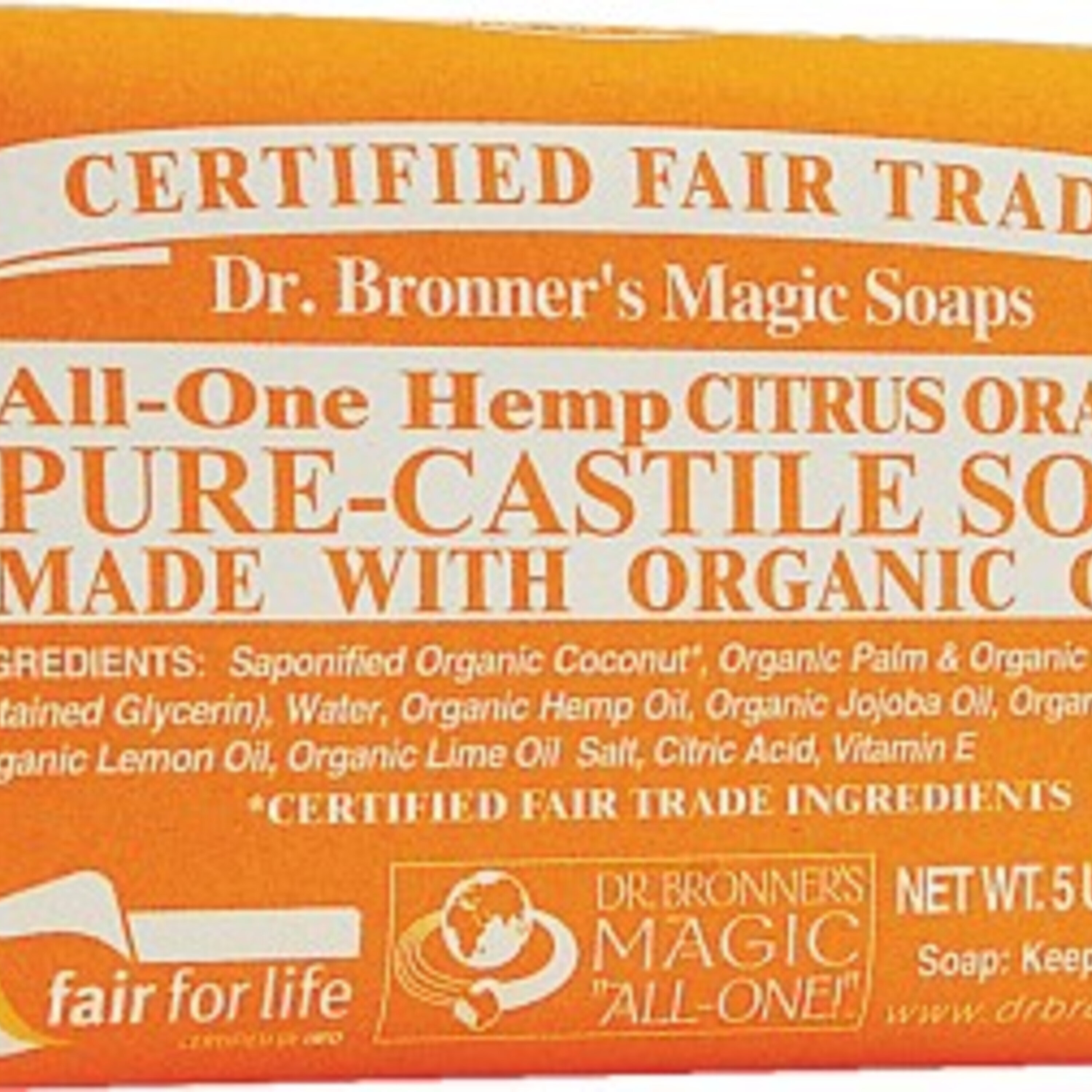
As you may know from reading my article on "How To Detox Your Home", if I can't eat something without it killing me, I don't smear it on my body either. From liquid soaps, to my bar soap, to lip balms to lotions, I've been using products from Dr. Bronner's as one of my main personal care products sources to follow this simple rule.
Unlike most commercial soapmakers, who distill the glycerin out of their soaps to sell separately, Dr. Bronner's retain it in their soaps for its superb moisturizing qualities. They use natural vitamin E from sunflower seeds and citric acid from fermented tapioca to protect freshness. They don't add any chelating agents, dyes, whiteners or synthetic fragrances, and instead use pure and powerful high-quality certified organic essential oils. All their soaps are biodegradable and nature-friendly and their bottles are made from 100% post-consumer recycled (PCR) plastic.
In today's podcast, I interview David Bronner, the president of Dr. Bronners, and a guy who has been arrested for hemp activism, written a recently polarizing Huffington Post article on GMO's , and who recently championed a drive towards labeling GMO foods in my own home state of Washington, a drive that unfortunately lost by narrow margins, but is now being revived in another form, which you'll learn all about in today's episode, including: -The amazing story of the original Dr. Bronner... -Why there are over 30,000 words on the label of Dr. Bronner's soaps... -What’s in Dr. Bronner’s soap... -Why not all coconut oil is created equal... -Why David Bronner recently penned this controversial article in Huffington Post on GMO’s... -What you can do to stop the toxic production of GMO's on our farmed crops...
Do you have questions, comments or feedback about Dr. Bronners or about GMO labeling? Leave your thoughts at BenGreenfieldFitness.com, be sure to check out all of Dr. Bronner's products by clicking here, and visit OregonRightToKnow.org to help fight GMO crop production, to cast your vote, to donate and to stop the spread of toxic herbicides.
See omnystudio.com/listener for privacy information.
Available Results
Generated results are saved to your library for reuse and search.
Choose Template
Pick the result you want. You can review provider and model before generating.
A concise first-pass summary for understanding the episode quickly.
A comprehensive, source-grounded extraction of the reusable knowledge in an episode.
A comprehensive extraction focused on health practices, protocols, claims, and safety caveats.
A dedicated analysis of warnings, limitations, trade-offs, weak evidence, and uncertainty.
Repeatable methods, frameworks, mental models, processes, and systems.
Technologies, AI models, technical methods, capabilities, limitations, and adoption implications.
A concise first-pass summary for understanding the episode quickly.
A detailed readable summary organized by chapter or topic.
A navigable map of subjects, topic flow, and suggested chapters.
A comprehensive, source-grounded extraction of the reusable knowledge in an episode.
Reusable atomic knowledge units extracted from the episode.
A comprehensive extraction focused on health practices, protocols, claims, and safety caveats.
A comprehensive extraction focused on opportunities, strategy, markets, and company building.
Explicit actions, next steps, habits, recommendations, and things to avoid.
A dedicated inventory of concrete resources named in the episode.
A dedicated analysis of warnings, limitations, trade-offs, weak evidence, and uncertainty.
A concise first-pass summary for understanding the episode quickly.
A detailed readable summary organized by chapter or topic.
A navigable map of subjects, topic flow, and suggested chapters.
A comprehensive, source-grounded extraction of the reusable knowledge in an episode.
Reusable atomic knowledge units extracted from the episode.
A comprehensive extraction focused on health practices, protocols, claims, and safety caveats.
A comprehensive extraction focused on opportunities, strategy, markets, and company building.
Scientific findings, mechanisms, studies, hypotheses, and the limits of the evidence discussed.
Technologies, AI models, technical methods, capabilities, limitations, and adoption implications.
Investment theses, assets, catalysts, valuation reasoning, time horizons, and risks.
Chronologies, actors, causes, consequences, turning points, and competing historical interpretations.
Policies, proposals, stakeholders, arguments, implementation constraints, and predicted effects.
Career paths, skills, hiring signals, workplace decisions, transitions, and limitations of the advice.
Behavioral mechanisms, biases, motivation, habits, emotions, interventions, and evidence limitations.
Economic mechanisms, incentives, indicators, market structure, forecasts, and uncertainty.
Leadership principles, team systems, organizational design, culture, feedback, and failure modes.
Audience, positioning, messaging, acquisition, retention, experiments, metrics, and failed approaches.
Teaching methods, learning strategies, practice, feedback, assessment, and effectiveness evidence.
Theses, premises, arguments, objections, values, thought experiments, and unresolved questions.
Communication patterns, conflict, boundaries, expectations, repair methods, and contextual limitations.
Books, papers, authors, courses, and other learning resources mentioned in the episode.
Repeatable methods, frameworks, mental models, processes, and systems.
Explicit actions, next steps, habits, recommendations, and things to avoid.
Memorable statements and important claims with attribution and source context.
A dedicated inventory of concrete resources named in the episode.
A dedicated analysis of warnings, limitations, trade-offs, weak evidence, and uncertainty.