Training Secrets From The Freak Of Nature Who Can Hoist 51 Reps Of Double 72 Pound Kettlebells In 10 Minutes.
https://bengreenfieldfitness.com/salemi
Imagine...
...a 72 pound kettlebell in each hand...
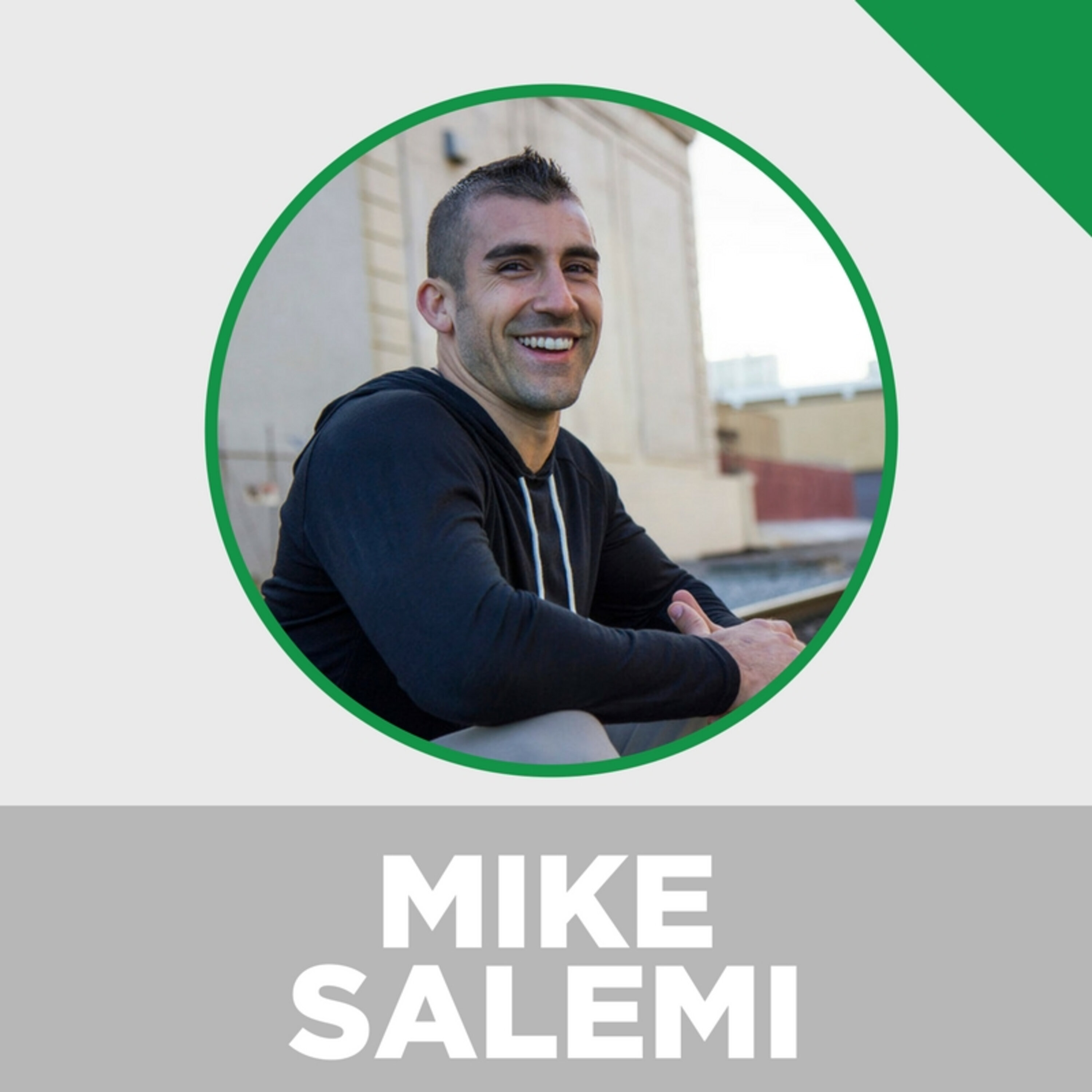
...51 reps in ten minutes. Barely anyone on the face of the planet can accomplish this feat, but today's podcast guest can. Mike Salemi's journey in strength & conditioning started at the age of 15 as a young and hungry Powerlifter. At his peak, Mike became a WABDL World Champion in the Bench Press and Deadlift, while simultaneously working as a collegiate level strength & conditioning coach. It was at this time that Mike was both introduced to the power of the kettlebell, and the work of respected Holistic Health Practitioner Paul Chek. Both have had large influences on Mike's development as a more well-rounded athlete and person in the years that followed. Currently, as an avid Kettlebell Sport competitor, Mike has achieved the ranking Master of Sport, and became the 2017 WAKSC World Champion in the Clean and Jerk. Through his unique approach, Mike has been able to integrate high performance athletic training using a holistic model. His dream is to continue creating educational materials and programs that support a more balanced athlete.
During our discussion, you'll discover:
-Why Mike is such a fan of the kettlebell, and he switched to it after being a freakin' world champion in the bench and deadlift...[8:00]
-The Russian military secrets Mike uses to train and compete...[10:45]
-What a sample workout looks like for Mike to get ready for competition...[12:55]
-How Mike's training approach allows athletes to train far less than their peers and achieve superior results...[18:55]
-What Paul Chek figured out about Mike that nobody else could figure out, an issue that completely reinvented Mike's performance...[23:55]
-Mike's experience with DMT and Ayahuasca...[34:15]
-How Mike fuels his body, how he incorporates intuitive eating in his approach, and how he banished his gut distress...[39:35]
-The crazy thing that happened when Mike deadlifted against Paul Chek...[44:30]
-The biggest mistakes people make when they're trying to get stronger or use kettlebells...[48:55]
-And much more...
Resources from this episode: -My first interview with Paul Chek -My second interview with Paul Chek -Paul Chek and the Chek Institute -My interview with Chris Holder about the RKC Kettlebell certification -Mikesalemi.io -My ELDOA podcast -Wild Mediterranean Oil of Oregano -Mike's e-book: 7-Steps To The Perfect Set-Up: What Your Kettlebell Swing Is Missing
Check out these videos with Mike: Show Sponsors:
-MVMT Watches - Go to MVMT.com/BEN for the perfect Christmas gift! You can get any watch, starting at 95-dollars, and get a free strap, all placed in an elegant gift box – ready to give - and shipping is free!
-HealthIQ - To learn more about life insurance for physically active people and get a free quote, go to HealthIQ.com/BEN.
-Me Undies - To get your 20% off, Free Shipping AND their 100% Satisfaction Guarantee and get the best and softest underwear you will ever own, go to: MeUndies.com/GREENFIELD
-ZipRecruiter - Post jobs on ZipRecruiter for FREE by visiting ZipRecruiter.com/GREEN.
Do you have questions, thoughts or feedback for Mike or me? Leave your comments at BenGreenfieldFitness.com and one of us will reply!
See omnystudio.com/listener for privacy information.
Available Results
Generated results are saved to your library for reuse and search.
Choose Template
Pick the result you want. You can review provider and model before generating.
A concise first-pass summary for understanding the episode quickly.
A comprehensive, source-grounded extraction of the reusable knowledge in an episode.
A comprehensive extraction focused on health practices, protocols, claims, and safety caveats.
A dedicated analysis of warnings, limitations, trade-offs, weak evidence, and uncertainty.
Repeatable methods, frameworks, mental models, processes, and systems.
Technologies, AI models, technical methods, capabilities, limitations, and adoption implications.
A concise first-pass summary for understanding the episode quickly.
A detailed readable summary organized by chapter or topic.
A navigable map of subjects, topic flow, and suggested chapters.
A comprehensive, source-grounded extraction of the reusable knowledge in an episode.
Reusable atomic knowledge units extracted from the episode.
A comprehensive extraction focused on health practices, protocols, claims, and safety caveats.
A comprehensive extraction focused on opportunities, strategy, markets, and company building.
Explicit actions, next steps, habits, recommendations, and things to avoid.
A dedicated inventory of concrete resources named in the episode.
A dedicated analysis of warnings, limitations, trade-offs, weak evidence, and uncertainty.
A concise first-pass summary for understanding the episode quickly.
A detailed readable summary organized by chapter or topic.
A navigable map of subjects, topic flow, and suggested chapters.
A comprehensive, source-grounded extraction of the reusable knowledge in an episode.
Reusable atomic knowledge units extracted from the episode.
A comprehensive extraction focused on health practices, protocols, claims, and safety caveats.
A comprehensive extraction focused on opportunities, strategy, markets, and company building.
Scientific findings, mechanisms, studies, hypotheses, and the limits of the evidence discussed.
Technologies, AI models, technical methods, capabilities, limitations, and adoption implications.
Investment theses, assets, catalysts, valuation reasoning, time horizons, and risks.
Chronologies, actors, causes, consequences, turning points, and competing historical interpretations.
Policies, proposals, stakeholders, arguments, implementation constraints, and predicted effects.
Career paths, skills, hiring signals, workplace decisions, transitions, and limitations of the advice.
Behavioral mechanisms, biases, motivation, habits, emotions, interventions, and evidence limitations.
Economic mechanisms, incentives, indicators, market structure, forecasts, and uncertainty.
Leadership principles, team systems, organizational design, culture, feedback, and failure modes.
Audience, positioning, messaging, acquisition, retention, experiments, metrics, and failed approaches.
Teaching methods, learning strategies, practice, feedback, assessment, and effectiveness evidence.
Theses, premises, arguments, objections, values, thought experiments, and unresolved questions.
Communication patterns, conflict, boundaries, expectations, repair methods, and contextual limitations.
Books, papers, authors, courses, and other learning resources mentioned in the episode.
Repeatable methods, frameworks, mental models, processes, and systems.
Explicit actions, next steps, habits, recommendations, and things to avoid.
Memorable statements and important claims with attribution and source context.
A dedicated inventory of concrete resources named in the episode.
A dedicated analysis of warnings, limitations, trade-offs, weak evidence, and uncertainty.