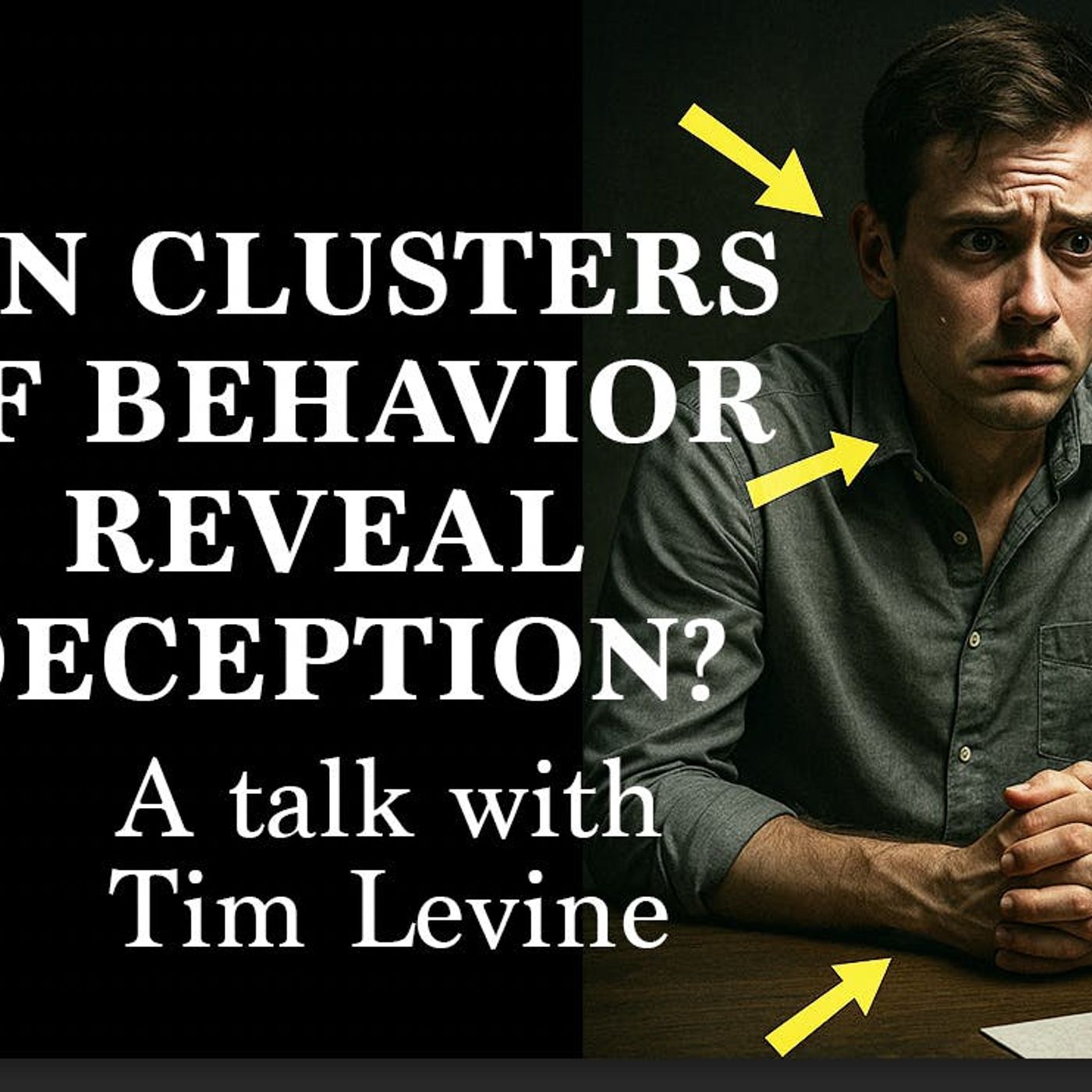
Can behavior clusters help determine a lie? Tim Levine on deception detection science
Many people think there are telltale signs of lying — shifty eyes, nervous fidgeting, maybe a quick smile — that can give someone away to trained observers. But according to decades of research, that’s a myth. Still, some scientists push back on that consensus. A recent paper by well-known researcher David Matsumoto (of the company Humintell) argues that combinations of nonverbal cues might be highly useful for revealing deception. In this episode, I talk with deception researcher Tim Levine, author of Duped and creator of truth-default theory, about whether that claim holds up — and what the science says about our ability to read lies using body language.
Hosted by Simplecast, an AdsWizz company. See pcm.adswizz.com for information about our collection and use of personal data for advertising.
More description
Many people think there are telltale signs of lying — shifty eyes, nervous fidgeting, maybe a quick smile — that can give someone away to trained observers. But according to decades of research, that’s a myth. Still, some scientists push back on that consensus. A recent paper by well-known researcher David Matsumoto (of the company Humintell) argues that combinations of nonverbal cues might be highly useful for revealing deception. In this episode, I talk with deception researcher Tim Levine, author of Duped and creator of truth-default theory, about whether that claim holds up — and what the science says about our ability to read lies using body language.
Hosted by Simplecast, an AdsWizz company. See pcm.adswizz.com for information about our collection and use of personal data for advertising.
Listen elsewhere
Available Results
Generated results are saved to your library for reuse and search.