63 Cups Of Coffee A Day & More: Five Simple Things You Can Do to Live a Longer, Healthier Life.
I received plenty of puzzled comments and inquiries from podcast listeners when, several episodes ago, I mentioned that one could gain a large number of surprising health, longevity and disease preventing benefits by drinking up to 4-6 cups of coffee a day.
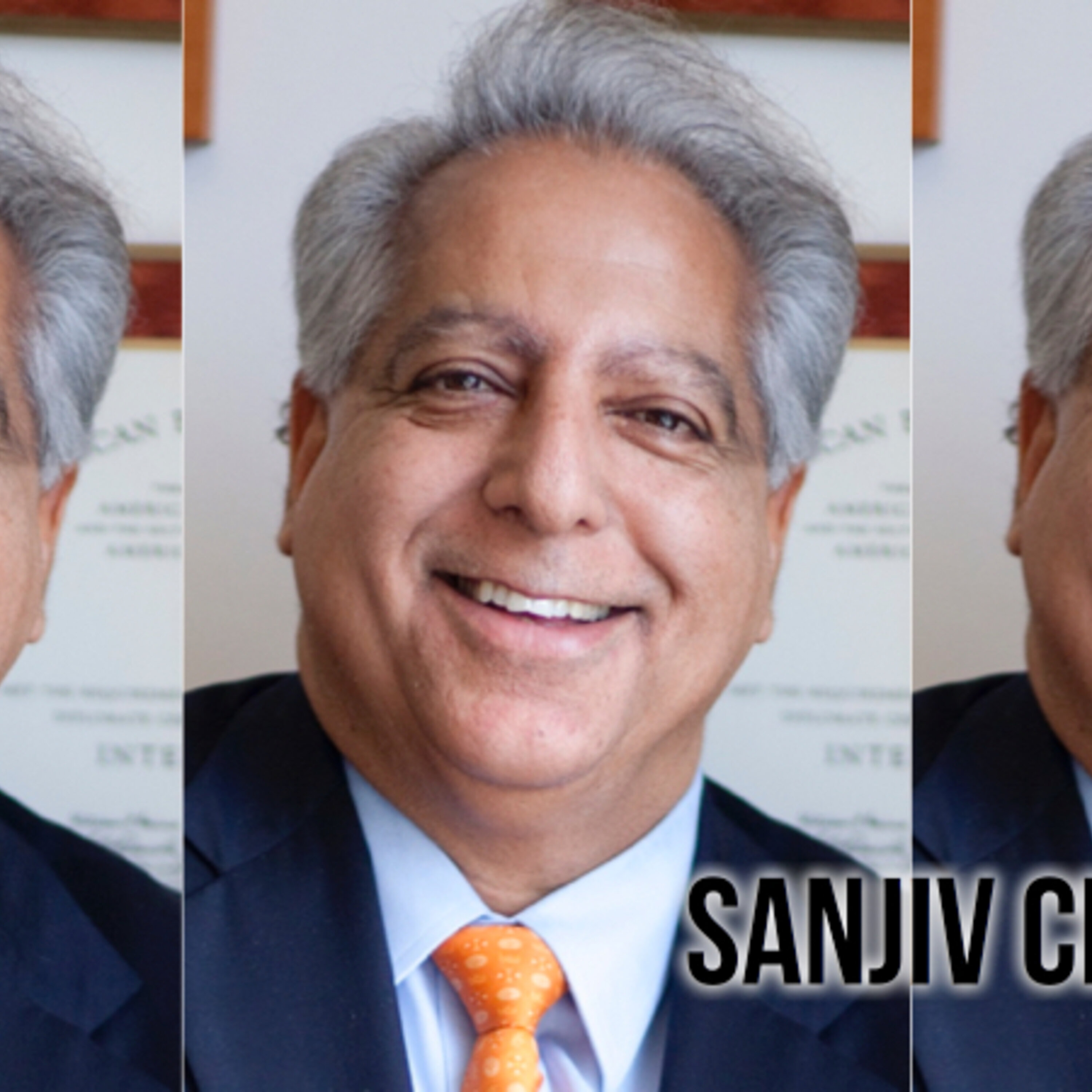
What I said in that episode was based on a book I recently read - a book by a Harvard medical researcher named Dr. Sanjiv Chopra. The book, entitled "The Big Five", delves into five simple things you can do to live a longer, healthier life and I actually learned quite a bit about everything from coffee to Vitamin D to nuts and beyond in it. Each of the recommendations outlined in this book has been proven by an overwhelming number of tests, trials, and studies to increase health and lifespan. Dr. Chopra promises that if you adapt the five simple, virtually-free suggestions in his book, you will live a longer and healthier life, guaranteed - without needing the latest expensive supplements, fad diets, jazzy exercise programs, and state-of-the-art gym equipment.
Since I'm all about natural living, anti-aging and longevity, I decided I had to get this guy on the show. Sanjiv Chopra, MD, is Professor of Medicine and served as Faculty Dean for Continuing Medical Education at Harvard Medical School for 12 years. He is the James Tullis Firm Chief, Department of Medicine, at Beth Israel Deaconess Medical Center. Dr. Chopra has more than 150 publications and seven books to his credit. Dr. Chopra is Editor-in-Chief of the Hepatology Section of UpToDate, the most widely used electronic textbook in the world subscribed to by more than 850,000 physicians in 149 countries.
He is a sought after motivational speaker across the United States and abroad, addressing diverse audiences on topics related to medicine, leadership, happiness, and living with purpose. Awards bestowed upon Dr. Chopra include.... • The George W. Thorn Award - 1985 • Received the highest accolade from the graduating class of Harvard Medical School, the Excellence in Teaching Award - 1991 • The Robert S. Stone Award - 1995 • American Gastroenterological Association’s Distinguished Educator Award - 2003 • Elected as a Master of the American College of Physicians, a singular honor bestowed to only a select few individuals for being ͞citizen physicians, educational innovators, scientific thinkers and humanists who inspire those around him or her and sets the standards for quality in medicine - 2009 • Recipient of Ellis Island Medal of Honor for “Exemplifying outstanding qualities in both one’s personal and professional lives while continuing to preserve the richness of one’s particular heritage.”–2012
On May 10, 2016, Dr. Chopra released his 8th book titled, The Big Five: Five Simple Things You Can Do to Live a Longer, Healthier Life, and during our discussion about the book, you'll discover:
-The shocking answer to the question Dr. Chopra asks when he's giving a lecture on liver disorders...
-The famous philosopher who drank 60-70 cups of coffee per day...
-Whether it matters if the coffee is caffeinated or decaffeinated...
-The one organ in your body that highly benefits from caffeinated versions of coffee...
-The surprising myth about coffee, blood pressure and heart rate...
-How many cups of coffee you can actually drink per day if you are a pregnant woman...
-How men and women respond differently to coffee, and why...
-Fast caffeine oxidizers vs. slow caffeine oxidizers, and which does not respond to caffeine's effects on exercise...
-Dr. Chopra's thoughts on coffee enemas...
-The effect of coffee on muscle motor units...
-The "world's most expensive coffee" from elephant dung and weasel poop...
-The trick to know if you are getting enough Vitamin D from natural sunlight...
-Why mold in peanuts and coffee may not be as big an issue as you think...
-How meditation affects your telomeres, your cells and your gut...
-And much more...
Resources from this episode: -Weasel poop coffee (Wild Kopi Luwak, the World's Most Exclusive Coffee, Sustainably Sourced From Sumatra, Indonesia) -Black Ivory coffee -Genetically Engineered 'Mighty Mouse' Can Run 6 Kilometers Without Stopping -Coffee Enema 101 article -Maranatha peanut butter -Arrowhead Mills peanut butter -Vitamin D3 + Vitamin K2 droplets -The book "True To Form"
Do you have questions, comments or feedback for Dr. Chopra or me? Leave your thoughts at BenGreenfieldFitness.com and one of us will reply! And be sure to check out Dr. Chopra's book: The Big Five.
See omnystudio.com/listener for privacy information.
Available Results
Generated results are saved to your library for reuse and search.
Choose Template
Pick the result you want. You can review provider and model before generating.
A concise first-pass summary for understanding the episode quickly.
A comprehensive, source-grounded extraction of the reusable knowledge in an episode.
A comprehensive extraction focused on health practices, protocols, claims, and safety caveats.
A dedicated analysis of warnings, limitations, trade-offs, weak evidence, and uncertainty.
Repeatable methods, frameworks, mental models, processes, and systems.
Scientific findings, mechanisms, studies, hypotheses, and the limits of the evidence discussed.
A concise first-pass summary for understanding the episode quickly.
A detailed readable summary organized by chapter or topic.
A navigable map of subjects, topic flow, and suggested chapters.
A comprehensive, source-grounded extraction of the reusable knowledge in an episode.
Reusable atomic knowledge units extracted from the episode.
A comprehensive extraction focused on health practices, protocols, claims, and safety caveats.
A comprehensive extraction focused on opportunities, strategy, markets, and company building.
Explicit actions, next steps, habits, recommendations, and things to avoid.
A dedicated inventory of concrete resources named in the episode.
A dedicated analysis of warnings, limitations, trade-offs, weak evidence, and uncertainty.
A concise first-pass summary for understanding the episode quickly.
A detailed readable summary organized by chapter or topic.
A navigable map of subjects, topic flow, and suggested chapters.
A comprehensive, source-grounded extraction of the reusable knowledge in an episode.
Reusable atomic knowledge units extracted from the episode.
A comprehensive extraction focused on health practices, protocols, claims, and safety caveats.
A comprehensive extraction focused on opportunities, strategy, markets, and company building.
Scientific findings, mechanisms, studies, hypotheses, and the limits of the evidence discussed.
Technologies, AI models, technical methods, capabilities, limitations, and adoption implications.
Investment theses, assets, catalysts, valuation reasoning, time horizons, and risks.
Chronologies, actors, causes, consequences, turning points, and competing historical interpretations.
Policies, proposals, stakeholders, arguments, implementation constraints, and predicted effects.
Career paths, skills, hiring signals, workplace decisions, transitions, and limitations of the advice.
Behavioral mechanisms, biases, motivation, habits, emotions, interventions, and evidence limitations.
Economic mechanisms, incentives, indicators, market structure, forecasts, and uncertainty.
Leadership principles, team systems, organizational design, culture, feedback, and failure modes.
Audience, positioning, messaging, acquisition, retention, experiments, metrics, and failed approaches.
Teaching methods, learning strategies, practice, feedback, assessment, and effectiveness evidence.
Theses, premises, arguments, objections, values, thought experiments, and unresolved questions.
Communication patterns, conflict, boundaries, expectations, repair methods, and contextual limitations.
Books, papers, authors, courses, and other learning resources mentioned in the episode.
Repeatable methods, frameworks, mental models, processes, and systems.
Explicit actions, next steps, habits, recommendations, and things to avoid.
Memorable statements and important claims with attribution and source context.
A dedicated inventory of concrete resources named in the episode.
A dedicated analysis of warnings, limitations, trade-offs, weak evidence, and uncertainty.