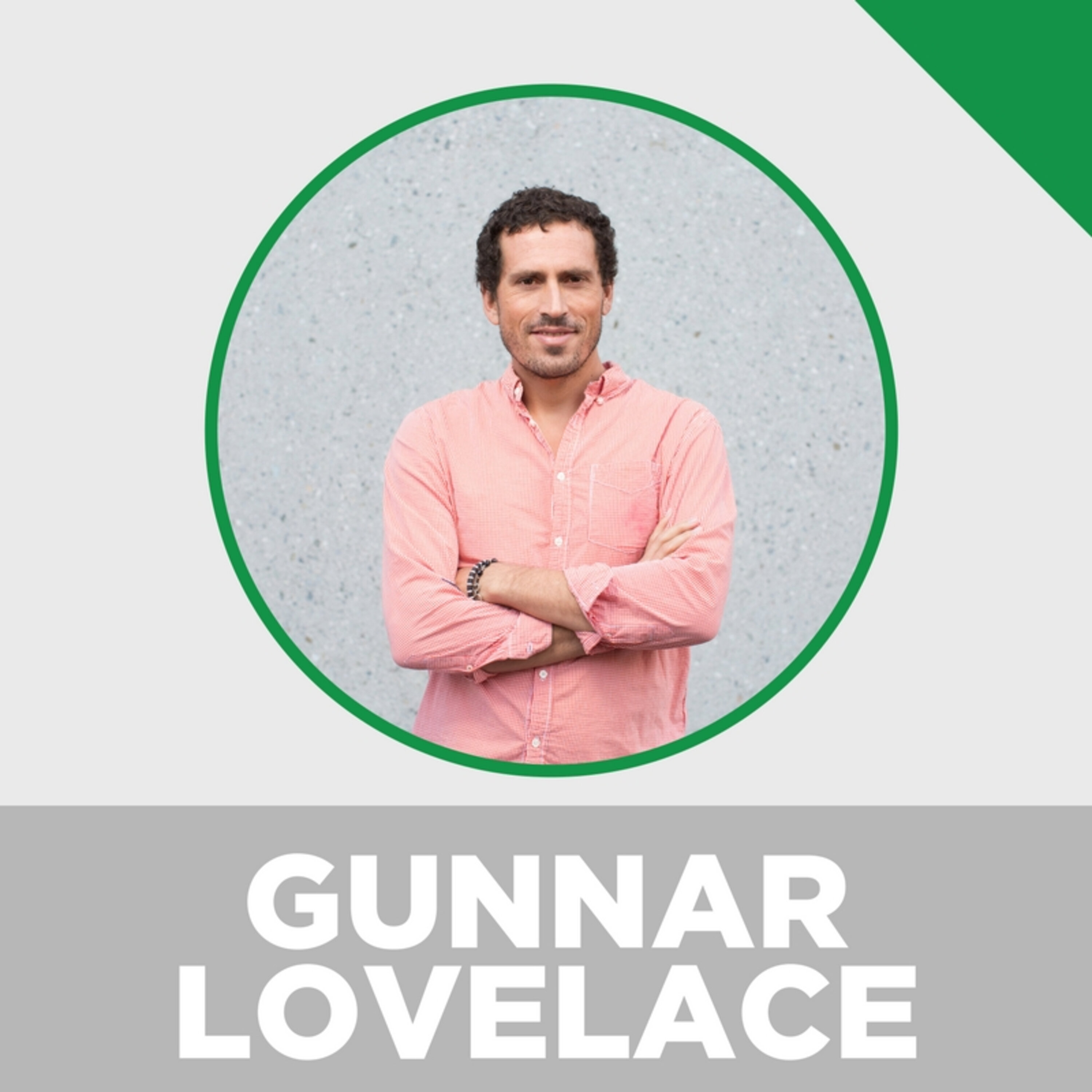
How A Guy Named Gunnar Made An Online Whole Foods For People Who Aren't Rich.
https://bengreenfieldfitness.com/gunnar
Let's face it: grocery shopping to get high quality organic food at a reasonable price isn't easy. And sure - while getting fresh, local fruits, vegetables and meats - which should always be at the core of a healthy diet - you can use farmer's markets, CSAs and local grocers.
But when it comes to packaged healthy goods, from nori wraps to coconut milk to gluten-free baking powders and beyond -there's a host of options out there: Amazon, Vitacost, Walmart, Safeway...the list goes on and on. However, when it comes to buying online organic food, you'd be surprised at what you're about to discover on today's podcast with Gunnar Lovelace.
Gunnar is a serial entrepreneur focused on business and health as vehicles for social change. He is the founder of Thrive Market, which is making healthy living accessible to Americans by providing the most popular organic and non-GMO groceries at what he claims is 25-50% off normal retail prices. He is also the co-founder and co-owner of Love Heals - a jewelry business in more than 200 high-end retail stores and with over 75 employees. To date, LoveHeals has funded the planting of over 1,500,000 trees and sponsored over 50,000 malnourished children. Prior to Love Heals, Gunnar started two technology companies in Los Angeles in software education and natural language processing. In addition to his for-profit companies, Gunnar has started two non-profits in education and environmental sustainability.
During our discussion, you'll discover:
-How Gunnar grew up poor, yet still eating foods like kale and sprouts and kombucha...[7:25]
-Gunnar's secret to never getting sick, and his top three supplements...[12:55]
-What goes on "behind the scenes" that allows Gunnar to provide organic groceries delivered to people with free shipping at a 25-50% discount...[17:25]
-Whether shopping for groceries online leaves a big carbon footprint and disrupt community small businesses...[24:30]
-How to make "cardboard" packaging out of compostable mushrooms or dirt...[28:00]
-Gunnar's favorite superfoods, including sprouted chia, coconut wraps, coconut manna, sprouted granola and more...[32:45 & 49:40]
-If Amazon Prime is so convenient, since you can buy a friggin' alarm clock and book at the same time I'm buying my canned coconut milk, why Thrive is any better than Amazon...[39:30]
-What Gunnar thinks of the Amazon acquisition of Whole Foods...[42:20]
-What is Love Heals? [45:45]
Resources from this episode: -What I Eat: 19 Of My Go-To Foods For Stocking A Healthy Pantry. All the products discussed in this episode can be found on my Thrive Market Favourites Page. -Dr. Ohira's Probiotic -Host Defense mushroom products -Vitamin C by Health Force -Coconut wraps -Coconut flake cereal -Nutiva Organic Coconut Manna -Lets Do Organic Unsweetened Coconut Flakes -Go Raw Spirulina Chips -Hawaiian Orchards Macadamia Nuts -Go Raw Pumpkin Seeds -Thrive Market
Are you ok to say thrivemarket.com/Ben-Get $60 of FREE organic groceries + free shipping and 30 day trial! Keep in mind that prices on Thrive Market are already up to 50% off and now they're giving an EXTRA $60 of free groceries! Go to thrivemarket.com/ben. (no code is necessary, all they need is the link) How it works: Users will get $20 off their first 3 orders of $49 or more + free shipping - up to Ben on whether he wants to explain this part. -The LoveTuner Ben wearsShow Sponsors:
-Human Charger - Go to BenGreenfieldFitness.com/humancharger and use the code BEN20 for 20% off.
-Organifi - Go to BenGreenfieldFitness.com/Organifi and use discount BEN for 20% your order.
-Blue Apron - Check out this week’s menu and get your first meals FREE—with free shipping by going to blueapron.com/ben
-Quarterly - Get your carefully curated box of goodies at BenGreenfieldFitness.com/BiohackBox.
Do you have questions, thoughts or feedback for Gunnar or me? Leave your comments at BenGreenfieldFitness.com and one of us will reply!
See omnystudio.com/listener for privacy information.
Available Results
Generated results are saved to your library for reuse and search.
Choose Template
Pick the result you want. You can review provider and model before generating.
A concise first-pass summary for understanding the episode quickly.
A comprehensive, source-grounded extraction of the reusable knowledge in an episode.
A comprehensive extraction focused on health practices, protocols, claims, and safety caveats.
A dedicated analysis of warnings, limitations, trade-offs, weak evidence, and uncertainty.
Repeatable methods, frameworks, mental models, processes, and systems.
A comprehensive extraction focused on opportunities, strategy, markets, and company building.
A concise first-pass summary for understanding the episode quickly.
A detailed readable summary organized by chapter or topic.
A navigable map of subjects, topic flow, and suggested chapters.
A comprehensive, source-grounded extraction of the reusable knowledge in an episode.
Reusable atomic knowledge units extracted from the episode.
A comprehensive extraction focused on health practices, protocols, claims, and safety caveats.
A comprehensive extraction focused on opportunities, strategy, markets, and company building.
Explicit actions, next steps, habits, recommendations, and things to avoid.
A dedicated inventory of concrete resources named in the episode.
A dedicated analysis of warnings, limitations, trade-offs, weak evidence, and uncertainty.
A concise first-pass summary for understanding the episode quickly.
A detailed readable summary organized by chapter or topic.
A navigable map of subjects, topic flow, and suggested chapters.
A comprehensive, source-grounded extraction of the reusable knowledge in an episode.
Reusable atomic knowledge units extracted from the episode.
A comprehensive extraction focused on health practices, protocols, claims, and safety caveats.
A comprehensive extraction focused on opportunities, strategy, markets, and company building.
Scientific findings, mechanisms, studies, hypotheses, and the limits of the evidence discussed.
Technologies, AI models, technical methods, capabilities, limitations, and adoption implications.
Investment theses, assets, catalysts, valuation reasoning, time horizons, and risks.
Chronologies, actors, causes, consequences, turning points, and competing historical interpretations.
Policies, proposals, stakeholders, arguments, implementation constraints, and predicted effects.
Career paths, skills, hiring signals, workplace decisions, transitions, and limitations of the advice.
Behavioral mechanisms, biases, motivation, habits, emotions, interventions, and evidence limitations.
Economic mechanisms, incentives, indicators, market structure, forecasts, and uncertainty.
Leadership principles, team systems, organizational design, culture, feedback, and failure modes.
Audience, positioning, messaging, acquisition, retention, experiments, metrics, and failed approaches.
Teaching methods, learning strategies, practice, feedback, assessment, and effectiveness evidence.
Theses, premises, arguments, objections, values, thought experiments, and unresolved questions.
Communication patterns, conflict, boundaries, expectations, repair methods, and contextual limitations.
Books, papers, authors, courses, and other learning resources mentioned in the episode.
Repeatable methods, frameworks, mental models, processes, and systems.
Explicit actions, next steps, habits, recommendations, and things to avoid.
Memorable statements and important claims with attribution and source context.
A dedicated inventory of concrete resources named in the episode.
A dedicated analysis of warnings, limitations, trade-offs, weak evidence, and uncertainty.