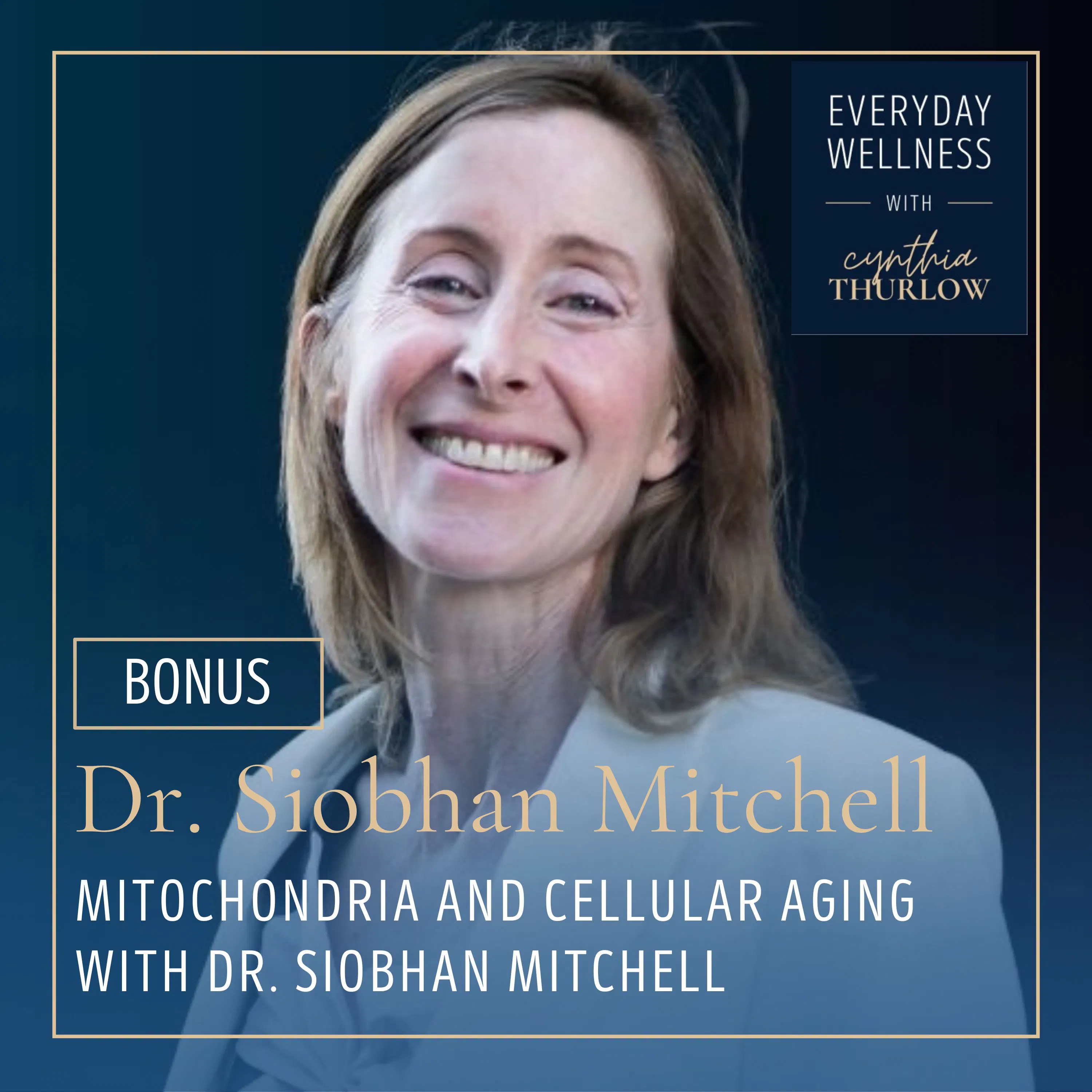
BONUS: Mitochondria and Cellular Aging with Dr. Siobhan Mitchell | Menopause, Perimenopause, Mitochondrial Health
Everyday Wellness: Midlife Hormones, Menopause, and Science for Women 35+
In this episode, we’re featuring MitoQ, a company whose research around antioxidant support for mitochondrial function has been of particular interest to me.
I’m thrilled to welcome Dr. Siobhan Mitchell, the Chief Scientific Officer at MitoQ. Dr. Mitchell completed her PhD at SUNY Albany and a postdoctoral fellowship on brain aging at the University of Washington. She has held roles at multinational food companies, leading research on brain nutrition, metabolism, cardiovascular health, and weight loss. She has published clinical research demonstrating the effects of stress on women’s heart health and the importance of nutrients such as polyphenols, omega-3s, probiotics, and amino acids for brain health, authored dozens of clinical studies and more than 80 papers, and given talks on nutritional neuroscience at conferences worldwide. She also holds eight patents for products related to aging, cognition, and mood.
In today’s conversation, Dr. Mitchell and I discuss mitochondrial physiology, energy, and dysfunction, exploring the impact of MitoQ and supplementation for supporting health. We examine research on menopause, how estrogen influences mitochondria, the roles of oxidative stress, antioxidants, and zombie cells, highlighting how mitochondria impact our cardiovascular health, the value of MitoQ in supporting vascular function in females, the importance of polyphenols and spices, and signs of mitochondrial dysfunction.
This is a truly invaluable conversation- one you’ll likely want to revisit. Stay tuned for today’s informative discussion on supporting our mitochondria and reducing oxidative stress with MitoQ.
IN THIS EPISODE, YOU WILL LEARN:
How our mitochondrial function changes as we get older, and what those changes might look like
How antioxidants protect the mitochondria from free radicals and oxidative stress
The early signs of mitochondrial dysfunction
How women who have damaged their mitochondria earlier in life can proactively support their mitochondria
Why some oxidative stress may be beneficial and when it could become problematic
How mitochondrial dysfunction impacts heart function, blood glucose regulation, insulin resistance, and metabolic syndrome
What Dr. Mitchell recommends for women learning about mitochondrial support for the first time
Dr. Mitchell shares the daily practices she uses to support her brain and metabolic health.
How long you may need to take MitoQ before noticing improvements, and what those improvements might look like
Bio: Dr. Siobhan Mitchell
Siobhan Mitchell is the chief scientific officer of MitoQ. She completed her PhD at SUNY Albany and a post-doctoral fellowship on brain aging at the University of Washington. Siobhan has held roles at multinational food companies leading research on brain nutrition, metabolism, cardiovascular health and weight loss.
Siobhan has published clinical research showing the effects of stress on women's heart health, and the importance of nutrients such as polyphenols, omega-3 oils, probiotics and amino acids for brain health. She has authored over a dozen clinical studies on best practices for weight management and prevention of chronic diseases during her time as senior director for Noom.
Siobhan is passionate about the intersection of nutrition and lifestyle factors, such as exercise, sleep, and mental well-being, to extend health span.
Siobhan has given talks on nutritional neuroscience at conferences all over the world. She's authored over 80 papers and holds eight patents for aging, cognition, and mood products.
Connect with Cynthia Thurlow
Check out Cynthia’s website.
Submit your questions to support@cynthiathurlow.com
Join other like-minded women in a supportive, nurturing community: The Midlife Pause/Cynthia Thurlow.
Purchase Cynthia’s book, The Menopause Gut.
Cynthia’s Intermittent Fasting Transformation Book
Connect with Dr. Siobhan Mitchell
Email Dr. Siobhan Mitchell: s.mitchell@mitoq.com
More description
In this episode, we’re featuring MitoQ, a company whose research around antioxidant support for mitochondrial function has been of particular interest to me.
I’m thrilled to welcome Dr. Siobhan Mitchell, the Chief Scientific Officer at MitoQ. Dr. Mitchell completed her PhD at SUNY Albany and a postdoctoral fellowship on brain aging at the University of Washington. She has held roles at multinational food companies, leading research on brain nutrition, metabolism, cardiovascular health, and weight loss. She has published clinical research demonstrating the effects of stress on women’s heart health and the importance of nutrients such as polyphenols, omega-3s, probiotics, and amino acids for brain health, authored dozens of clinical studies and more than 80 papers, and given talks on nutritional neuroscience at conferences worldwide. She also holds eight patents for products related to aging, cognition, and mood.
In today’s conversation, Dr. Mitchell and I discuss mitochondrial physiology, energy, and dysfunction, exploring the impact of MitoQ and supplementation for supporting health. We examine research on menopause, how estrogen influences mitochondria, the roles of oxidative stress, antioxidants, and zombie cells, highlighting how mitochondria impact our cardiovascular health, the value of MitoQ in supporting vascular function in females, the importance of polyphenols and spices, and signs of mitochondrial dysfunction.
This is a truly invaluable conversation- one you’ll likely want to revisit. Stay tuned for today’s informative discussion on supporting our mitochondria and reducing oxidative stress with MitoQ.
IN THIS EPISODE, YOU WILL LEARN:
How our mitochondrial function changes as we get older, and what those changes might look like
How antioxidants protect the mitochondria from free radicals and oxidative stress
The early signs of mitochondrial dysfunction
How women who have damaged their mitochondria earlier in life can proactively support their mitochondria
Why some oxidative stress may be beneficial and when it could become problematic
How mitochondrial dysfunction impacts heart function, blood glucose regulation, insulin resistance, and metabolic syndrome
What Dr. Mitchell recommends for women learning about mitochondrial support for the first time
Dr. Mitchell shares the daily practices she uses to support her brain and metabolic health.
How long you may need to take MitoQ before noticing improvements, and what those improvements might look like
Bio: Dr. Siobhan Mitchell
Siobhan Mitchell is the chief scientific officer of MitoQ. She completed her PhD at SUNY Albany and a post-doctoral fellowship on brain aging at the University of Washington. Siobhan has held roles at multinational food companies leading research on brain nutrition, metabolism, cardiovascular health and weight loss.
Siobhan has published clinical research showing the effects of stress on women's heart health, and the importance of nutrients such as polyphenols, omega-3 oils, probiotics and amino acids for brain health. She has authored over a dozen clinical studies on best practices for weight management and prevention of chronic diseases during her time as senior director for Noom.
Siobhan is passionate about the intersection of nutrition and lifestyle factors, such as exercise, sleep, and mental well-being, to extend health span.
Siobhan has given talks on nutritional neuroscience at conferences all over the world. She's authored over 80 papers and holds eight patents for aging, cognition, and mood products.
Connect with Cynthia Thurlow
Check out Cynthia’s website.
Submit your questions to support@cynthiathurlow.com
Join other like-minded women in a supportive, nurturing community: The Midlife Pause/Cynthia Thurlow.
Purchase Cynthia’s book, The Menopause Gut.
Cynthia’s Intermittent Fasting Transformation Book
Connect with Dr. Siobhan Mitchell
Email Dr. Siobhan Mitchell: s.mitchell@mitoq.com
Listen elsewhere
Available Results
Generated results are saved to your library for reuse and search.