A Rocket Scientist Homeschooler's Insider Blood Glucose Monitoring Secrets, The Best Way To Use A Continuous Glucose Monitor (CGM), Blood Sugar Biohacking Tips & Much More!
bengreenfieldfitness.com/levels
As I've mentioned many times before on podcasts, I've been using something called a "Continuous Glucose Monitor" (CGM) at various intervals throughout my life for about 4 years or so.
Considering that, as I write about here, I consider glycemic variability (which is exactly what these CGM's track) and inflammation (which is a bit more difficult to measure as it typically requires a visit to a lab) to be my top two key biomarkers for health and longevity, my use of a CGM has given me some very valuable data on how my body responds to certain foods, supplements, exercises, lifestyle practices, and even emotions.
But how does a CGM work, exactly?
What does the really tiny "filamentous" needle actually measure?
How do you get yours to "stick" for long periods of time, or in water?
How does the phone gather data from the sensor, and is EMF a concern?
Does the sensor have to be calibrated to a blood glucose reading due to the fact it is recording interstitial fluid vs. blood?
Is this type of thing, from an insurance standpoint, that is only available to diabetics?
What do you do about activities that cause high glucose excursions, such as exercise/sauna/coffee etc., which wind up decreasing the metabolic score when, long-term, those are all glucose stabilizing/insulin sensitizing activities?
Are there certain supplements or herbs that do the best job controlling blood glucose?
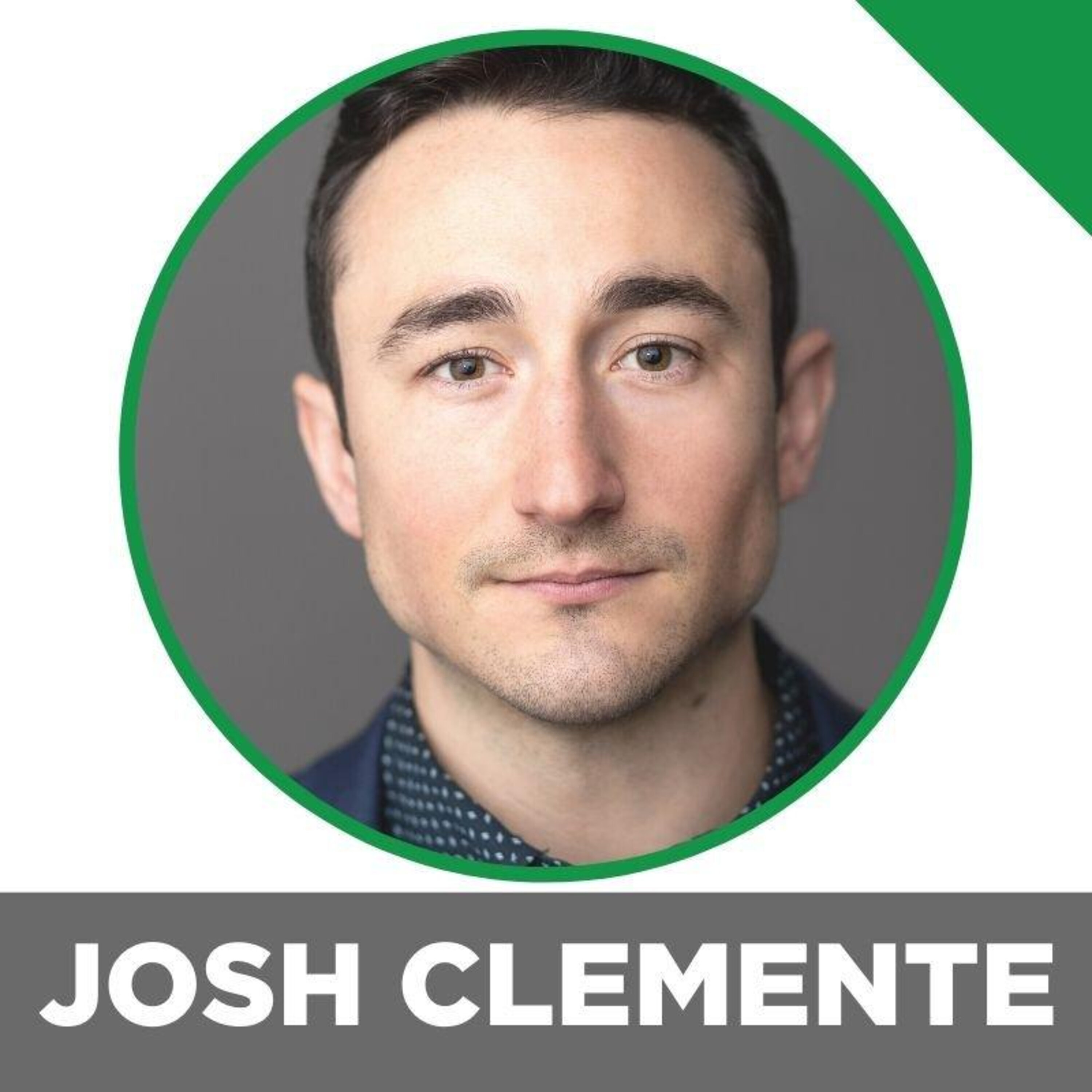
I explore these questions and many others in this podcast with Josh Clemente. Josh is a rocket scientist and worked at SpaceX for 6 years, managing the team that designed the life support systems in their space shuttles. Overtime, he started to notice extreme levels of fatigue and experienced volatile spikes and crashes of energy throughout his day. For someone that worked out consistently and followed the guidelines for what he believed to be healthy practices, it didn’t seem to add up. After experimenting with glucose monitoring, he realized that he was pre-diabetic, borderlining on fully-blown diabetic, and that the foods he was eating were having a significant impact on his performance. It was this discovery and struggle to derive actionable insights from his glucose monitoring that led him to start Levels.
Today at Levels Health, Josh and his team are revolutionizing the way people think about their metabolic health. And why is metabolic health so important? Before Levels, an average person had no way of understanding how efficiently or inefficiently their body was producing energy. Levels enables you, using a new CGM system, to access and understand this information in real-time, so you can start making better diet and lifestyle choices to avoid those energy peaks and valleys.
During our discussion, you'll discover: -How Josh became a rocket scientist...8:50
-How Josh became interested in blood glucose management...32:05
-How a CGM works, what it measures, and how it compares to a blood glucose stick...19:33
-How the Levels app calibrates w/ the CGM's on the market...24:00
-Gold standard location for placement of the GCM on the body...30:45
-How to keep the CGM on your body for long periods of time...31:00
-How to obtain a CGM without faking you have diabetes...37:50
-If it's necessary to wear a CGM in perpetuity...39:15
-What is a "metabolic score?"...45:15
-What is an "activity response"...56:15
-How to keep blood glucose stable throughout the day and beyond...1:01:00
-Glucose disposal agents that may be outside the norm...1:06:45
-Josh's personal practices to stabilize his glucose levels...1:11:45
See omnystudio.com/listener for privacy information.
Available Results
Generated results are saved to your library for reuse and search.
Choose Template
Pick the result you want. You can review provider and model before generating.
A concise first-pass summary for understanding the episode quickly.
A comprehensive, source-grounded extraction of the reusable knowledge in an episode.
A comprehensive extraction focused on health practices, protocols, claims, and safety caveats.
A dedicated analysis of warnings, limitations, trade-offs, weak evidence, and uncertainty.
Repeatable methods, frameworks, mental models, processes, and systems.
Technologies, AI models, technical methods, capabilities, limitations, and adoption implications.
A concise first-pass summary for understanding the episode quickly.
A detailed readable summary organized by chapter or topic.
A navigable map of subjects, topic flow, and suggested chapters.
A comprehensive, source-grounded extraction of the reusable knowledge in an episode.
Reusable atomic knowledge units extracted from the episode.
A comprehensive extraction focused on health practices, protocols, claims, and safety caveats.
A comprehensive extraction focused on opportunities, strategy, markets, and company building.
Explicit actions, next steps, habits, recommendations, and things to avoid.
A dedicated inventory of concrete resources named in the episode.
A dedicated analysis of warnings, limitations, trade-offs, weak evidence, and uncertainty.
A concise first-pass summary for understanding the episode quickly.
A detailed readable summary organized by chapter or topic.
A navigable map of subjects, topic flow, and suggested chapters.
A comprehensive, source-grounded extraction of the reusable knowledge in an episode.
Reusable atomic knowledge units extracted from the episode.
A comprehensive extraction focused on health practices, protocols, claims, and safety caveats.
A comprehensive extraction focused on opportunities, strategy, markets, and company building.
Scientific findings, mechanisms, studies, hypotheses, and the limits of the evidence discussed.
Technologies, AI models, technical methods, capabilities, limitations, and adoption implications.
Investment theses, assets, catalysts, valuation reasoning, time horizons, and risks.
Chronologies, actors, causes, consequences, turning points, and competing historical interpretations.
Policies, proposals, stakeholders, arguments, implementation constraints, and predicted effects.
Career paths, skills, hiring signals, workplace decisions, transitions, and limitations of the advice.
Behavioral mechanisms, biases, motivation, habits, emotions, interventions, and evidence limitations.
Economic mechanisms, incentives, indicators, market structure, forecasts, and uncertainty.
Leadership principles, team systems, organizational design, culture, feedback, and failure modes.
Audience, positioning, messaging, acquisition, retention, experiments, metrics, and failed approaches.
Teaching methods, learning strategies, practice, feedback, assessment, and effectiveness evidence.
Theses, premises, arguments, objections, values, thought experiments, and unresolved questions.
Communication patterns, conflict, boundaries, expectations, repair methods, and contextual limitations.
Books, papers, authors, courses, and other learning resources mentioned in the episode.
Repeatable methods, frameworks, mental models, processes, and systems.
Explicit actions, next steps, habits, recommendations, and things to avoid.
Memorable statements and important claims with attribution and source context.
A dedicated inventory of concrete resources named in the episode.
A dedicated analysis of warnings, limitations, trade-offs, weak evidence, and uncertainty.