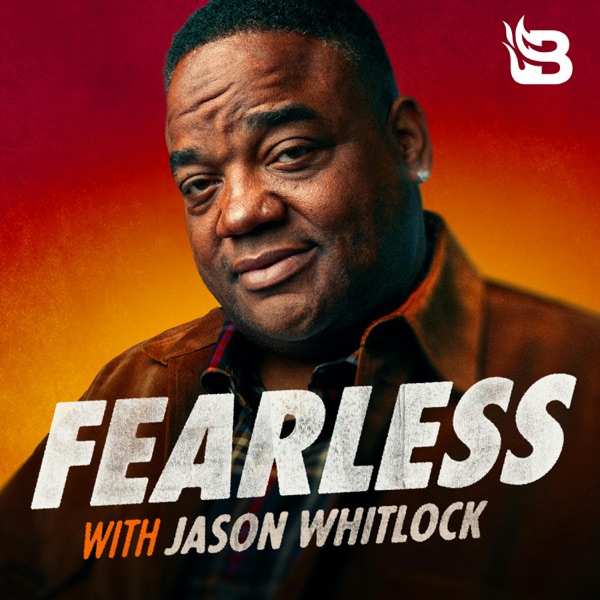
Ep 501 | Michael Oher: ‘Blind Side’ Was a Lie, Tuohy Family Never Adopted Him, Cries Exploitation | Ep 501
It’s been nearly 15 years since Sandra Bullock won an Oscar for her performance in the feel-good film “The Blind Side.” Now, almost a decade and a half later, the subject of the true story, Michael Oher, claims the movie is all a lie. The story of a white family taking in an underprivileged but talented black teen scored over $300 millions at the box office. But Oher says not only was the premise of the film a fabrication, he’s also never received a dime from the movie about his life. Oher claims the Tuohy family never adopted him, only misled him into signing into a conservatorship in an effort to cash in on his football career. The lazy mainstream media has run with Oher’s version of events and has quickly cast the Tuohy family as greedy charlatans exploiting a naive black kid. Good thing Jason Whitlock is here to actually research Oher’s slanderous claims. Jason has proof that Oher actually was well aware he was never adopted and knew about the conservatorship well before February 2023. “This whole exploitative, conservatorship nonsense isn’t exactly Britney Spears’ parents controlling her money.” Jason shares the fruits of his research and discusses the story with “Fearless” contributor Shemeka Michelle and T.J. Moe. Plus, Steve Kim shares his Oher thoughts and weighs in on Ezekiel Elliott and Dalvin Cook finding new teams, the Big Ten heading to Las Vegas, and James Harden burying the president of the 76ers.
We want to hear from the Fearless Army!! Join the conversation in the show chat, leave a comment, or email Jason at FearlessBlazeShow@gmail.com
Today's Sponsors:
Switch today with Patriot Mobile! Get the same great nationwide coverage while supporting the conservative values you believe in. Go to https://PATRIOTMOBILE.COM/JASON or call 878-PATRIOT.
Growing up, cereal was one of the best parts of being a kid. Magic Spoon has the amazing flavors you love, but high protein and less sugar! Pick on a Magic Spoon Variety Pack and see for yourself. Go to https://magicspoon.com/FEARLESS5 to grab a variety pack and try it today! And be sure to use our promo code FEARLESS 5 at checkout to save $5 off your order!
Get 10% off Blaze swag by using code Fearless10 at https://shop.blazemedia.com/fearless Make yourself an official member of the “Fearless Army!”
Support Conservative Voices! Subscribe to BlazeTV at https://get.blazetv.com/FEARLESS and get $10 off your yearly subscription.
Learn more about your ad choices. Visit megaphone.fm/adchoices
Available Results
Generated results are saved to your library for reuse and search.
Choose Template
Pick the result you want. You can review provider and model before generating.
A concise first-pass summary for understanding the episode quickly.
A comprehensive, source-grounded extraction of the reusable knowledge in an episode.
Scientific findings, mechanisms, studies, hypotheses, and the limits of the evidence discussed.
A dedicated analysis of warnings, limitations, trade-offs, weak evidence, and uncertainty.
Memorable statements and important claims with attribution and source context.
Technologies, AI models, technical methods, capabilities, limitations, and adoption implications.
A concise first-pass summary for understanding the episode quickly.
A detailed readable summary organized by chapter or topic.
A navigable map of subjects, topic flow, and suggested chapters.
A comprehensive, source-grounded extraction of the reusable knowledge in an episode.
Reusable atomic knowledge units extracted from the episode.
A comprehensive extraction focused on health practices, protocols, claims, and safety caveats.
A comprehensive extraction focused on opportunities, strategy, markets, and company building.
Explicit actions, next steps, habits, recommendations, and things to avoid.
A dedicated inventory of concrete resources named in the episode.
A dedicated analysis of warnings, limitations, trade-offs, weak evidence, and uncertainty.
A concise first-pass summary for understanding the episode quickly.
A detailed readable summary organized by chapter or topic.
A navigable map of subjects, topic flow, and suggested chapters.
A comprehensive, source-grounded extraction of the reusable knowledge in an episode.
Reusable atomic knowledge units extracted from the episode.
A comprehensive extraction focused on health practices, protocols, claims, and safety caveats.
A comprehensive extraction focused on opportunities, strategy, markets, and company building.
Scientific findings, mechanisms, studies, hypotheses, and the limits of the evidence discussed.
Technologies, AI models, technical methods, capabilities, limitations, and adoption implications.
Investment theses, assets, catalysts, valuation reasoning, time horizons, and risks.
Chronologies, actors, causes, consequences, turning points, and competing historical interpretations.
Policies, proposals, stakeholders, arguments, implementation constraints, and predicted effects.
Career paths, skills, hiring signals, workplace decisions, transitions, and limitations of the advice.
Behavioral mechanisms, biases, motivation, habits, emotions, interventions, and evidence limitations.
Economic mechanisms, incentives, indicators, market structure, forecasts, and uncertainty.
Leadership principles, team systems, organizational design, culture, feedback, and failure modes.
Audience, positioning, messaging, acquisition, retention, experiments, metrics, and failed approaches.
Teaching methods, learning strategies, practice, feedback, assessment, and effectiveness evidence.
Theses, premises, arguments, objections, values, thought experiments, and unresolved questions.
Communication patterns, conflict, boundaries, expectations, repair methods, and contextual limitations.
Books, papers, authors, courses, and other learning resources mentioned in the episode.
Repeatable methods, frameworks, mental models, processes, and systems.
Explicit actions, next steps, habits, recommendations, and things to avoid.
Memorable statements and important claims with attribution and source context.
A dedicated inventory of concrete resources named in the episode.
A dedicated analysis of warnings, limitations, trade-offs, weak evidence, and uncertainty.