Building The Perfect Beast & Tuning Your Body's Electricity With Qi Gong.
I'm infatuated with getting a better body andmindbyusing special breathing techniques.
In previous podcasts and articles, I've describedeverythingfromrhythmic breathwork while runningandbicycling,to hyperoxygenation breathing, to fire breathing to hypoxic and apnea training and beyond. Andintoday'spodcast, I'm going to introduce you to anotherspecializedstyle ofbreathwork referred to Chi Kung - or QiGong.
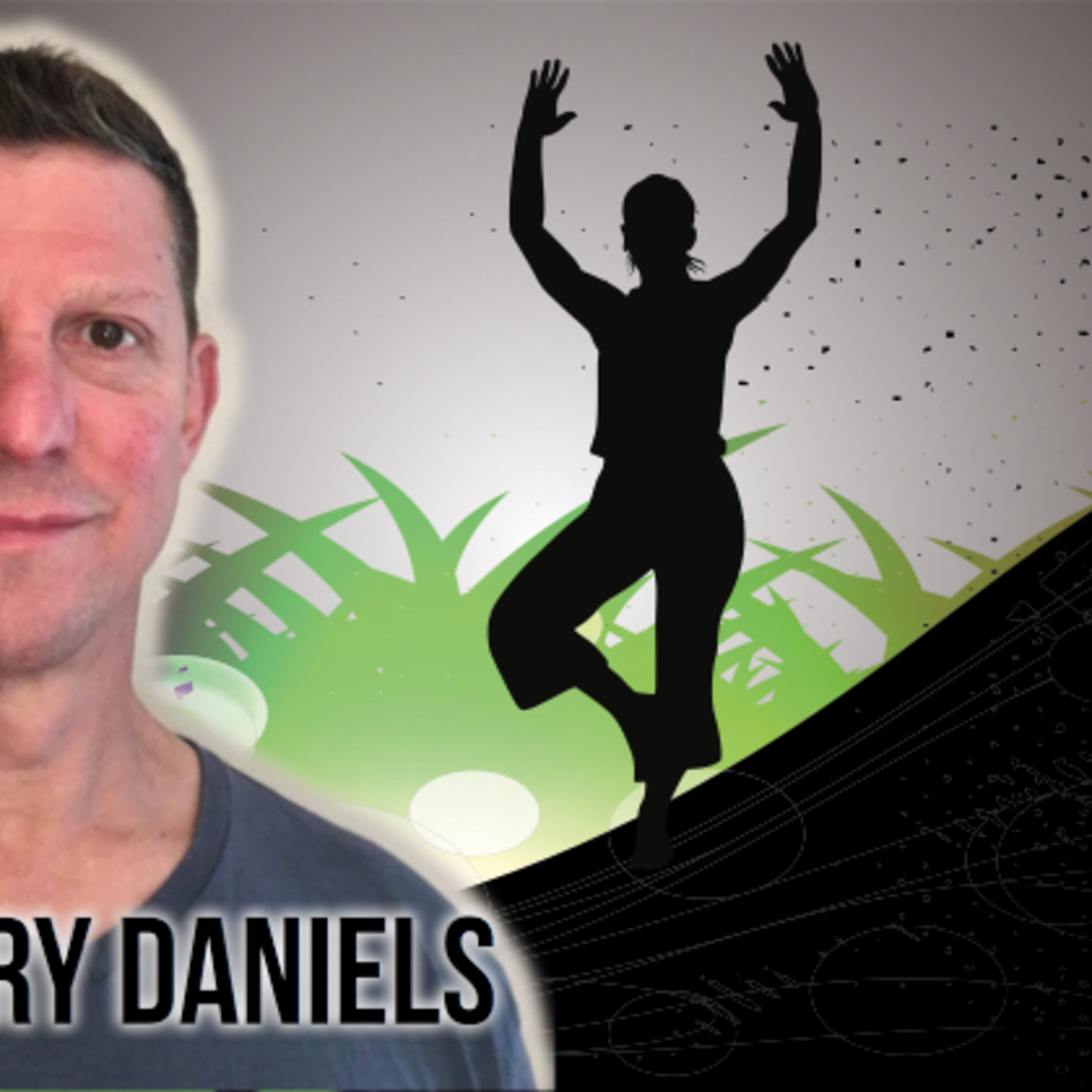
My guest is Gary Daniels, a lifelong martialartist,formercompetitive boxer, and former elite amateur bicycleracerwith over100,000 logged miles and over 200 race starts.Garyspecializes intraining methods that have been designed tohonephysical skill andmental focus, and uses specificbreathingtechniques to extend timeto failure, increase overallcorecompetency, and achieve thehighest level of natural balanceforgreater efficiency in anyfield of endeavor. Gary aUSA-Cyclingcertified coach, formerBlack-Belt in Uechi Ryu karate,three timeFlorida AAU GoldenGloves competitor, NORBA expert crosscountrycyclist, Cat-3masters road racer, present coach of severalworldclass athletes,founder of HealthDefense training systems and writerforNextMotoChampion.com.
During our podcast episode, you'll discover:
-What exactly Qi Gong is...
-How you can "move" electricity throughoutyourbody...
-The link between Gary's work as anelectrician,acupunctureand Qi Gong...
-How to "breathe" through your handsandfeet...
-How your blood, biomarkers and biology respondtoQiGong...
-And much more!
Do you have questions, comments, or feedback aboutQiGong or anything else that Gary and I discuss? Leaveyourthoughtsat BenGreenfieldFitness.com andoneofus will reply.
See omnystudio.com/listener for privacy information.
Available Results
Generated results are saved to your library for reuse and search.
Choose Template
Pick the result you want. You can review provider and model before generating.
A concise first-pass summary for understanding the episode quickly.
A comprehensive, source-grounded extraction of the reusable knowledge in an episode.
A comprehensive extraction focused on health practices, protocols, claims, and safety caveats.
A dedicated analysis of warnings, limitations, trade-offs, weak evidence, and uncertainty.
Repeatable methods, frameworks, mental models, processes, and systems.
A comprehensive extraction focused on opportunities, strategy, markets, and company building.
A concise first-pass summary for understanding the episode quickly.
A detailed readable summary organized by chapter or topic.
A navigable map of subjects, topic flow, and suggested chapters.
A comprehensive, source-grounded extraction of the reusable knowledge in an episode.
Reusable atomic knowledge units extracted from the episode.
A comprehensive extraction focused on health practices, protocols, claims, and safety caveats.
A comprehensive extraction focused on opportunities, strategy, markets, and company building.
Explicit actions, next steps, habits, recommendations, and things to avoid.
A dedicated inventory of concrete resources named in the episode.
A dedicated analysis of warnings, limitations, trade-offs, weak evidence, and uncertainty.
A concise first-pass summary for understanding the episode quickly.
A detailed readable summary organized by chapter or topic.
A navigable map of subjects, topic flow, and suggested chapters.
A comprehensive, source-grounded extraction of the reusable knowledge in an episode.
Reusable atomic knowledge units extracted from the episode.
A comprehensive extraction focused on health practices, protocols, claims, and safety caveats.
A comprehensive extraction focused on opportunities, strategy, markets, and company building.
Scientific findings, mechanisms, studies, hypotheses, and the limits of the evidence discussed.
Technologies, AI models, technical methods, capabilities, limitations, and adoption implications.
Investment theses, assets, catalysts, valuation reasoning, time horizons, and risks.
Chronologies, actors, causes, consequences, turning points, and competing historical interpretations.
Policies, proposals, stakeholders, arguments, implementation constraints, and predicted effects.
Career paths, skills, hiring signals, workplace decisions, transitions, and limitations of the advice.
Behavioral mechanisms, biases, motivation, habits, emotions, interventions, and evidence limitations.
Economic mechanisms, incentives, indicators, market structure, forecasts, and uncertainty.
Leadership principles, team systems, organizational design, culture, feedback, and failure modes.
Audience, positioning, messaging, acquisition, retention, experiments, metrics, and failed approaches.
Teaching methods, learning strategies, practice, feedback, assessment, and effectiveness evidence.
Theses, premises, arguments, objections, values, thought experiments, and unresolved questions.
Communication patterns, conflict, boundaries, expectations, repair methods, and contextual limitations.
Books, papers, authors, courses, and other learning resources mentioned in the episode.
Repeatable methods, frameworks, mental models, processes, and systems.
Explicit actions, next steps, habits, recommendations, and things to avoid.
Memorable statements and important claims with attribution and source context.
A dedicated inventory of concrete resources named in the episode.
A dedicated analysis of warnings, limitations, trade-offs, weak evidence, and uncertainty.