How to Feed a Brain: Nutrition for Optimal Brain Function and Repair
This is a special Premium audio episode. Click here to activate a Premium subscription to the BenGreenfieldFitness show and access this and over 300 additional hidden audios, videos, pdf's and more!
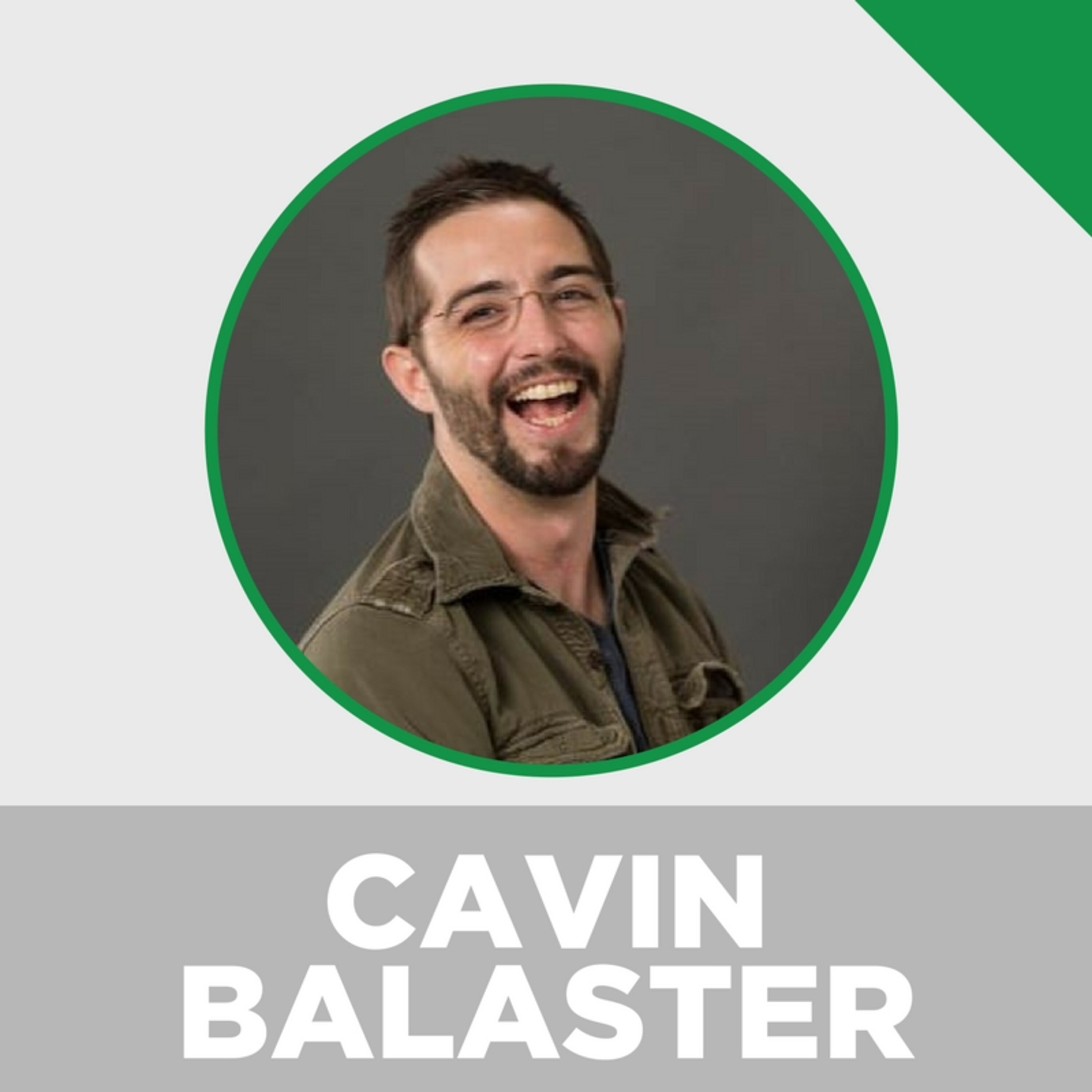
In 2011 Cavin Balaster sustained a severe traumatic brain injury that left him comatose with less than a 10% chance of ever regaining consciousness beyond a persistent vegetative state. He didn't eat, walk, or talk for months while he was in the hospital. He was breathing from a tube in his neck, receiving nutrition from a tube in his belly, and his left hand was completely flexed inward.
About a year after his injury, he was introduced to a nutritional protocol that helped him begin to regain some clarity. That's when he dove into an intense study of why nutrition made such a difference. For over five years, he has devoted his life to studying metabolism, neurometabolism, mechanisms of neuroplasticity, neuroscience, and nutrition, while reaching out to doctors, researchers, practitioners, and neuroscientists, to learn everything he can to optimize his brain function and to maximize his recovery. Cavin recently released the book How to Feed a Brain: Nutrition for Optimal Brain Function and Repair, which is the culmination of the nutritional tools he has learned through this journey. Cavin wrote this book to share with others the nutritional information that has helped him to regain his brain function. While his recovery has been an astounding example for brain injury survivors, this book is not just for those with neurological conditions - it is for anyone wanting to improve their brains.
During our discussion, you'll discover:
-The crazy story of Cavin's traumatic brain injury and subsequent diffuse axonal injury (DAI) ...[4:25]
-How a brain injury causes a leaky gut, and vice versa...[6:55]
-How what Cavin did is very different than the current "standard of care" in modern medicine for TBI...[22:20]
-The relationship between the brain and the eye, and how Cavin fixed his eyes...[27:45]
-The importance of neurometabolism...[29:55]
- The lesser-known tools Cavin used for rehab and repairing the brain, including choline, DHA and a ketogenic diet...[34:45]
-Why Cavin endorses trying 15-20g of fish oil along with choline and uridine...[38:30]
-The importance of dessicated organ meats, kelp, dulse...[40:30]
-Some of Cavin's favorite books (aside from his own) that he recommends for brain resources...[42:45]
-And much more!
Resources from this episode: -The Adventures in Brain Injury Podcast -How to Feed a Brain: Nutrition for Optimal Brain Function and Repair -Flint Rehab (“a fun and effective rehabilitation device that helps restore hand function for individuals with stroke, spinal cord injury (SCI), traumatic brain injury (TBI), or other neurologic injuries.”) -Creative Harmonics (“a specialized, state-of-the-art cognitive prosthetic, delivered on an iPad…serves as “external memory” and has been specifically designed to provide the comprehensive cognitive structure and visual cueing supports that individuals with cognitive challenges need.”) -Kion Colostrum -My article on How To Fix The Gut -The Autoimmune Paleo diet -Dr. Alex Vasquez -KetoFX online ketogenic summit -My interview with Dr. Terry Wahls -My interview with Daniel Schmachtenberger -My interview with Dr. Kelly Ryder -My Interview with JJ Virgin -My Interview with Dan Engle -My Interview with Andrew Hill -My Interview with Tony Jeffries
Do you have questions, thoughts or feedback for Cavin or me? Leave your comments at BenGreenfieldFitness.com and one of us will reply!
See omnystudio.com/listener for privacy information.
Available Results
Generated results are saved to your library for reuse and search.
Choose Template
Pick the result you want. You can review provider and model before generating.
A concise first-pass summary for understanding the episode quickly.
A comprehensive, source-grounded extraction of the reusable knowledge in an episode.
A comprehensive extraction focused on health practices, protocols, claims, and safety caveats.
A dedicated analysis of warnings, limitations, trade-offs, weak evidence, and uncertainty.
Repeatable methods, frameworks, mental models, processes, and systems.
Scientific findings, mechanisms, studies, hypotheses, and the limits of the evidence discussed.
A concise first-pass summary for understanding the episode quickly.
A detailed readable summary organized by chapter or topic.
A navigable map of subjects, topic flow, and suggested chapters.
A comprehensive, source-grounded extraction of the reusable knowledge in an episode.
Reusable atomic knowledge units extracted from the episode.
A comprehensive extraction focused on health practices, protocols, claims, and safety caveats.
A comprehensive extraction focused on opportunities, strategy, markets, and company building.
Explicit actions, next steps, habits, recommendations, and things to avoid.
A dedicated inventory of concrete resources named in the episode.
A dedicated analysis of warnings, limitations, trade-offs, weak evidence, and uncertainty.
A concise first-pass summary for understanding the episode quickly.
A detailed readable summary organized by chapter or topic.
A navigable map of subjects, topic flow, and suggested chapters.
A comprehensive, source-grounded extraction of the reusable knowledge in an episode.
Reusable atomic knowledge units extracted from the episode.
A comprehensive extraction focused on health practices, protocols, claims, and safety caveats.
A comprehensive extraction focused on opportunities, strategy, markets, and company building.
Scientific findings, mechanisms, studies, hypotheses, and the limits of the evidence discussed.
Technologies, AI models, technical methods, capabilities, limitations, and adoption implications.
Investment theses, assets, catalysts, valuation reasoning, time horizons, and risks.
Chronologies, actors, causes, consequences, turning points, and competing historical interpretations.
Policies, proposals, stakeholders, arguments, implementation constraints, and predicted effects.
Career paths, skills, hiring signals, workplace decisions, transitions, and limitations of the advice.
Behavioral mechanisms, biases, motivation, habits, emotions, interventions, and evidence limitations.
Economic mechanisms, incentives, indicators, market structure, forecasts, and uncertainty.
Leadership principles, team systems, organizational design, culture, feedback, and failure modes.
Audience, positioning, messaging, acquisition, retention, experiments, metrics, and failed approaches.
Teaching methods, learning strategies, practice, feedback, assessment, and effectiveness evidence.
Theses, premises, arguments, objections, values, thought experiments, and unresolved questions.
Communication patterns, conflict, boundaries, expectations, repair methods, and contextual limitations.
Books, papers, authors, courses, and other learning resources mentioned in the episode.
Repeatable methods, frameworks, mental models, processes, and systems.
Explicit actions, next steps, habits, recommendations, and things to avoid.
Memorable statements and important claims with attribution and source context.
A dedicated inventory of concrete resources named in the episode.
A dedicated analysis of warnings, limitations, trade-offs, weak evidence, and uncertainty.