The Six Mantras
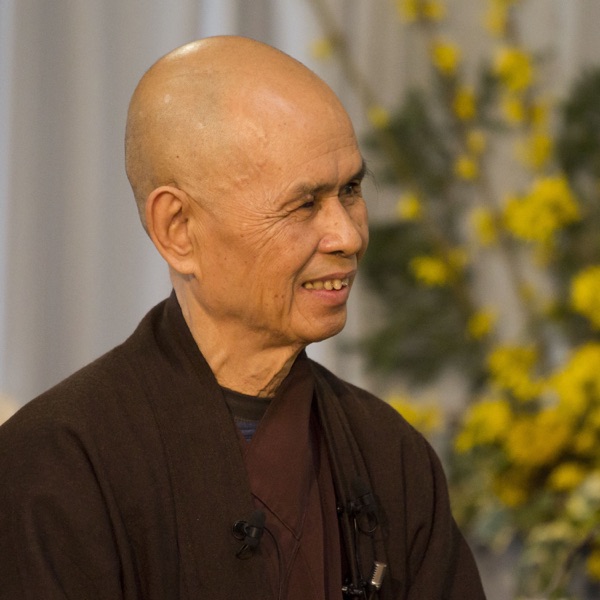
June 16, 2012. 99-minute dharma talk by Thich Nhat Hanh from Upper Hamlet in Plum Village during the 21-Day Retreat with the theme The Science of the Buddha. The talk is given in English and this is the eleventh dharma talk (of 15).
Four (six) Mantras of Love (45-minutes)
- Darling, I am here for you.
- Darling, I know you are there and it makes me happy.
- Darling, I know you suffer.
- Darling, I suffer, please help.
- (This is a Happy Moment.)
- (Darling, you are partly right.)
The last one is new and for when someone congratulates or criticizes you.
—
Perception and our mind. Subject of cognition and object of mind. The mind can be both the observed and the observer.
Three parts acting together. The notion of superposition. Three but one.
- The observer
- The observed
- Consciousness
The third part is the base, the foundation, for the observed. Thay has used the example of a piece of paper. The first two are the right and left side and the third is the paste (the paper itself). The third part has many names – different types of consciousnesses. For example, store consciousness.
More description
June 16, 2012. 99-minute dharma talk by Thich Nhat Hanh from Upper Hamlet in Plum Village during the 21-Day Retreat with the theme The Science of the Buddha. The talk is given in English and this is the eleventh dharma talk (of 15).
Four (six) Mantras of Love (45-minutes)
- Darling, I am here for you.
- Darling, I know you are there and it makes me happy.
- Darling, I know you suffer.
- Darling, I suffer, please help.
- (This is a Happy Moment.)
- (Darling, you are partly right.)
The last one is new and for when someone congratulates or criticizes you.
—
Perception and our mind. Subject of cognition and object of mind. The mind can be both the observed and the observer.
Three parts acting together. The notion of superposition. Three but one.
- The observer
- The observed
- Consciousness
The third part is the base, the foundation, for the observed. Thay has used the example of a piece of paper. The first two are the right and left side and the third is the paste (the paper itself). The third part has many names – different types of consciousnesses. For example, store consciousness.
Listen elsewhere
Available Results
Generated results are saved to your library for reuse and search.