Creating 'world models' for robots + An AI math shakeup
When you ask an LLM like ChatGPT or Claude a question, the model goes through its massive amount of training data and guesses the answer by mathematically predicting the word most likely to appear next in a sentence.
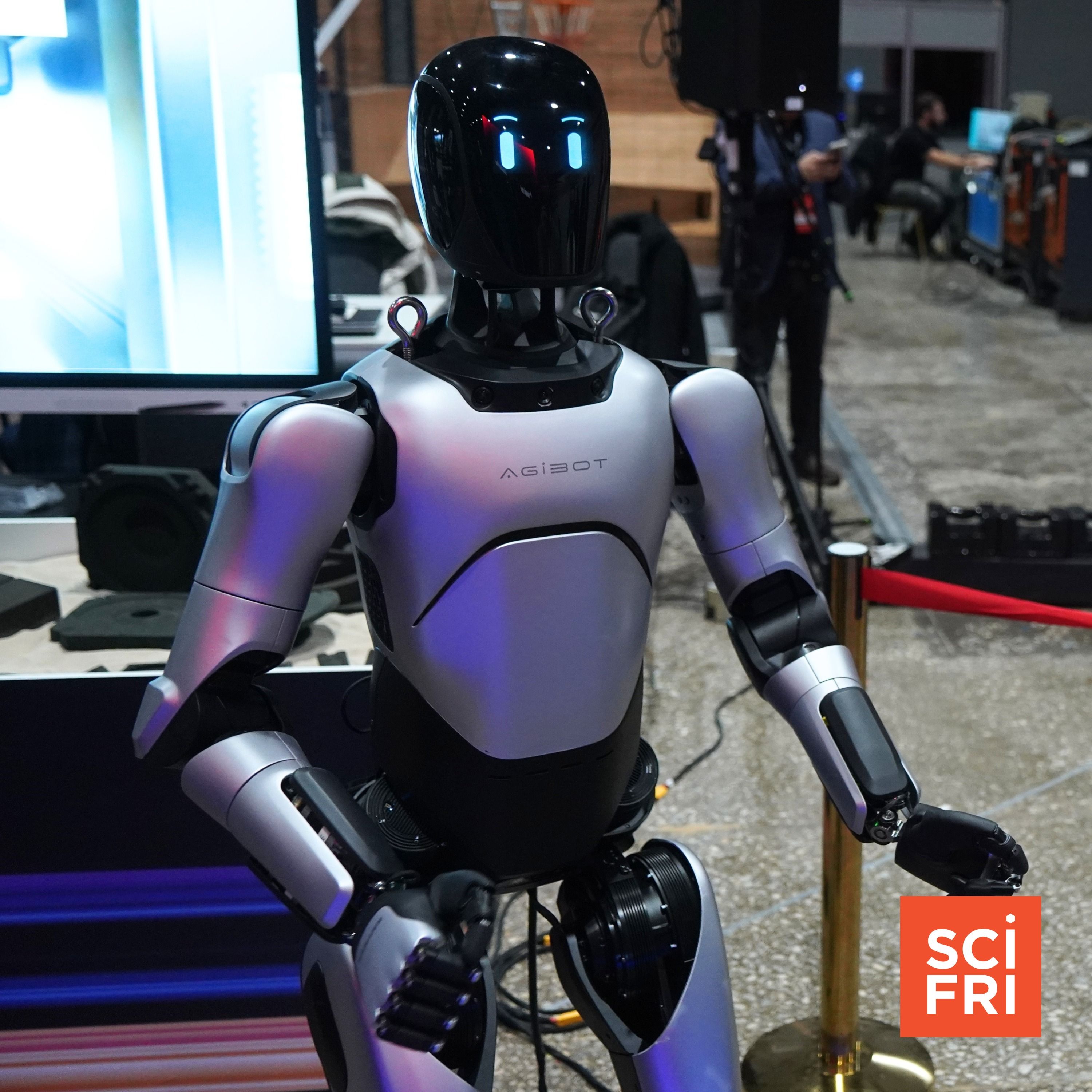
This model, experts say, will not work well for technology designed to navigate the physical world. Something like a robot that works in a warehouse will instead require a “world model” that can understand spatial surroundings, like the stuff we walk by or bang into.
But what is a world model, exactly? And how do you train AI to recognize what the real world looks like? Host Ira Flatow checks in with tech journalist Joanna Stern, who’s seen the early days of these models up close, even in her own home.
Then, we check in on the math world, where frontier AI models have made meaningful progress on decades-old problems. Mathematician Emily Riehl gives us the big picture on how significant these results actually are.
Guests:
Joanna Stern is a tech journalist who writes newsletters and creates videos for New Things Media.
Dr. Emily Riehl is a professor of mathematics at Johns Hopkins University.
Transcript will be available after the show airs on sciencefriday.com.
Subscribe to this podcast. Follow our show on Instagram, TikTok, Facebook, and Bluesky @scifri and sign up for our newsletters. Got a science question that’s keeping you up at night? Call us: 877-472-4374
Hosted by Simplecast, an AdsWizz company. See pcm.adswizz.com for information about our collection and use of personal data for advertising.
More description
When you ask an LLM like ChatGPT or Claude a question, the model goes through its massive amount of training data and guesses the answer by mathematically predicting the word most likely to appear next in a sentence.
This model, experts say, will not work well for technology designed to navigate the physical world. Something like a robot that works in a warehouse will instead require a “world model” that can understand spatial surroundings, like the stuff we walk by or bang into.
But what is a world model, exactly? And how do you train AI to recognize what the real world looks like? Host Ira Flatow checks in with tech journalist Joanna Stern, who’s seen the early days of these models up close, even in her own home.
Then, we check in on the math world, where frontier AI models have made meaningful progress on decades-old problems. Mathematician Emily Riehl gives us the big picture on how significant these results actually are.
Guests:
Joanna Stern is a tech journalist who writes newsletters and creates videos for New Things Media.
Dr. Emily Riehl is a professor of mathematics at Johns Hopkins University.
Transcript will be available after the show airs on sciencefriday.com.
Subscribe to this podcast. Follow our show on Instagram, TikTok, Facebook, and Bluesky @scifri and sign up for our newsletters. Got a science question that’s keeping you up at night? Call us: 877-472-4374
Hosted by Simplecast, an AdsWizz company. See pcm.adswizz.com for information about our collection and use of personal data for advertising.
Listen elsewhere
Available Results
Generated results are saved to your library for reuse and search.