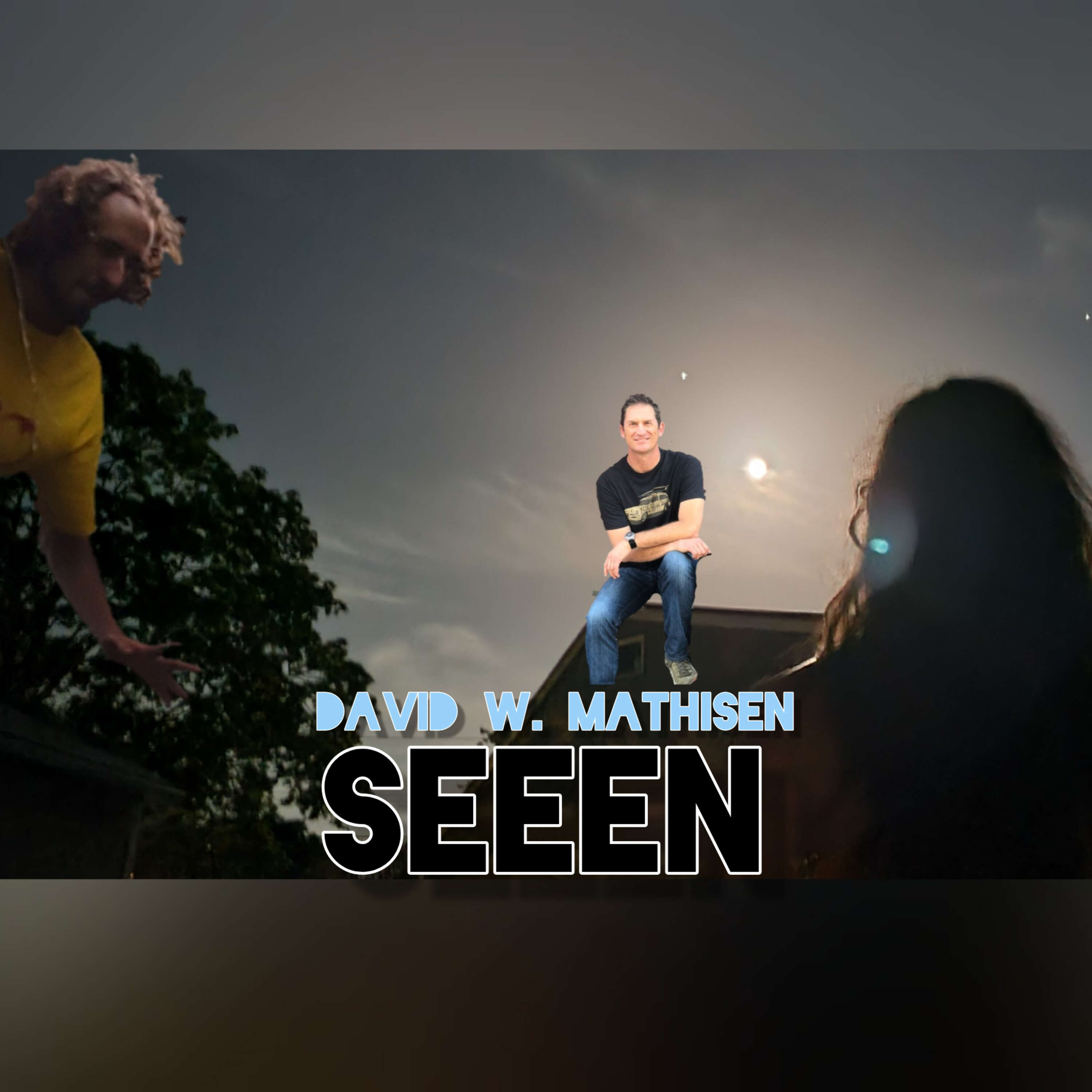
David W. Mathisen | SEEEN| Stone Alignments, Mythic Trauma, and Our Higher Selves
*Join The Family on our Patreon for the full 90+ minute episode of SEEEN. Embrace the story and help us unfold the Mystery.
David W. Mathisen, Author, Free Spirit and Researcher behind Star Myth World, Joins us to teach how the myths show us the way through trauma and how to reconnect with our higher selves. Below is an excerpt from or conversation, the second paragraph is from the Patreon Only portion of the SEEEN available on Patreon.com/MFTIC
[00:42:19] David W. Mathisen: a common pattern in myths around the world of a divine twin and an immortal twin, in the Gilgamesh epic Gilgamesh is two-thirds divine, but he's given a twin who's covered in hair. That is Enkidu and Enkidu ends up going down into the underworld and Gilgamesh is weeping over the death of Enkidu…”
“…in the Castor and Pollux myth. Castor is actually mortal and Pollux is Immortal. And they're both the sons of the same mother, the Queen of Sparta Leda. You may have heard of the myth of Leda and the Swan”
In The SEEEN Patreon-Only Portion
“Core self that is not a part it's self. It has these characteristics that are the same in everybody and it's indestructible. And it actually is almost like I think of it as like the coach of the team. The parts are like the players on the team. And what happens is the players, because of trauma and other things that happen as part of, I think incorporation into society to players will often lock this, the coach in the locker room and, or they'll lose trust in the coach, the self, maybe it would only happens through trauma, but even, even getting kind of indoctrinated into society can be traumatic at some level for everybody”
For Exclusive My Family Thinks I'm Crazy Content: Leave me a message at https://podinbox.com/MFTIC
Sign up on our Patreon For Exclusive Episodes. check out the SEEEN
@myfamilythinksimcrazy on Instagram, Follow, Subscribe, Rate, and Review we appreciate you!
https://www.myfamilythinksimcrazy.com
Music: Egg Shaped Sphere
by Kristof Lauwers
And
Music: Damn Summer
by Glitch
Released under a Creative Commons Attribution International 4.0 License
Our Sponsors:
* Check out Hims and use my code hims.com/CRAZY for a great deal: https://www.hims.com
* Check out Mars Men and use my code Mengotomars.com for a great deal: https://mengotomars.com
Advertising Inquiries: https://redcircle.com/brands
Privacy & Opt-Out: https://redcircle.com/privacy
Available Results
Generated results are saved to your library for reuse and search.
Choose Template
Pick the result you want. You can review provider and model before generating.
A concise first-pass summary for understanding the episode quickly.
A comprehensive, source-grounded extraction of the reusable knowledge in an episode.
Scientific findings, mechanisms, studies, hypotheses, and the limits of the evidence discussed.
A dedicated analysis of warnings, limitations, trade-offs, weak evidence, and uncertainty.
Memorable statements and important claims with attribution and source context.
Technologies, AI models, technical methods, capabilities, limitations, and adoption implications.
A concise first-pass summary for understanding the episode quickly.
A detailed readable summary organized by chapter or topic.
A navigable map of subjects, topic flow, and suggested chapters.
A comprehensive, source-grounded extraction of the reusable knowledge in an episode.
Reusable atomic knowledge units extracted from the episode.
A comprehensive extraction focused on health practices, protocols, claims, and safety caveats.
A comprehensive extraction focused on opportunities, strategy, markets, and company building.
Explicit actions, next steps, habits, recommendations, and things to avoid.
A dedicated inventory of concrete resources named in the episode.
A dedicated analysis of warnings, limitations, trade-offs, weak evidence, and uncertainty.
A concise first-pass summary for understanding the episode quickly.
A detailed readable summary organized by chapter or topic.
A navigable map of subjects, topic flow, and suggested chapters.
A comprehensive, source-grounded extraction of the reusable knowledge in an episode.
Reusable atomic knowledge units extracted from the episode.
A comprehensive extraction focused on health practices, protocols, claims, and safety caveats.
A comprehensive extraction focused on opportunities, strategy, markets, and company building.
Scientific findings, mechanisms, studies, hypotheses, and the limits of the evidence discussed.
Technologies, AI models, technical methods, capabilities, limitations, and adoption implications.
Investment theses, assets, catalysts, valuation reasoning, time horizons, and risks.
Chronologies, actors, causes, consequences, turning points, and competing historical interpretations.
Policies, proposals, stakeholders, arguments, implementation constraints, and predicted effects.
Career paths, skills, hiring signals, workplace decisions, transitions, and limitations of the advice.
Behavioral mechanisms, biases, motivation, habits, emotions, interventions, and evidence limitations.
Economic mechanisms, incentives, indicators, market structure, forecasts, and uncertainty.
Leadership principles, team systems, organizational design, culture, feedback, and failure modes.
Audience, positioning, messaging, acquisition, retention, experiments, metrics, and failed approaches.
Teaching methods, learning strategies, practice, feedback, assessment, and effectiveness evidence.
Theses, premises, arguments, objections, values, thought experiments, and unresolved questions.
Communication patterns, conflict, boundaries, expectations, repair methods, and contextual limitations.
Books, papers, authors, courses, and other learning resources mentioned in the episode.
Repeatable methods, frameworks, mental models, processes, and systems.
Explicit actions, next steps, habits, recommendations, and things to avoid.
Memorable statements and important claims with attribution and source context.
A dedicated inventory of concrete resources named in the episode.
A dedicated analysis of warnings, limitations, trade-offs, weak evidence, and uncertainty.