How To Get Into Hunting, Build Hunting Fitness, The Most Challenging Hunts & More!
If you've been paying attention to the BenGreenfieldFitness Instagram page lately, you may know that I've just returned from a big axis deer hunt in Texas. Before that, I was hunting whitetail deer in Washington and elk in Colorado. I spent the summer competing in TrainToHunt bowhunting, meatpacking and obstacle course competition, I won the Idaho TrainToHunt, and now I've got my eyes on safari hunting in Africa and moose and bear hunting in British Columbia. In the podcast episode "Are Hunters The Fittest People In The World?" I interview TrainToHunt founder Kenton Clairmont, and in the episode "How To Build Primal Fitness And Endurance By Hunting: An Interview With A Bowhunting Triathlete", you learn how an Ironman triathlon competitor combines hunting with endurance sports.
With the growing popularity of sports like TrainToHunt, bowhunting, and even a growing interest in the ancestral practice of persistence hunting, I figured it was high time to introduce you to the guy who has organized a couple of the hunts I've been on, and who is one of the world's leading authorities on finding good hunts, building hunting fitness and much more.
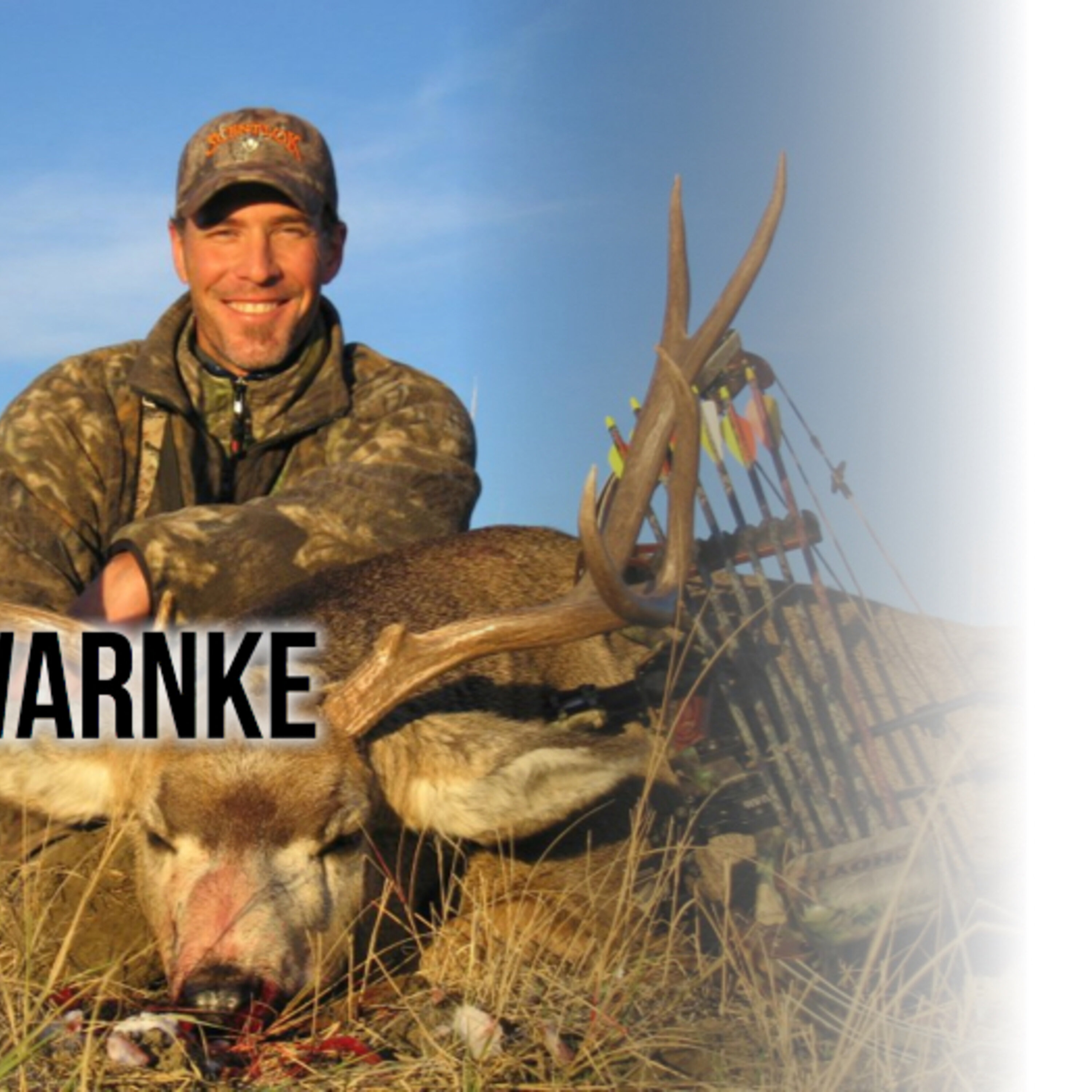
So if you want to tap into the primal practice of challenging your body in the wilderness and hunting and gathering your own tasty meat, then this episode is for you. My guest Marc Warnke is owner of GotHunts a hunting consultant, family man, avid bow hunter, mule deer fanatic, fly fisherman and best selling author.
Marc has had global hunting experience with outfitters in Canada, Africa and New Zealand. He understands what makes a quality hunt, how to find challenging hunts and (as a fellow TrainToHunt competitor) how to build the ultimate hunting fitness. -How Marc became a hunting guide... -The most thrilling place in the world to hunt... -How to "get into" hunting, even if you didn't grow up with it... -The biggest fitness “holes” you're going to face when you begin hunting... -Why persistence hunting may be the next big thing in hunting fitness... -The best kind of hunting and hunts to go on if you really want to challenge your fitness... -And much more!
Resources from this episode: -GotHunts.com -How To Hunt 'Till You're 80 podcast -The Splendid Savage book -Video below... https://www.youtube.com/watch?v=GiyQvm9d4tM
Do you have questions, comments or feedback for Marc or me about how to get into hunting, how to build hunting fitness, the most challenging hunts or anything else we discuss in this episode? Leave your thoughts at BenGreenfieldFitness.com!
See omnystudio.com/listener for privacy information.
Available Results
Generated results are saved to your library for reuse and search.
Choose Template
Pick the result you want. You can review provider and model before generating.
A concise first-pass summary for understanding the episode quickly.
A comprehensive, source-grounded extraction of the reusable knowledge in an episode.
A comprehensive extraction focused on health practices, protocols, claims, and safety caveats.
A dedicated analysis of warnings, limitations, trade-offs, weak evidence, and uncertainty.
Repeatable methods, frameworks, mental models, processes, and systems.
A comprehensive extraction focused on opportunities, strategy, markets, and company building.
A concise first-pass summary for understanding the episode quickly.
A detailed readable summary organized by chapter or topic.
A navigable map of subjects, topic flow, and suggested chapters.
A comprehensive, source-grounded extraction of the reusable knowledge in an episode.
Reusable atomic knowledge units extracted from the episode.
A comprehensive extraction focused on health practices, protocols, claims, and safety caveats.
A comprehensive extraction focused on opportunities, strategy, markets, and company building.
Explicit actions, next steps, habits, recommendations, and things to avoid.
A dedicated inventory of concrete resources named in the episode.
A dedicated analysis of warnings, limitations, trade-offs, weak evidence, and uncertainty.
A concise first-pass summary for understanding the episode quickly.
A detailed readable summary organized by chapter or topic.
A navigable map of subjects, topic flow, and suggested chapters.
A comprehensive, source-grounded extraction of the reusable knowledge in an episode.
Reusable atomic knowledge units extracted from the episode.
A comprehensive extraction focused on health practices, protocols, claims, and safety caveats.
A comprehensive extraction focused on opportunities, strategy, markets, and company building.
Scientific findings, mechanisms, studies, hypotheses, and the limits of the evidence discussed.
Technologies, AI models, technical methods, capabilities, limitations, and adoption implications.
Investment theses, assets, catalysts, valuation reasoning, time horizons, and risks.
Chronologies, actors, causes, consequences, turning points, and competing historical interpretations.
Policies, proposals, stakeholders, arguments, implementation constraints, and predicted effects.
Career paths, skills, hiring signals, workplace decisions, transitions, and limitations of the advice.
Behavioral mechanisms, biases, motivation, habits, emotions, interventions, and evidence limitations.
Economic mechanisms, incentives, indicators, market structure, forecasts, and uncertainty.
Leadership principles, team systems, organizational design, culture, feedback, and failure modes.
Audience, positioning, messaging, acquisition, retention, experiments, metrics, and failed approaches.
Teaching methods, learning strategies, practice, feedback, assessment, and effectiveness evidence.
Theses, premises, arguments, objections, values, thought experiments, and unresolved questions.
Communication patterns, conflict, boundaries, expectations, repair methods, and contextual limitations.
Books, papers, authors, courses, and other learning resources mentioned in the episode.
Repeatable methods, frameworks, mental models, processes, and systems.
Explicit actions, next steps, habits, recommendations, and things to avoid.
Memorable statements and important claims with attribution and source context.
A dedicated inventory of concrete resources named in the episode.
A dedicated analysis of warnings, limitations, trade-offs, weak evidence, and uncertainty.